Pool Leak Detection & Repair in San Diego, CA
Experienced local pool professionals providing pool leak detection & repair to homes and communities in San Diego and surrounding Coastal areas of San Diego County.

What does pool leak detection & repair include in San Diego?
Plumbing joints along the San Diego coast take years of salt corrosion before they finally give out, and that's where most coastal leaks start. Refresh Pool Pros matches homeowners with licensed independent leak specialists. Ask them to locate the source before anyone opens the deck, and whether repair is a separate quote. Water here is supplied by City of San Diego and runs hard.
Leak Detection in San Diego: site, access, and equipment details
Give the San Diego street address, access or parking notes, and the equipment model or visible symptom when you request leak detection.
San Diego is on City of San Diego Public Utilities, and the water it delivers runs hard, which the trade calls hard. That is what shapes leak detection work here: a wide range of pool ages and equipment types citywide, with coastal salt-air corrosion on the western neighborhoods.
Refresh Pool Pros matches San Diego homeowners with licensed independent pros across San Diego County.
Repair and renovation coverage from Point Loma to Pacific Highlands Ranch
Coverage runs the coastal corridor through Point Loma, Ocean Beach, Sunset Cliffs, and Liberty Station, the central neighborhoods of Hillcrest, North Park, South Park, and Normal Heights, and the far-north communities of Carmel Valley, Pacific Highlands Ranch, and Sorrento Valley. La Jolla, Pacific Beach, Mission Valley, Kearny Mesa, Tierrasanta, Mira Mesa, Scripps Ranch, Rancho Bernardo, and Rancho Peñasquitos each have their own dedicated page, same network, same repair match. Coverage follows the I-5, I-805, I-8, and SR-163 corridors. A large share of the homes in San Diego went up before 1980, which is a fair guide to how old the plumbing around a local pool is likely to be.
What symptoms to describe when requesting leak detection in San Diego
Note which symptoms from the list below apply, when each started, and whether it's getting worse.
- Wet or sinking ground around the deck
- a buried line, and the soil is telling you roughly where without any equipment.
- Water level settling and stopping at one line
- the leak is at that height. A stop at the tile line points at the skimmer or the tile itself.
- Pool losing water
- a bucket test separates a real leak from ordinary evaporation before anyone charges to look for one.
- Air bubbles from the return jets
- air entering on the suction side, which is a leak that pulls in rather than pushes out.
When you request a written quote, name the visible symptom and the equipment model if it applies.
What's included
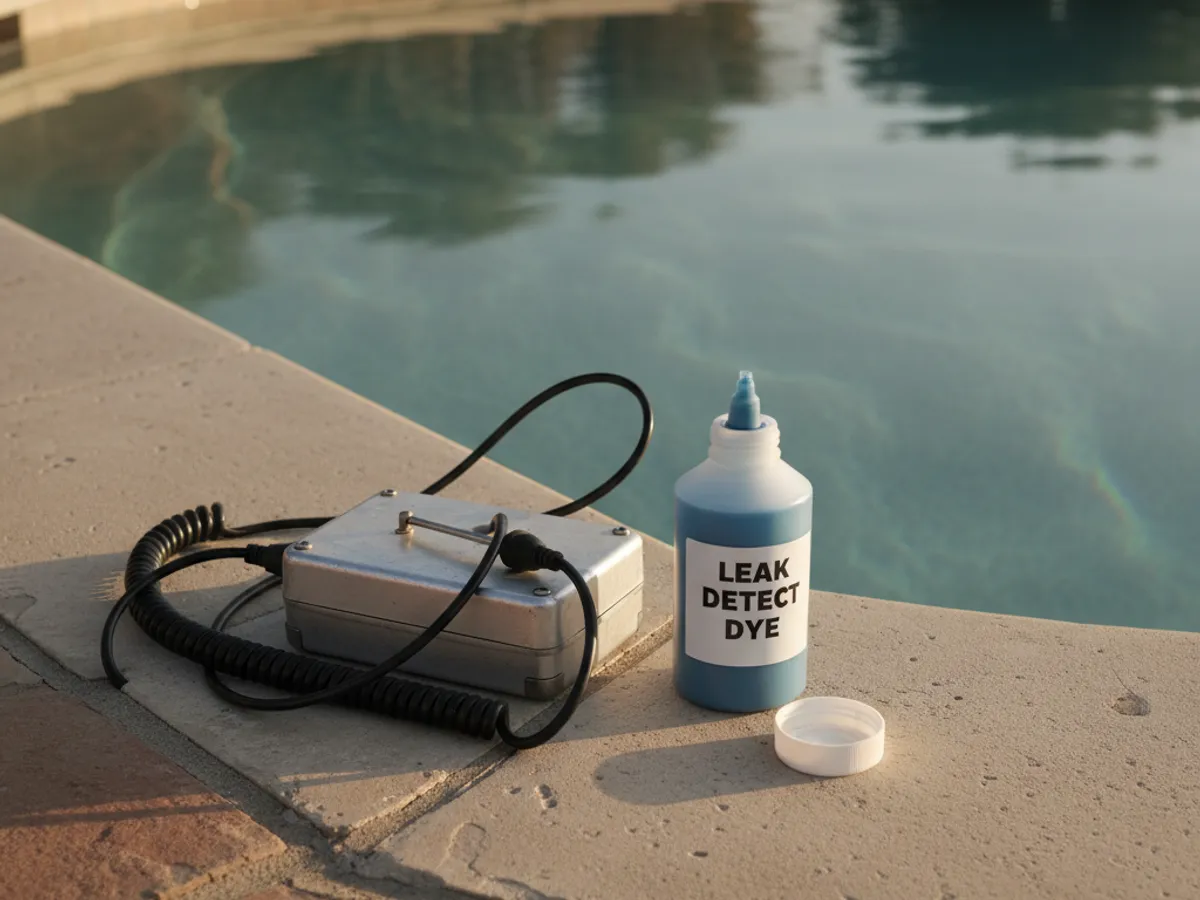
- Bucket test to separate a real leak from normal evaporation
- Independent pressure testing on every plumbing line
- Electronic listening-device detection
- Dye testing at suspected cracks and fittings
- Leak location mapping and a repair plan
- Pipe and fitting repair wherever it's accessible
What do San Diego homeowners ask about leak detection?
How do I know if my San Diego pool is actually leaking versus just evaporating?
Run a bucket test. Fill a bucket with pool water, set it on the first step, and mark the water level on both the bucket and the pool. Compare both after 24 hours. If the pool dropped more than the bucket did, you have a leak. If the drops match, that is evaporation.
Can a leak get located without digging up my whole deck?
Almost always, yes. Electronic detection finds the leak's location through the deck itself, so digging only happens once the leak is confirmed and repair actually requires access.
How much water loss is considered normal for a San Diego pool?
Measure it instead of estimating. Run a bucket test: a weighted bucket on a step, filled so the water inside matches the pool. Evaporation drops both by the same amount, so if the pool falls further than the bucket over 24 hours, that difference is a leak and worth a proper test.
Why does pool equipment corrode so fast near the San Diego coast?
Salt air, marine fog, and UV exposure combine to shorten the working life of pumps, heaters, salt cells, and metal fixtures on coastal pools. Salt-rated equipment on replacements and regular inspection for corrosion are standard practice for the pool repair pros working the coastal neighborhoods.
Can the network service high-end automated pools in Carmel Valley?
Yes. The far-north communities have some of the most complex pool installs in the city, full automation, elaborate water features, and premium equipment, and the network brings the specialized repair knowledge those systems require.
Do the pool repair pros cover every San Diego neighborhood?
Yes. Coverage runs coastal (Point Loma, Ocean Beach, Sunset Cliffs, Mission Beach, Liberty Station), central (Hillcrest, North Park, South Park, Normal Heights, City Heights), and far-north (Carmel Valley, Pacific Highlands Ranch, Sorrento Valley).
Do you resurface older pools in Clairemont and Bay Park?
Yes. Much of that housing stock dates back decades, and original plaster and equipment are now well past their service life. Refresh Pool Pros matches homeowners with licensed independent resurfacing specialists. Ask which plaster, pebble, or quartz finish they recommend, and whether an equipment refresh belongs in the same written quote.
Is emergency pool repair available anywhere in San Diego?
Yes. The network's emergency coverage reaches the entire city, from the coast to the far-north communities.
Where we work in San Diego
Need leak detection in San Diego?
Describe what's going on and we'll match you with a licensed local specialist.