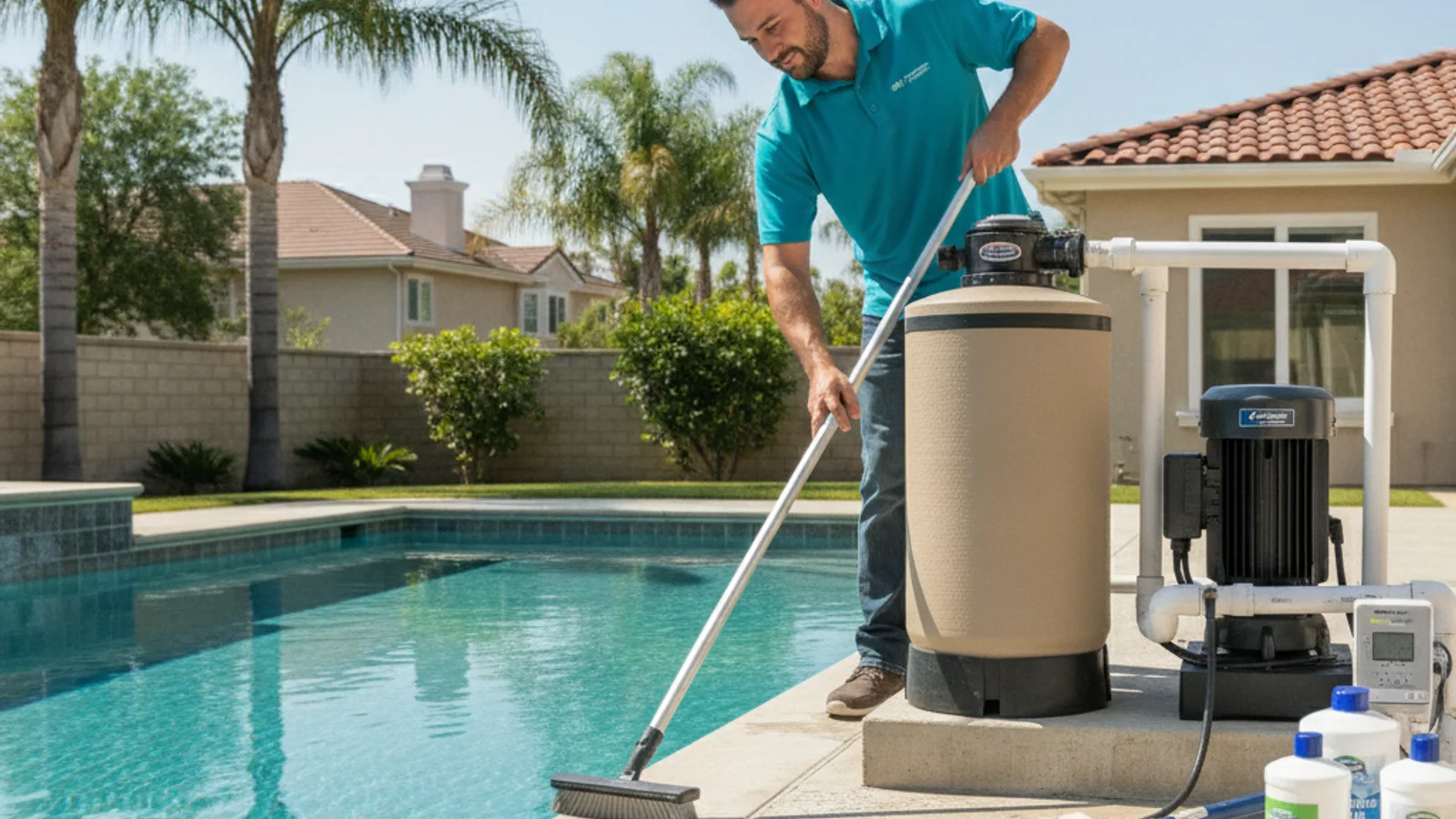
Chlorine pools run on simple, familiar chemistry, while salt water pools add a generator system upfront and produce softer-feeling water. Angi’s salt pool conversion cost guide gives a general US planning range of about $1,000 to $2,500 for an in-ground conversion. That is a general US planning estimate, not a company or local rate. Refresh Pool Pros connects homeowners with licensed independent pros, and the actual quote after discussing and assessing the job may fall outside that range. Neither system is universally “better”; the right call in San Diego depends on your pool’s surface material, your equipment budget, and how much hands-on chemical balancing you want to do.
Both systems put chlorine in the water. The difference is where that chlorine comes from and what it costs to keep it flowing.
What’s the actual difference between chlorine and salt water pools?
A traditional chlorine pool gets its sanitizer added directly, usually as liquid chlorine, tablets, or granular shock poured or fed in by a chemical feeder. A salt water pool dissolves pool-grade salt into the water, then runs that salted water through a salt chlorine generator that uses electrolysis to convert the salt into chlorine automatically. Both pools end up sanitized by chlorine. The salt system just manufactures it on site instead of requiring you to add it by hand every week.
This is the single biggest misunderstanding homeowners bring to a repair call: a salt pool is not a chlorine-free pool. It’s a chlorine pool with a built-in chlorine factory.
How much does it cost to convert a pool to salt water in San Diego?
Ask what a conversion quote includes: the salt chlorine generator, the initial salt, and installation labor. Ask whether the existing pump can stay and whether a new filter or pump is included, since extra equipment or repair can raise the actual quote. Pool size affects which generator the job needs.
The specialists in our network who handle salt water conversions walk the equipment pad first to confirm your filter, pump, and existing plumbing can support a cell before quoting a firm number.
Which system is cheaper to run month to month?
Compare your own chemical purchases, electricity, and maintenance with the company’s estimate rather than treating either system as cheaper to run.
The catch is the salt cell itself. Replacing a worn cell is a later expense, and how long a cell lasts depends on water chemistry, hard water and scale, run hours, and maintenance history. Ask the licensed contractor what to inspect and what the written warranty terms cover. Factor that into the real cost comparison instead of just looking at monthly chemical spend.
Which system is gentler on skin, eyes, and hair?
Salt water pools generally feel softer on skin and eyes because the chlorine concentration stays lower and more consistent than the spikes that come from manually dosing a traditional pool. Swimmers with sensitive skin or mild chlorine sensitivity often report salt water feels noticeably easier to be in for hours at a time. It isn’t chlorine-free, so anyone with a true chlorine allergy still needs to be cautious in either system.
Is salt water more corrosive to pool equipment than chlorine?
Yes, salt water is more corrosive to exposed metal fixtures, ladders, handrails, and some older heater components than a traditional chlorine pool, which is why proper conversions specify saltwater-rated hardware. This matters more in San Diego than in some markets because a lot of the county’s pool stock dates to the 1970s through 1990s and still has original metal fixtures never rated for salt exposure. A conversion done without swapping those fixtures can lead to pitting and corrosion. Ask the specialist to inspect metal before quoting.
This is also where San Diego’s hard water compounds the issue. High calcium content combines with salt exposure to accelerate scaling on the cell plates and on metal surfaces, so a pool converting to salt here needs a hardness check as part of the job, not an afterthought.
What should you document about the pool surface before a conversion quote?
Photograph the finish and describe the visible issue when you request a conversion quote. Ask the resurfacing specialists in our network what a resurfacing quote covers, keep that separate from the salt conversion quote, and request written product care and warranty terms.
What repairs come up more often on salt water pools?
Salt cell failure, control board issues, and corrosion on exposed metal are the repair calls that show up disproportionately on salt systems, while traditional chlorine pools see more issues tied to feeder equipment, chemical automation controllers, and plumbing scale. A salt cell losing output is one of the most common calls a swimming pool repair technician gets in San Diego, usually from calcium scaling on the plates rather than the cell simply wearing out. A quick acid wash or cell cleaning often restores output before a full replacement is needed.
On the equipment side, both systems lean on the same pumps, filters, and heaters, so general pool equipment issues (worn pump seals, failing capacitors, filter pressure problems) show up at similar rates regardless of which sanitizing method you run.
Which system makes sense for an older San Diego pool with an aging surface?
A pool with original 1980s or 1990s plaster and metal fixtures usually makes more sense to keep on traditional chlorine until the surface and fixtures are updated, since converting to salt on aging infrastructure can accelerate the wear that eventually forces a bigger renovation anyway. Once a pool has been resurfaced with modern saltwater-rated plaster or pebble finish and the metal fixtures are swapped for salt-rated hardware, converting becomes a much lower-risk move.
If you’re not sure which category your pool falls into, a leak detection and surface inspection from a licensed pro is a fast way to find out before spending money on a conversion or a new cell.
What about spas and water features attached to the pool?
Attached spas and water features usually share the same sanitizing system as the main pool, so a salt conversion typically covers the spa too, but the higher salt concentration and heat cycling in a spa environment wears cells and metal fixtures faster than the pool alone does. If your backyard includes a separate spa or hot tub or a fountain running on its own equipment, that unit may need its own conversion decision rather than assuming it’s covered by whatever you choose for the pool.
How do you decide which system is right for your pool?
Start with your pool’s age, surface condition, and equipment pad, not with a general preference for salt or chlorine, since the physical condition of the pool determines which system will actually hold up. A newer pool with modern equipment and a fresh surface is a candidate for a salt conversion if you want generated chlorine and a softer feel. An older pool with original fixtures and aging plaster is often better served staying on traditional chlorine until a renovation is already planned, at which point converting during that same project makes sense.
Homeowners anywhere from San Diego and its surrounding communities can get a straight answer on which system fits their specific pool by having a technician walk the equipment pad and check the surface before any money changes hands.
Frequently asked questions
Is a salt water pool cheaper to run than a chlorine pool?
Compare your own chemical purchases, electricity, and maintenance with the company’s estimate rather than treating either system as cheaper to run. The trade-off shows up later: a worn salt cell is a replacement expense a traditional chlorine setup doesn’t have.
Do salt water pools still need chlorine?
Yes. A salt system uses electrolysis to convert dissolved salt into chlorine, so the pool is still sanitized by chlorine, just generated on site instead of poured in from a jug. Anyone with a chlorine allergy or sensitivity should know a salt pool won’t solve that.
Can I convert my existing chlorine pool to salt water?
Most gunite and vinyl-liner pools in San Diego can convert to salt by adding a salt cell and control box on the existing equipment pad. Pools with certain older metal fixtures, unfinished pebble surfaces, or damaged plaster should get a professional evaluation first, since saltwater is more corrosive to exposed metal. Ask the matched independent pro what this pad needs, in writing.
Does San Diego’s hard water make chlorine or salt pools harder to maintain?
San Diego’s hard, mineral-heavy water raises scaling risk for both systems, but salt cells are more sensitive to it because calcium buildup on the cell plates reduces chlorine output and shortens the cell’s life. Either way, a pool on San Diego water needs calcium hardness checked more often than the same pool would on soft water.
How long does a salt cell last in a San Diego backyard pool?
Salt cell plates wear down as output drops, with heavier bather load, harder water, scale, and high run hours pushing replacement sooner. A pro can test cell output and tell you if you’re looking at a cleaning, a new cell, or a full system inspection. Ask the licensed contractor for written warranty terms on any replacement.
Not sure which system fits your pool, or dealing with a salt cell that’s already struggling? Call Refresh Pool Pros at (858) 400-4598 and we’ll connect you with a licensed repair or conversion specialist in your area for a straight quote.
Need professional help in San Diego County?
Refresh Pool Pros connects you with a licensed specialist for any service in this post.