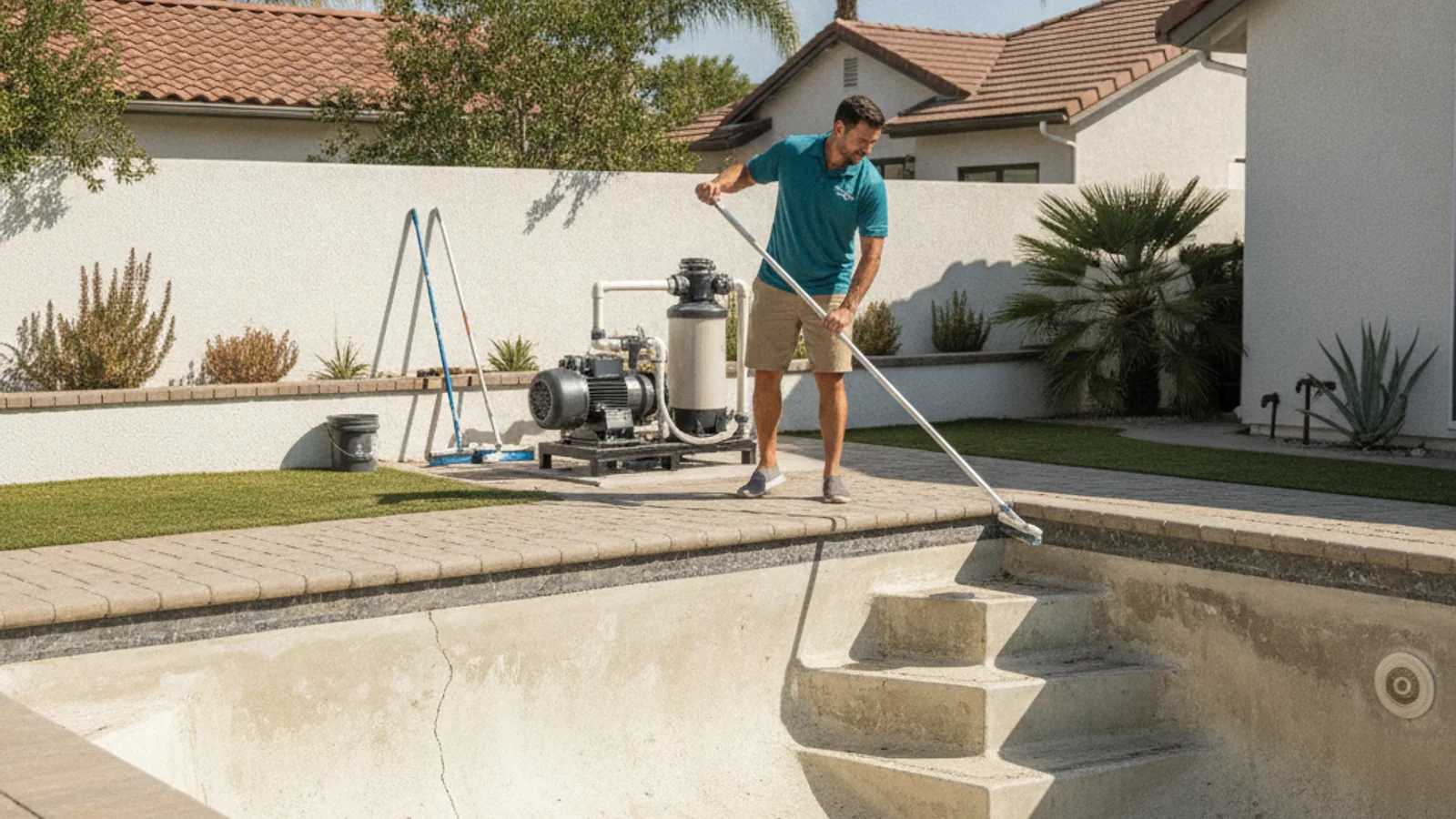
How long pool resurfacing lasts in San Diego depends on the finish, water chemistry and balance history, hard water and scale, sun and heat exposure, installation quality, bather load, and maintenance history. Standard white plaster is the softer common finish. Quartz-aggregate finishes are harder than plain plaster. Pebble finishes are the most durable of those options. Inspect the surface for etching, scale, and roughness, and ask the licensed contractor for written warranty terms.
Comparing pool resurfacing finishes, warranty, and care
Record the current finish and photograph the visible surface. Ask which plaster, quartz, or pebble product the quote uses, then compare that product’s written care instructions and warranty terms. The condition of this pool has to be assessed before a quote can specify which finish and scope fit the job.
What shortens a pool surface’s lifespan in San Diego specifically
Water hardness is the biggest local factor. Much of San Diego County receives water with moderate to hard mineral content, and that mineral load speeds up scaling, a chalky buildup that roughens plaster and dulls its color years before it would otherwise fail. Homes in East County and parts of North County Inland tend to see harder water than coastal zones, which means faster surface aging even with identical maintenance habits. Sun exposure is the second factor. A pool that sits fully uncovered through San Diego’s long dry season absorbs more UV and heat cycling than a shaded or covered pool, and that thermal stress contributes to hairline cracking over time. Bather load matters too. Pools that host frequent parties or daily swim use wear faster than a pool used a few times a week.
Signs your pool needs resurfacing instead of a patch
Rough, sandpaper-like texture on the pool floor or steps is the most common complaint homeowners bring to a repair specialist. That roughness usually means the plaster has etched down and lost its smooth top layer, exposing the aggregate underneath. Gray, brown, or black staining that won’t lift with brushing or a shock treatment often points to plaster that’s absorbed minerals or organic material too deep to clean out. Algae that keeps returning within days of treatment, even with correct chlorine levels, can mean the porous surface is holding onto spores that a smooth new finish would shed. Visible cracking, especially cracks that seem to spread or multiply over a season, signals the shell itself may be moving and needs a professional look before cosmetic work makes sense.
How much does pool resurfacing cost in San Diego
HomeGuide lists general U.S. resurfacing-only planning estimates of $6 to $8 per square foot for plaster and $7 to $15 per square foot for pebble, excluding refill. Ask the matched independent pro how the quoted finish options compare for this pool. Prices vary, and the matched independent pro gives the actual quote after assessing the shell. Pool size, current surface condition, and whether the crew finds hidden structural issues once the old surface is drained and chipped away all move the final number. A quote from a licensed resurfacing specialist should include prep work, material, and labor as separate line items so homeowners can see where the cost comes from.
What written care should you request for a pool surface
Ask the licensed contractor, and check the finish product’s written water-care instructions. What pH and alkalinity range do those instructions list for the pool water? What testing do they specify? Check those written care instructions for whether a cover or brushing is specified for this finish. None of this is a promised extra lifespan. Request the written warranty and care terms for the product used.
When to call a pool repair specialist
A pool showing rough texture, spreading stains, or repeat algae growth is worth a professional inspection before the homeowner assumes the worst or ignores it. A pool repair in San Diego County specialist in our network can run a plaster thickness check and confirm whether the pool needs a full pool resurfacing job or a smaller patch. If cracking coincides with water loss, a pool leak detection check should happen first, since resurfacing over an active leak wastes the new finish. Pools converting to salt during the same renovation should ask about salt water conversion timing, since salt systems interact differently with fresh plaster during the curing period. Homeowners near the coast or in San Diego proper dealing with aging equipment alongside a worn surface can also ask about pool equipment while the pool is already drained for resurfacing, since it’s the easiest time to handle both.
Frequently asked questions
How long does pool resurfacing last in San Diego?
How long a San Diego finish lasts depends on material type, water chemistry and balance history, hard water and scale, bather load, and how consistently the pool gets serviced. White plaster is the softer common option, quartz is harder, and pebble is more durable. Pools that sit uncovered under strong coastal or inland sun tend to wear faster than shaded pools. Inspect the surface and ask the licensed contractor for written warranty terms.
What are the signs a pool needs resurfacing?
Rough or pitted texture underfoot, visible gray or brown staining that won’t scrub out, stubborn algae that returns within days of treatment, and hairline cracks spreading across the shell are the main signs. A pool repair specialist can check plaster thickness and bond strength to confirm whether resurfacing or a smaller patch job is the right call.
Does San Diego’s water affect how long resurfacing lasts?
Yes. Much of San Diego County runs moderate to hard water from imported Colorado River supply, and that mineral content accelerates scaling and etching on plaster if the water chemistry isn’t monitored. Homes on well water or in harder-water zones like parts of East County typically see faster surface wear than coastal areas on softer supply.
How should I compare a surface patch with a full resurfacing quote?
A patch covers a limited damaged area. Full resurfacing replaces the finish across the shell. HomeGuide lists general U.S. resurfacing-only planning estimates of $6 to $8 per square foot for plaster and $7 to $15 per square foot for pebble, or about $6,000 to $8,000 and $7,000 to $15,000 for 1,000 square feet of surface, excluding refill. Those figures are planning estimates for a full resurface, not a patch. Ask the matched independent pro to quote both scopes after assessing how far the damage goes on this shell.
Can pool resurfacing be delayed if the surface still looks okay?
A surface that looks fine can still have plaster thinning down to the gunite or rebar underneath, which turns a resurfacing job into a structural repair. A pool repair pro can measure remaining plaster thickness with a simple probe test rather than relying on appearance alone.
Ready to find out what your pool’s surface actually needs? Call Refresh Pool Pros at (858) 400-4598 and we’ll connect you with a licensed resurfacing specialist for a straight assessment and quote.
Need professional help in San Diego County?
Refresh Pool Pros connects you with a licensed specialist for any service in this post.