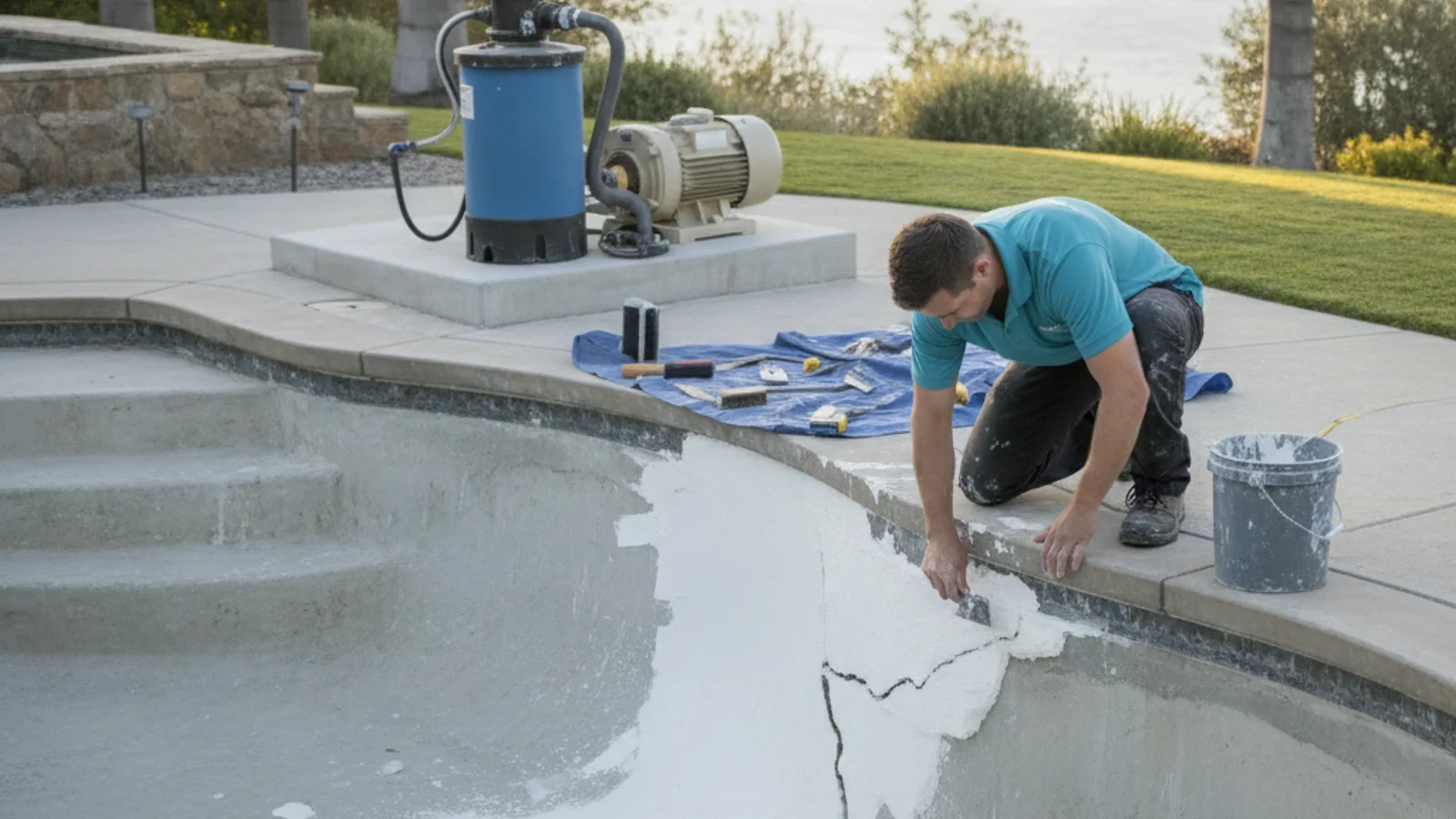
Cracked pool plaster repair in San Diego is quoted by crack type: a small spot patch, a structural crack repair, or a full resurface when cracking has spread across the shell. Prices vary, and Refresh Pool Pros connects homeowners with licensed independent pros who provide the actual quote after discussing and assessing the job; the brand does not perform repairs. Photograph the crack pattern and note any water loss. Ask a licensed independent pro to assess a patch versus a new finish.
How to prepare for a cracked plaster assessment
Photograph the crack pattern, including how far it runs and whether it crosses corners, steps, or fittings. Note any water loss and describe the visible issue when you request an assessment. Ask a licensed independent pro to discuss a simple patch versus a new finish.
How do you tell a structural crack from cosmetic crazing
A structural crack runs as a single defined line, often at a corner, step, or where the pool shell meets a fitting, and it usually deepens over time. Crazing looks completely different: a spiderweb of fine hairline lines spread evenly across the finish coat, caused by the surface layer curing faster than the plaster underneath it during the original application. Crazing is cosmetic and doesn’t leak or threaten the shell. A single crack that widens, follows a straight or gently curved path, or sits near a return line or light niche deserves closer inspection, since those are the spots most likely to be structural rather than surface-level.
What is the repair process for a cracked pool plaster
Repairing a structural pool plaster crack means draining the area, chipping out the damaged plaster along the crack line, and patching with hydraulic cement or matching plaster mix. The resurfacing specialists in our network start by grinding or chipping a clean channel along the full length of the crack, several inches wide, to expose sound material on both sides. That channel gets packed with a fast-setting hydraulic cement or, for larger patches, a color-matched plaster blend applied and hand-troweled to match the surrounding texture. The pool refills only after the patch has cured for the time the product’s written instructions require. Ask the specialist to name that product and those refill rules in the quote. A patch this size rarely matches the surrounding plaster’s color perfectly at first, but most weathering evens out within a few months as the whole surface ages together.
When does cracked pool plaster mean a full resurface instead of a patch
Resurfacing prepares the surface for a new finish. A small crack may only require a simple patch, but extensive cracking requires more complicated work. Photograph the crack pattern, describe the visible issue, and ask a licensed independent pro to assess a patch versus a new finish. Request written product care and warranty terms.
Does San Diego’s climate make plaster cracking worse
Yes. San Diego’s mild coastal climate keeps most pools running nearly year-round, which means far more sun and chemical exposure hours on the plaster surface compared to regions with a true off-season. Coastal zip codes add salt air into the mix, which accelerates corrosion on metal fittings near cracks and can worsen leaks once water finds a path through. Inland areas swap that problem for expansive clay soil, which shifts enough between the wet winter months and dry summer to stress older shells at their weakest points, usually corners, steps, and light niches. Either way, a plaster surface here works harder than the same surface would somewhere with a shorter pool season.
Can a cracked pool leak without visible water loss
Yes, and this is the scenario that costs homeowners the most if it goes unnoticed. A hairline crack below the waterline can seep slowly enough that daily water loss looks like normal evaporation, especially during San Diego’s dry summer months. The giveaway is usually a bucket test: fill a bucket to the pool’s water line, mark both levels, and check again in 24 hours. If the pool has dropped noticeably more than the bucket, water is escaping somewhere the eye can’t see. A leak detection specialist can pinpoint whether a suspected crack is actually the source before any repair work starts, which saves patching a crack that turns out to be cosmetic while the real leak sits somewhere else in the plumbing.
Should you repair or resurface a pool with plaster cracks
A small crack may only require a simple patch, but extensive cracking needs more complicated work. Resurfacing prepares the surface for a new finish. A licensed independent pro assesses which work is appropriate. Photograph the crack pattern, note any water loss, and describe the visible issue when you request a quote, and ask for written product care and warranty terms. Homeowners converting to salt at the same time should mention that plan so it can be part of the quote.
Frequently asked questions
How much does cracked pool plaster repair cost in San Diego?
HomeGuide’s general US planning range for concrete or gunite small-crack repair is about $100 to $200, and about $700 to $1,000 for large cracks, spiderweb cracks, bulges, or divots. That is a surface-repair planning estimate, not a structural, bond-beam, or full-resurface price, and not a company or local rate. Refresh Pool Pros connects homeowners with licensed independent pros who provide the actual quote after discussing and assessing the job, not a price from photos alone.
Is a cracked pool plaster an emergency?
Hairline surface cracks aren’t urgent and can wait for a scheduled repair. A crack that’s actively leaking, growing week over week, or paired with a dropping water level needs attention within days, since water working behind the shell can undermine the gunite structure and turn a patch job into a full resurface.
Can you patch a pool crack without draining the pool?
Some hairline surface cracks can be filled underwater with an epoxy putty, but any crack that’s actively weeping or structural requires draining so the surface is fully dry and the crack can be chipped, cleaned, and patched properly. Patching over wet plaster rarely holds past one season.
Will a pool plaster crack get worse if I ignore it?
Have a pro check whether the crack is still cosmetic or already leaking before you decide to wait.
How long does a pool plaster crack repair last?
A structural crack that is chipped out and refilled is meant to last with the remaining surface, but how long that lasts depends on the product, the shell, and water chemistry. Ask the matched independent pro for the written warranty on the patch versus a full resurface. Underwater epoxy on hairline cracks is a different method with different durability.
What’s the difference between a crack and normal plaster crazing?
Crazing is a web of fine surface lines across the whole plaster finish, caused by the top layer curing faster than the layer beneath it, and it’s cosmetic, not structural. A crack is a single line, often following a straight or slightly curved path, that goes deeper than the finish coat and can signal shell movement or a failed patch from an earlier repair.
Cracked plaster only gets more expensive to fix the longer it sits, especially once water starts working behind the shell. Call Refresh Pool Pros at (858) 400-4598 and we’ll connect you with a licensed pool repair in San Diego County or pool resurfacing specialist in San Diego who can look at the crack and give you a straight answer on patch versus resurface. If a crack turns out to be hiding a leak, our network also covers pool leak detection and pool equipment repair for anything the leak may have affected. Homeowners in San Diego can request a quote today.
Need professional help in San Diego County?
Refresh Pool Pros connects you with a licensed specialist for any service in this post.