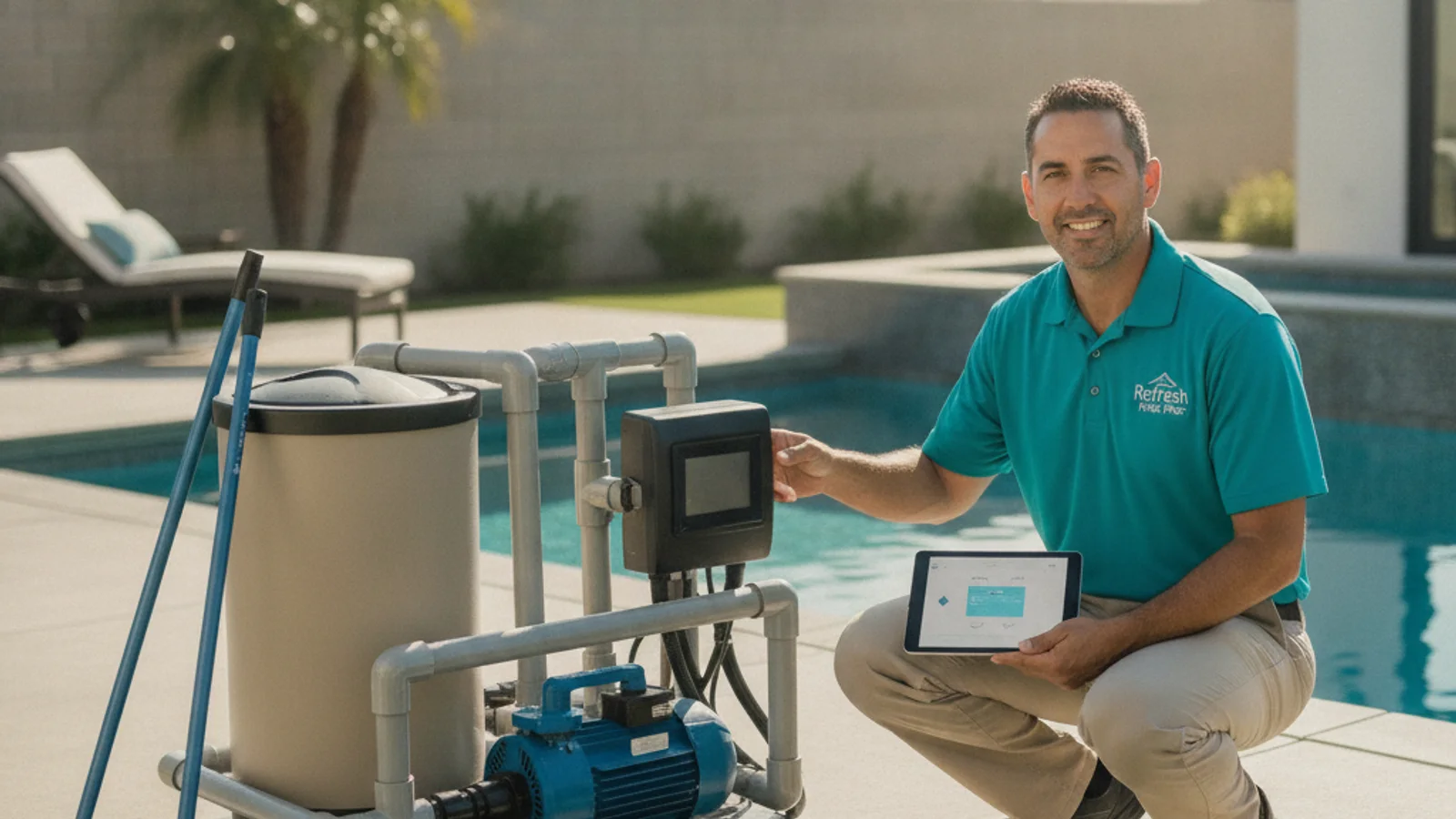
A pool automation system lets a homeowner control pumps, heaters, lights, and valves from a wall panel or phone app instead of manual switches.
Refresh Pool Pros connects San Diego County homeowners with licensed local pool repair and equipment specialists. This guide covers what automation actually does, which options to price, what a quote should include, and when it makes sense to pair it with a repair or renovation project already underway.
What is a pool automation system exactly?
A pool automation system is a control panel, usually wall-mounted near the equipment pad, that replaces individual timers and switches for the pump, heater, lights, valves, and any water features. Instead of flipping breakers or turning dials by hand, the homeowner sets schedules and adjustments through the panel or a phone app. The panel talks to relays wired into each piece of equipment, so one interface runs everything that used to require walking to the pad. Most systems also log run times and flag equipment that isn’t responding, which helps a repair technician diagnose a failing pump or heater faster on a service call.
What should a pool automation quote cover in San Diego?
Ask the matched independent pro which equipment the quote will control. A single-function upgrade may automate just the pump and one heater. A fuller system can add valve actuators for spa and water feature control, salt cell integration, and app-based remote access. If an existing actuator is stuck, clicking, or the spa will not switch over, see pool actuator repair. Refresh Pool Pros connects homeowners with licensed independent pros, and the company handling the job gives the actual quote after assessing the pad.
What does pool automation actually control?
A properly wired system controls pump speed and scheduling, heater temperature and on/off timing, pool and spa lighting, water feature valves, and salt or chlorine generator output, all from one interface. Pump control is the most common starting point, since it’s also where most of the energy savings live. Heater control matters most for pools that run year-round or heat a spa separately from the main pool. Valve automation is the piece homeowners underestimate; manually turning a three-way valve to switch between pool and spa wears out the valve faster than an actuator-driven one on a set schedule.
What should you ask before adding automation to an existing pool?
Record each unit’s model if you can read it, describe the pad, and ask a specialist in pool equipment repair and installation to assess compatibility. Quote automation on the existing equipment first, and list any pump or heater work as a separate line after that inspection. Do not count on a combined visit to cut labor in half.
When should automation be added during a renovation instead of on its own?
If the pad will already be open for pool resurfacing, re-plumbing, or a salt water conversion, ask whether automation can be quoted as its own line on that project so you can compare a combined plan with separate jobs. Do not assume the same visit is cheaper or faster. If the pool is losing water, request pool leak detection first and describe the visible issue, then decide on automation after the leak source is identified and quoted.
What are the signs an existing automation system needs repair, not replacement?
A panel that won’t respond to app commands, a pump that ignores its programmed schedule, or a heater that fires at the wrong times usually points to a failed relay or a firmware issue, not a dead system. Salt water pools see this often when a corroded connection at the pad interrupts communication between the panel and the salt cell. Before assuming a full replacement is needed, a pool equipment repair technician can usually isolate whether the fault is the panel, the wiring, or the piece of equipment it’s trying to control. Replacing a relay board is a very different repair than swapping a control panel, and diagnosis is the only way to know which one is actually broken.
Does automation work for spas and water features too?
Yes, automation is often most valuable for pools with an attached spa or water feature, since those setups normally require manual valve turning to switch modes. A spa or hot tub that shares plumbing with the main pool benefits from automated valve actuators that switch flow on a schedule instead of a homeowner remembering to turn a handle before guests arrive. The same applies to fountain or water feature service, where automated timing keeps a feature running during specific hours without leaving a pump running with no schedule.
What should a San Diego homeowner ask before hiring for automation?
Ask whether the quote includes both hardware and the labor to run new wiring, since some estimates only cover the panel itself. Ask how the system handles a lost Wi-Fi connection, since a panel that requires constant internet to run basic schedules is a weak design for San Diego’s occasional utility outages. Ask whether the installer offers emergency pool service if a relay fails after hours, since a stuck-open valve or a heater that won’t shut off is the kind of fault that shouldn’t wait until Monday. For homeowners in the central metro area, a San Diego pool service specialist in the Refresh network can walk the equipment pad in person before quoting, which catches wiring issues a phone estimate misses.
Frequently asked questions
What should a pool automation quote cover in San Diego?
Ask which equipment it would control, like the pump, heater, lights, and valves, and whether it works with the equipment you already have. Ask what hardware is in the quote and what the installation and setup include. The matched independent service company gives the actual quote after assessing the pad.
Can I add automation to an older pool without replacing the equipment?
It depends on whether the pump, heater, and filter on the pad can work with the new controls. Record each unit’s model if you can read it, describe the pad, and ask the matched independent pro to assess compatibility and quote automation on the existing equipment, with any pump or heater work as a separate line after that inspection.
Will pool automation actually lower my energy bill?
Whether your bill goes down depends on the pump already on the pad, how it is scheduled, and your rate plan. Ask the matched independent pro how a proposed schedule would work with your equipment, and request written product information for any pump they would use.
What happens to pool automation during a power outage or Wi-Fi drop?
The panel keeps running its last programmed schedule using onboard memory, so pumps, heaters, and lights still operate on their normal timers even with no internet connection. App control and remote alerts go offline until Wi-Fi or power returns, but the pool doesn’t stop circulating or sit unfiltered.
Is pool automation worth it on a small backyard pool?
It depends on how many separate systems the pool has. A basic pool with just a single-speed pump and no heater gets less benefit from a full panel. A pool with a heater, spa spillover, water feature, or salt system benefits even at a small size, because automation removes the daily juggling of separate switches and timers.
Thinking about adding automation during a repair or renovation project? Call Refresh Pool Pros at (858) 400-4598 and we’ll connect you with a licensed pool equipment specialist near you for a quote.
Need professional help in San Diego County?
Refresh Pool Pros connects you with a licensed specialist for any service in this post.