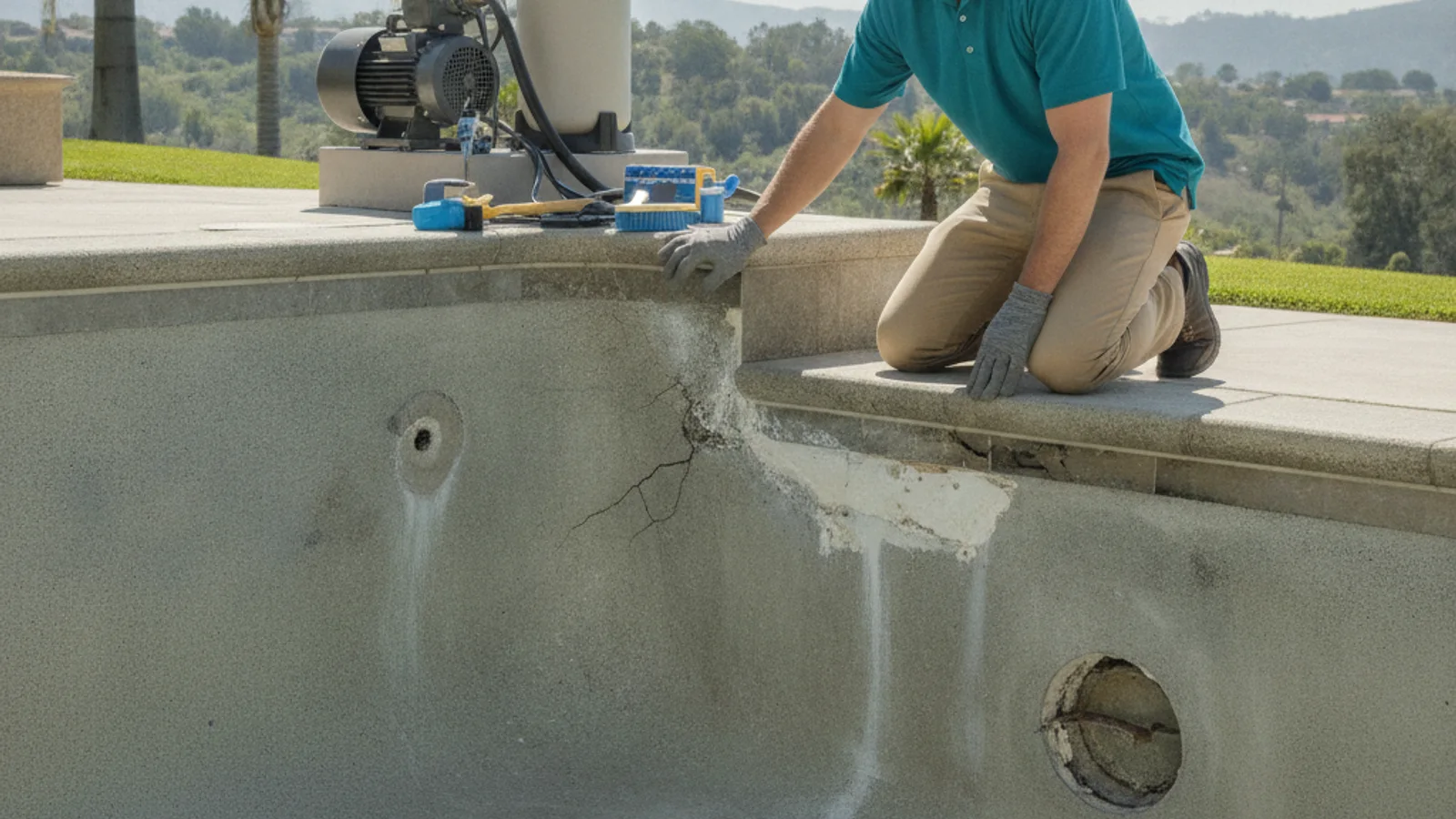
A pool needs resurfacing when the surface turns rough or gritty to the touch, shows gray or dark staining that won’t scrub out, develops visible cracks, or the water keeps chalky white flakes floating in it no matter how often it’s balanced. Any one of these signs on its own is worth a look. Two or more together usually means the plaster has reached the end of its life.
Pool plaster in San Diego takes a specific kind of beating. The county gets a long sun season, and a lot of local pools sit on well water or a public supply with harder mineral content than coastal areas typically expect. Both factors shorten how long a surface holds up compared to pools in milder, softer-water climates. Here’s what to look for before the surface fails outright.
What does rough pool plaster feel like?
Rough plaster feels like fine sandpaper or a cheese grater against bare skin, especially on the pool floor and steps. That texture comes from etching, where acidic or aggressive water chemistry has eaten into the plaster’s surface layer over years of exposure. It’s usually the first sign homeowners notice, often before they see any visual staining. Kids and swimmers with sensitive skin tend to flag it before anyone checks the water chemistry logs. Once plaster gets to this stage, patching a section doesn’t solve it, since the etching is happening across the whole surface at a similar rate.
Why does my pool have dark or gray stains that won’t come off?
Dark or gray staining that survives a scrub and a shock treatment usually means the stain has worked into the plaster itself, not just sitting on top of it. Surface stains from leaves, metal fixtures, or algae blooms respond to a good acid wash. Stains that persist after an acid wash are a sign the plaster has become porous enough to absorb minerals and organic material permanently. Pools with older copper or iron plumbing are especially prone to this, since metal leaching into the water darkens plaster from the inside out over a few seasons.
What causes cracks in a pool’s surface?
Cracks form when the plaster shell shifts slightly due to ground movement, freeze-thaw stress, or the shell simply aging past its structural life. Hairline cracks that spiderweb across a small area are often cosmetic and tied to shrinkage during the original cure. Wider cracks, or ones that run in a straight line across a large section, can signal movement in the underlying gunite or shotcrete shell. A licensed pool repair pro should evaluate any crack wider than a hairline before assuming it’s cosmetic, since structural cracks can turn into leaks.
Why does my pool water always look cloudy or chalky?
Chalky or cloudy water that won’t clear even with balanced chemistry is often caused by calcium leaching out of aging plaster into the water. As plaster degrades, it releases fine calcium particles that cloud the water and settle as a rough film on the walls and floor. Homeowners often chase this problem with filter cleanings and extra chemicals for months before realizing the plaster itself is the source. A water test that shows high calcium hardness alongside a rough, degraded surface points straight at resurfacing rather than a filtration fix.
Is exposed rebar or gunite a sign my pool needs resurfacing right away?
Exposed rebar or bare gunite showing through the plaster means the surface has failed completely and repair is urgent, not optional. Once metal rebar is exposed to pool water, it corrodes, and rust stains can bleed into the surrounding plaster. Continuing to use a pool in this condition risks the rebar weakening further and creating a real structural problem in the shell. Refresh Pool Pros matches homeowners with licensed independent specialists. Ask them to inspect exposed rebar before anyone treats it as a later cosmetic job.
How much does pool resurfacing cost in San Diego?
HomeGuide’s general U.S. planning estimate for plaster resurfacing is $6 to $8 per square foot, or about $6,000 to $8,000 for 1,000 square feet of surface; pebble is $7 to $15 per square foot, or about $7,000 to $15,000 for 1,000 square feet. Those figures are resurfacing only and do not include refill. They are planning estimates, and the actual quote from the company you are matched with may fall outside them. Price still depends on pool size, the finish selected, and how much prep the shell needs once the old surface is stripped. Ask whether crack repair, tile, or plumbing work is in the scope. Refresh Pool Pros connects homeowners with licensed independent pros. See HomeGuide’s pool resurfacing cost guide.
How soon does a San Diego pool need resurfacing?
How soon a San Diego pool needs resurfacing depends on finish type, water chemistry and balance history, hard water and scale, sun and heat exposure, and maintenance history. Pools that sit uncovered and unshaded through summer, or that run on harder well water, tend to need attention sooner. Consistent chemical balancing and a pool cover during peak sun months slow plaster wear. Inspect the surface for etching, scale, and roughness, and ask the licensed contractor for written warranty terms. Tracking the pool’s last resurfacing date is worth doing, since most homeowners lose count after a few years of ownership.
Ignoring these signs doesn’t make them go away. Rough plaster keeps etching, stains keep setting deeper, and a hairline crack left alone tends to widen with every freeze-thaw cycle and every pool season. A delayed resurfacing job can turn into a larger shell repair if water finds its way behind the plaster through a crack that went unaddressed. Catching these signs early is the difference between a planned renovation and an emergency one.
If a pool is also losing water faster than evaporation explains, describe that pattern and request pool leak detection before you commit to a new finish. Homeowners weighing a full renovation can request a salt water conversion quote separately from the resurfacing quote, and ask whether that conversion belongs in the same drained visit because resurfacing already requires draining and cleaning the pool to prep the surface for the new finish. Record the pump and heater model on the pad and discuss a pool equipment repair or replacement assessment. For wear beyond the plaster, note plumbing, tile, and coping damage you can see and request a written pool repair scope that lists those items.
Frequently asked questions
How do I know if my pool needs resurfacing or just an acid wash?
An acid wash only removes surface stains and a thin layer of plaster, so it works on light discoloration with no texture problems. If the surface feels rough, gritty, or pitted under bare feet, or if you can see gray patches through the finish, the plaster itself has broken down and an acid wash won’t fix it. A resurfacing specialist can tell the difference after they see the shell.
How long does pool resurfacing take in San Diego?
Ask the matched independent pro how they will split drain, surface work, and chemistry start-up, and who owns each phase. This page does not publish a standard job length. Plaster, quartz, and pebble finishes have different cure requirements, so the written scope should name the product and the refill rules that go with it.
What’s the average lifespan of pool plaster before it needs replacing?
How long a plaster finish lasts depends on water chemistry and balance history, hard water and scale, and how consistently the pool was balanced. Pools on well water or with a history of low pH wear faster, since acidic water etches plaster sooner. Pebble and quartz finishes are harder than plain plaster, which is why more San Diego homeowners are switching during a resurfacing project instead of replacing plaster with plaster. Inspect the surface for etching and roughness, and ask the licensed contractor for written warranty terms.
Can I resurface my pool myself to save money?
Plaster and pebble application isn’t a do-it-yourself project. It requires draining the pool, prepping the shell, and applying the finish in a single continuous pour so it cures evenly, and a botched pour can show up as streaking or premature cracking. The prep work also often uncovers structural issues like rebar corrosion that need a licensed pro to evaluate before any new surface goes on.
Does pool resurfacing fix leaks too?
Resurfacing alone doesn’t fix a structural leak, but it exposes hairline cracks in the shell that were hidden under the old plaster, so a resurfacing job is often when a leak gets caught. A pro will pressure-test the shell and patch structural cracks before the new finish goes on, since sealing over an active leak just traps the problem under fresh plaster.
Not sure which of these signs applies to your pool? Refresh Pool Pros connects San Diego homeowners with licensed pool resurfacing specialists who can inspect the shell and give a straight answer. Homeowners in the San Diego area can call (858) 400-4598 for a resurfacing or repair quote.
Need professional help in San Diego County?
Refresh Pool Pros connects you with a licensed specialist for any service in this post.