If your pool’s water line keeps dropping and you can’t explain why, the first question is whether you’re actually looking at a leak or just normal San Diego evaporation. The two look almost identical day to day, but they call for completely different responses, and guessing wrong wastes both time and water.
Refresh Pool Pros connects San Diego homeowners with vetted pool repair and leak detection specialists who separate the two quickly. This guide walks through how much water loss is normal here, the free test that tells you which one you’re dealing with, and the signs that mean it’s time to call for help.
Why is my pool losing water
Every pool loses some water to evaporation, and San Diego’s climate pushes that number higher than most homeowners expect. Low humidity, consistent sun, and dry Santa Ana wind events pull moisture off the surface faster than in muggier parts of the country. A pool that’s genuinely leaking, though, loses water at a rate that outpaces evaporation regardless of the weather, and the loss tends to hold steady or speed up rather than track with heat and wind. Sorting out which one you’re facing starts with knowing what normal actually looks like.
How much evaporation is normal in San Diego
A well-maintained pool typically loses about a quarter inch of water a day to evaporation under average conditions. That figure rises during Santa Ana wind events, when hot, dry air moves through the county and strips moisture off any exposed surface. Heat waves push it higher too, and a heated pool loses more than an unheated one because the warmer surface water evaporates faster. Inland areas like El Cajon and Santee often see slightly higher evaporation than coastal yards in La Jolla, where the marine layer keeps humidity a bit higher on many mornings. None of this is a defect. It’s simply what dry Southern California air does to an open body of water.
The 24-hour bucket test
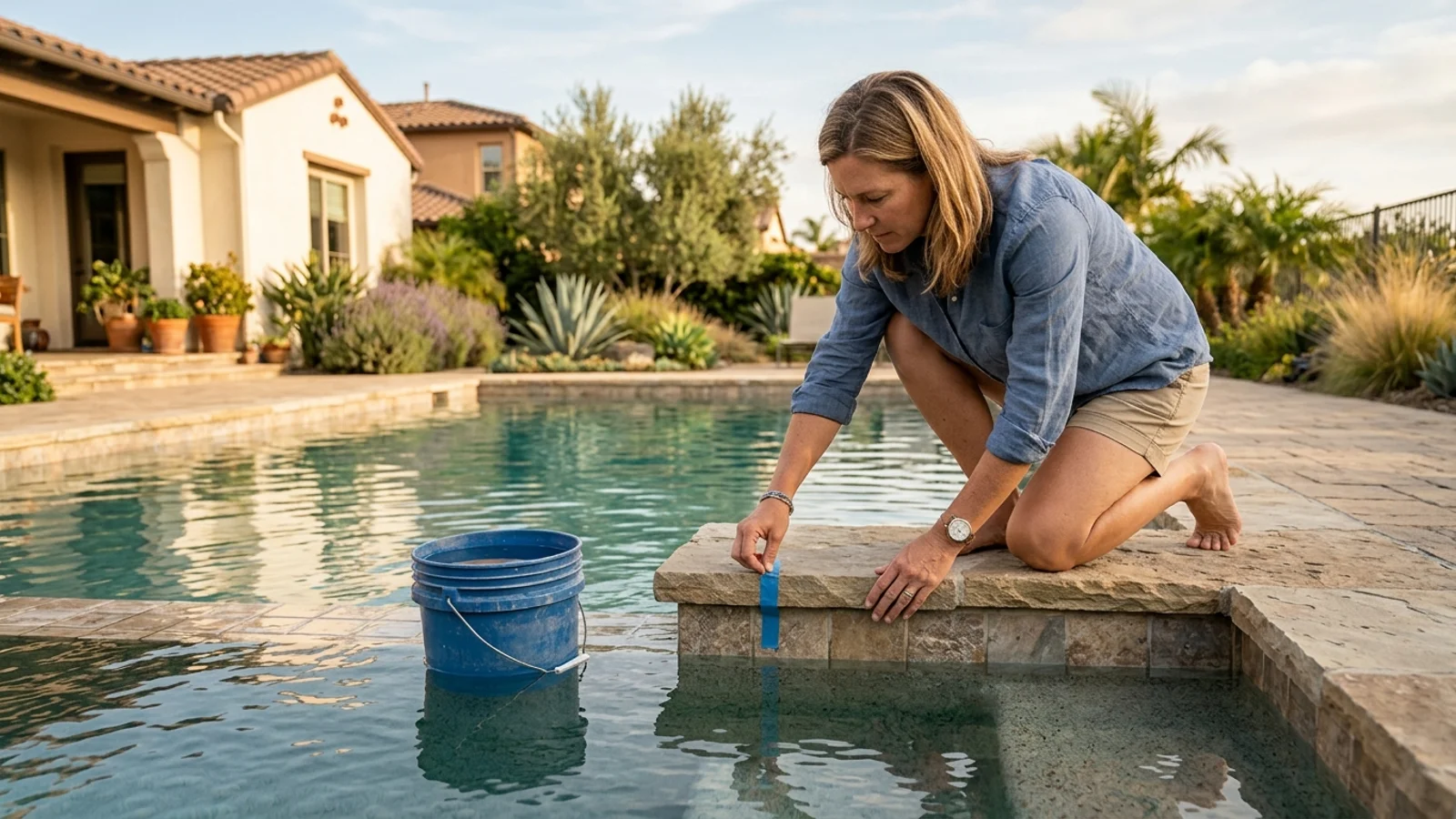
The bucket test is the fastest way to find out whether you actually have a leak, and it costs nothing. Place a bucket on one of the pool steps so it sits partly in the water, then fill it so the water level inside the bucket matches the pool’s level outside it. Mark both water lines with a piece of tape or a grease pencil. Let the pool run through a normal 24-hour cycle, filtration and all, then check both marks again. The bucket only loses water to evaporation, so if the pool has dropped noticeably more than the bucket, the difference is your leak.
Run this test on a calm day if you can, since strong wind skews evaporation on both the bucket and the pool. If you want a cleaner read, repeat it twice over two days and average the results before deciding whether the gap is real.
Is it a plumbing leak or a shell leak
Once the bucket test confirms a leak, the next question is where it’s coming from, and the pump gives you a clue for free. Run the test again, this time with the pump switched off for the full 24 hours. If the water loss slows down or nearly stops with the pump off, the leak is most likely on the pressure or suction side of the plumbing, since that’s only under stress when the system is circulating. If the pool keeps losing water at roughly the same rate, or loses more, with the pump off, the leak is more likely in the shell itself, a skimmer, a light niche, or a fitting that stays submerged whether the pump runs or not. This isn’t a full diagnosis, but it tells a leak detection specialist where to start listening before they ever set foot in your yard.
Other signs you have a real leak
Water loss is the headline symptom, but a handful of other clues usually show up alongside it. Soggy, spongy, or unusually green patches of lawn near the equipment pad or the shell often mean water is escaping underground and feeding the soil nearby. Cracks in the deck or coping, especially ones that widen over a few weeks, can point to shifting caused by water undermining the base. Air sputtering out of the return jets is a classic sign of a suction-side leak pulling in air along with water. A pump that keeps losing prime and needs re-priming more than it used to fits the same pattern. And a water bill that jumps for no obvious reason, like refilling a spa or hosting a pool party, is often the first thing homeowners notice before they connect it to the pool.
Clay soil across parts of Chula Vista, El Cajon, and inland San Diego County shifts noticeably between the wet winter months and the dry summer stretch, and that movement stresses rigid plumbing joints and shell connections over time. Coastal yards near the water deal with a different pressure: salt air corrodes metal fittings and unions faster than inland air does, which is a common source of slow leaks at the equipment pad even on newer pools.
When to call a leak detection specialist
Once the bucket test rules out evaporation, the smartest move is calling a specialist rather than guessing further on your own. A home test can tell you that you’re losing water and roughly where to look, but it can’t pinpoint the exact spot inside a buried line or under the plaster. That takes pressure testing, dye testing, and electronic listening equipment most homeowners don’t own and shouldn’t need to. The longer a real leak runs, the more it erodes the soil supporting your deck and shell, which is how a $500 plumbing fix can quietly turn into thousands of dollars of structural repair.
Refresh Pool Pros connects San Diego homeowners with vetted pool leak detection specialists who pinpoint the exact source before anyone quotes a repair, and pool repair pros who fix what they find. If the leak turns out to be at the pad rather than in the buried lines, our guide on standing water at the equipment pad walks through what to check there. For a deeper look at how the diagnostic process itself works, read how pool leak detection works, and see what leak detection costs in San Diego before you book a visit. Homeowners across San Diego, El Cajon, and Chula Vista can get matched with a local specialist who already knows how the soil and salt air in their area tend to cause leaks.
Frequently asked questions
Why is my pool losing water?
Some water loss is always normal, since heat and wind pull moisture off the surface every day. San Diego’s dry air and Santa Ana wind events push that loss higher than humid climates see. If your pool is dropping more than a quarter inch a day, or the level keeps falling even on cool, still days, you’re likely dealing with a leak in the plumbing, shell, or equipment pad rather than plain evaporation.
How much water loss is normal for a San Diego pool?
A healthy pool loses roughly a quarter inch of water a day to evaporation under normal conditions. That number climbs during dry Santa Ana wind events, heat waves, or if you run a heater and keep the water warmer than the air. Anything consistently above half an inch a day, especially with no wind or heat spike to explain it, points toward a leak rather than evaporation.
How does the bucket test work?
Set a bucket on a pool step so it’s partly submerged, fill it with pool water to match the pool’s level, and mark both water lines with tape. Run the pool normally for 24 hours, then compare how far each level dropped. If the pool has fallen noticeably more than the bucket, you’re losing water beyond what evaporation explains, and it’s time to call a leak detection specialist.
How can I tell if it’s a plumbing leak or a shell leak?
Run the bucket test twice, once with the pump running its normal cycle and once with the pump switched off for 24 hours. If water loss speeds up while the pump runs, the leak is likely on the pressure or suction side of the plumbing. If the pool keeps losing water at the same rate with the pump off, or loses more, the leak is more likely in the shell, skimmer, or a fitting below the waterline.
What are other signs of a pool leak besides losing water?
Watch for soggy or unusually green spots in the lawn near the equipment pad or shell, cracks appearing in the deck or coping, air sputtering out of the return jets, and a pump that keeps losing prime. A water bill that jumps without an obvious reason, like guests or a filled-up spa, is also a common first clue San Diego homeowners notice before they spot anything visual.
When should I call a professional for a leak?
Call a pro as soon as the bucket test confirms loss beyond normal evaporation, or sooner if you see cracks, soggy soil, or a sudden jump in your water bill. Waiting lets a small leak erode the soil under the deck and shell, which turns an affordable plumbing fix into a structural repair. Professional leak detection pinpoints the source before anyone quotes a repair.
If the bucket test says you’re losing more than evaporation explains, call Refresh Pool Pros at (858) 400-4598 to get matched with a vetted San Diego leak detection specialist who finds the source before quoting a fix.
Frequently asked questions
Why is my pool losing water?
Some water loss is always normal, since heat and wind pull moisture off the surface every day. San Diego's dry air and Santa Ana wind events push that loss higher than humid climates see. If your pool is dropping more than a quarter inch a day, or the level keeps falling even on cool, still days, you're likely dealing with a leak in the plumbing, shell, or equipment pad rather than plain evaporation.
How much water loss is normal for a San Diego pool?
A healthy pool loses roughly a quarter inch of water a day to evaporation under normal conditions. That number climbs during dry Santa Ana wind events, heat waves, or if you run a heater and keep the water warmer than the air. Anything consistently above half an inch a day, especially with no wind or heat spike to explain it, points toward a leak rather than evaporation.
How does the bucket test work?
Set a bucket on a pool step so it's partly submerged, fill it with pool water to match the pool's level, and mark both water lines with tape. Run the pool normally for 24 hours, then compare how far each level dropped. If the pool has fallen noticeably more than the bucket, you're losing water beyond what evaporation explains, and it's time to call a leak detection specialist.
How can I tell if it's a plumbing leak or a shell leak?
Run the bucket test twice, once with the pump running its normal cycle and once with the pump switched off for 24 hours. If water loss speeds up while the pump runs, the leak is likely on the pressure or suction side of the plumbing. If the pool keeps losing water at the same rate with the pump off, or loses more, the leak is more likely in the shell, skimmer, or a fitting below the waterline.
What are other signs of a pool leak besides losing water?
Watch for soggy or unusually green spots in the lawn near the equipment pad or shell, cracks appearing in the deck or coping, air sputtering out of the return jets, and a pump that keeps losing prime. A water bill that jumps without an obvious reason, like guests or a filled-up spa, is also a common first clue San Diego homeowners notice before they spot anything visual.
When should I call a professional for a leak?
Call a pro as soon as the bucket test confirms loss beyond normal evaporation, or sooner if you see cracks, soggy soil, or a sudden jump in your water bill. Waiting lets a small leak erode the soil under the deck and shell, which turns an affordable plumbing fix into a structural repair. Professional leak detection pinpoints the source before anyone quotes a repair.
Need professional help in San Diego County?
Refresh Pool Pros provides every service in this post. Call for a free quote.