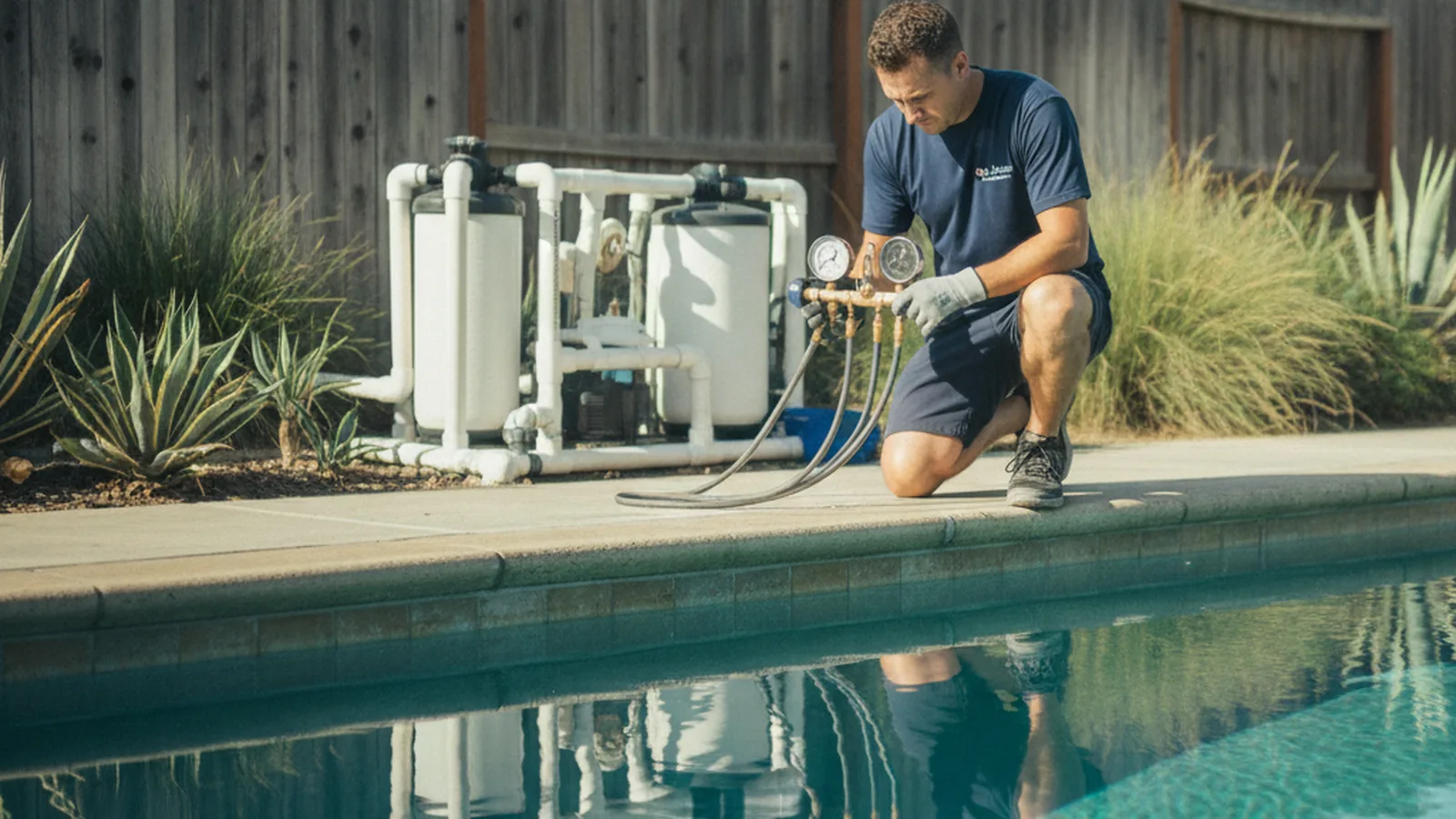
Professional pool leak detection in San Diego costs $150 to $600, with most homeowners paying $250 to $450 for a full diagnosis. The price covers finding the leak, not repairing it, and what you pay depends on how many places a specialist has to test: a single suspected plumbing line sits at the low end, while a full workup across the plumbing, shell, skimmer, and equipment pad lands toward the top.
Refresh Pool Pros connects San Diego homeowners with vetted pool repair specialists who pinpoint a leak before anyone quotes a repair. This guide breaks down what a detection service actually includes, what drives the price up or down across the county, and how to tell whether it’s worth calling a pro in the first place.
How much does pool leak detection cost in San Diego?
A basic pressure test on one suspected line runs $150 to $250, while a full detection that covers the plumbing, pool shell, skimmer, and equipment pad typically runs $350 to $600. Most single-family pools land in the $250 to $450 range for a complete diagnosis. The spread comes down to how much has to be tested: if the water loss clearly points to the equipment pad, a specialist can isolate it quickly, but a leak that could be in any of several buried lines takes longer to trace and costs more to confirm.
What’s included in a professional leak detection service?
A full service combines pressure testing, dye testing, and electronic or acoustic listening to isolate the leak room by room. Pressure testing seals off individual plumbing lines and pushes air or water through them to find which one won’t hold, dye testing releases a colored stream near suspected cracks to watch where it gets pulled in, and electronic equipment listens for the sound of water escaping under the deck or shell. On pools where the leak is in the structure itself, a diver may inspect the plaster, fittings, and main drain underwater. The point of layering these methods is to hand you an exact location, so the repair that follows is targeted instead of exploratory.
Why do leak detection prices vary across San Diego?
Price varies with plumbing age, soil type, and how accessible the equipment pad and pool lines are, not just the size of the pool. A 1970s pool in La Mesa or El Cajon often has original plumbing with several possible leak points, which takes longer to test than a newer pool in Carmel Valley with modern, well-documented lines. Coastal properties in La Jolla, Coronado, and Pacific Beach see more corrosion at fittings and unions from salt air, adding suspect points a specialist has to rule out. Yards where the plumbing runs under a hardscaped deck or a slope also cost more, since reaching and confirming the leak takes more work than an open equipment pad.
Is the leak repair included, or is that a separate cost?
Detection and repair are billed separately, because the diagnosis has to come first. Once the leak is located, the repair is quoted against the actual source: a buried plumbing line repair commonly runs $500 to $1,500, resealing a skimmer or fitting runs $350 to $900, and a structural crack in the shell can reach $1,000 to $4,000 or more depending on access and how the finish has to be patched. Many specialists in the pool leak detection network credit the detection fee toward the repair if you hire them for both, so it’s worth asking how that’s handled before the visit.
What does a leak actually cost you if you ignore it?
A pool losing an inch of water a day can waste more than a thousand gallons a week, which shows up first on your water bill and, on a heated pool, on your SDG&E bill as you keep reheating fresh cold water. The chemistry costs add up too, since every refill dilutes the chlorine and balancing chemicals you already paid for. The bigger risk is structural: water escaping a plumbing line or shell crack erodes the soil supporting the deck and pool, which can undermine footings and turn a $500 plumbing fix into a repair that involves the shell itself. Paying to find a leak early is almost always cheaper than paying for what a hidden one damages over a season.
How do I know if my pool needs leak detection?
The telltale sign is losing more than a quarter inch of water a day that evaporation and splash-out don’t explain. Cracks appearing in the deck, soggy or sinking spots in the surrounding soil, air sputtering from the return jets, and a pump or heater that keeps losing prime all point to water escaping somewhere it shouldn’t. A pool that suddenly needs the autofill running constantly, or one where the water settles and stops at a particular tile line, is telling you where to start looking. If you’re seeing any of these, a detection service confirms whether you have a leak and exactly where it is before the guessing costs you money.
Can I find a pool leak myself before paying for detection?
You can narrow it down for free with a bucket test. Fill a bucket with pool water, set it on a pool step so the inside and outside water levels match, mark both levels, and check after 24 hours: if the pool has dropped noticeably more than the bucket, you’re losing water beyond normal evaporation. Running the test with the pump off and then on helps separate a pressure-side plumbing leak from a leak in the shell or skimmer. What a home test can’t do is pinpoint the exact spot inside a buried line or under the plaster, which is where a specialist’s electronic listening and pressure testing earn their cost. A pool pump that’s visibly leaking at the equipment pad is one you can often spot yourself, but water disappearing with no obvious source is the case for a pro.
Refresh Pool Pros connects San Diego homeowners with vetted pool repair specialists who find the leak first and quote the fix honestly against what they actually find. Because leaks often surface alongside other issues, the network also includes pros who handle cracked plaster repair, pool resurfacing when a shell has reached the end of its life, and pool equipment work at the pad. Homeowners in San Diego, El Cajon, Chula Vista, and across the county can get matched with a specialist who knows the local plumbing eras and soil conditions that make leaks show up. For a deeper look at the process itself, our guide on how pool leak detection works walks through each method step by step. If you’re weighing a home with a pool, a full pool inspection checks for leaks alongside the equipment and plaster before you buy.
Frequently asked questions
How much does pool leak detection cost in San Diego?
Professional pool leak detection in San Diego runs $150 to $600, with most homeowners paying $250 to $450 for a full diagnosis. A basic pressure test on a single suspected line sits at the low end, while a full workup that covers the plumbing, shell, skimmer, and equipment pad lands higher. The price is for finding the leak, not fixing it, and a good detection service tells you exactly where the water is going before any repair quote is written.
Is the repair included in the leak detection price?
No. Detection and repair are two separate line items. Detection locates the leak, and the repair is quoted once the source is known. A plumbing line repair often runs $500 to $1,500, a skimmer or fitting reseal $350 to $900, and a structural crack in the shell can reach $1,000 to $4,000 or more depending on access and finish. Some specialists credit the detection fee toward the repair if you hire them for both.
How do I know if my pool is actually leaking?
The clearest sign is losing more than a quarter inch of water a day that refill and evaporation don’t explain. Cracks in the deck, soggy or sinking spots around the pool, air bubbles from the return jets, and a heater or pump that loses prime all point to a leak. The bucket test is a free first check: float a bucket of pool water on a step and compare how much the pool drops against the bucket over 24 hours.
Why is pool leak detection worth paying for?
A pool losing an inch a day can waste over a thousand gallons a week, which shows up on your San Diego water bill and, for a heated pool, on your SDG&E bill too. Left alone, a slow leak erodes soil under the deck and shell, undermines footings, and turns a $500 fix into a structural repair. Paying $250 to $450 to find the leak early is almost always cheaper than the damage a hidden one causes over a season.
Can I find a pool leak myself before calling a pro?
You can narrow it down. The bucket test confirms whether you’re actually leaking versus just seeing normal evaporation. Turning the pump off and watching whether the loss speeds up or slows down helps separate a plumbing leak from a shell leak. What a DIY check can’t do is pinpoint the exact spot inside a buried line or under the plaster, which is where electronic listening and pressure testing earn their cost.
Does San Diego’s climate make pool leaks more likely?
Yes. Coastal salt air in La Jolla, Coronado, and Pacific Beach corrodes fittings, unions, and equipment connections faster than inland yards see. Expansive clay soils across parts of El Cajon, Santee, and Chula Vista shift with wet and dry seasons, stressing rigid plumbing and shell joints. Older pools built before the 1990s also tend to have plumbing that’s reached the age where connections start to weep.
If your pool is losing water and you can’t find the source, call Refresh Pool Pros at (858) 400-4598 to get matched with a vetted San Diego leak detection specialist who pinpoints the leak before quoting the repair.
Frequently asked questions
How much does pool leak detection cost in San Diego?
Professional pool leak detection in San Diego runs $150 to $600, with most homeowners paying $250 to $450 for a full diagnosis. A basic pressure test on a single suspected line sits at the low end, while a full workup that covers the plumbing, shell, skimmer, and equipment pad lands higher. The price is for finding the leak, not fixing it, and a good detection service tells you exactly where the water is going before any repair quote is written.
Is the repair included in the leak detection price?
No. Detection and repair are two separate line items. Detection locates the leak, and the repair is quoted once the source is known. A plumbing line repair often runs $500 to $1,500, a skimmer or fitting reseal $350 to $900, and a structural crack in the shell can reach $1,000 to $4,000 or more depending on access and finish. Some specialists credit the detection fee toward the repair if you hire them for both.
How do I know if my pool is actually leaking?
The clearest sign is losing more than a quarter inch of water a day that refill and evaporation don't explain. Cracks in the deck, soggy or sinking spots around the pool, air bubbles from the return jets, and a heater or pump that loses prime all point to a leak. The bucket test is a free first check: float a bucket of pool water on a step and compare how much the pool drops against the bucket over 24 hours.
Why is pool leak detection worth paying for?
A pool losing an inch a day can waste over a thousand gallons a week, which shows up on your San Diego water bill and, for a heated pool, on your SDG&E bill too. Left alone, a slow leak erodes soil under the deck and shell, undermines footings, and turns a $500 fix into a structural repair. Paying $250 to $450 to find the leak early is almost always cheaper than the damage a hidden one causes over a season.
Can I find a pool leak myself before calling a pro?
You can narrow it down. The bucket test confirms whether you're actually leaking versus just seeing normal evaporation. Turning the pump off and watching whether the loss speeds up or slows down helps separate a plumbing leak from a shell leak. What a DIY check can't do is pinpoint the exact spot inside a buried line or under the plaster, which is where electronic listening and pressure testing earn their cost.
Does San Diego's climate make pool leaks more likely?
Yes. Coastal salt air in La Jolla, Coronado, and Pacific Beach corrodes fittings, unions, and equipment connections faster than inland yards see. Expansive clay soils across parts of El Cajon, Santee, and Chula Vista shift with wet and dry seasons, stressing rigid plumbing and shell joints. Older pools built before the 1990s also tend to have plumbing that's reached the age where connections start to weep.
Need professional help in San Diego County?
Refresh Pool Pros provides every service in this post. Call for a free quote.