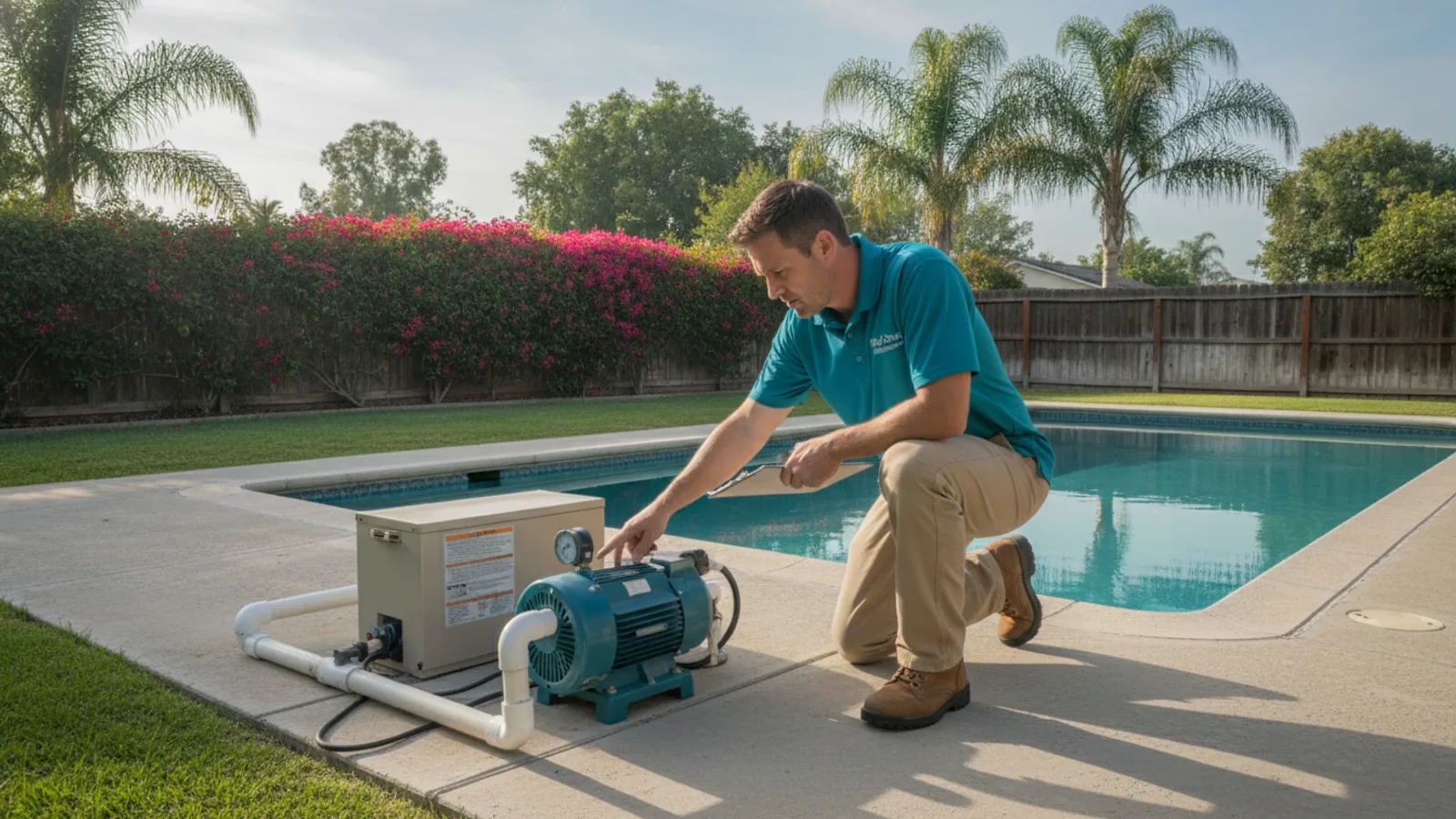
A basic pool inspection in San Diego costs $150 to $250, and a full inspection that runs the equipment and tests for leaks costs $250 to $450. The gap comes down to depth. A quick visual look at the shell and a note that the pump turns on sits at the low end. A specialist who powers up the equipment, checks the heater and filter, reads the plaster, and watches for leaks sits at the top. On a pool you’re about to buy, the deeper one is worth every dollar.
Refresh Pool Pros connects San Diego homeowners and buyers with vetted pool specialists who inspect the whole system, not just the surface. This guide breaks down what an inspection costs, what it covers, and when paying for one saves you far more than it costs.
How much does a pool inspection cost in San Diego?
A pool inspection in San Diego runs $150 to $450, depending on how deep it goes. Here’s how the pricing breaks down:
- Basic visual inspection, $150 to $250: the inspector checks the shell, confirms the pump runs, and gives the plaster and equipment a visual once-over. Good for a quick health check on a pool you already own.
- Full inspection with equipment run, $250 to $400: the crew powers up the pump, heater, filter, and automation, tests each under load, reads the plaster and coping, and looks for leaks. This is the one to get before buying.
- Inspection plus leak testing, $350 to $450 and up: adds a pressure test on the plumbing or a dye and dive check when the pool is losing water. Worth it when a leak is suspected.
A general home inspector who adds the pool to a house inspection usually charges less, often $75 to $150, but looks at far less. What moves the price is depth, pool size, whether there’s a spa or automation, and whether leak testing is part of the job.
Do you need a pool inspection before buying a house in San Diego?
If the home has a pool, yes, get a separate pool inspection before you close. A standard home inspection gives the pool a quick visual look and rarely runs the equipment or checks for leaks. That leaves the most expensive parts of the pool unexamined right when you’re deciding what the property is worth.
San Diego has a lot of older pools, and a plaster finish only lasts 10 to 15 years before it needs resurfacing. A pump or heater from the last decade may be one season from failing. A dedicated inspection tells you which of those bills is coming and roughly when, so you can negotiate the price or plan the repairs instead of finding out after you move in. Buyers across San Diego and Chula Vista lean on the inspection to turn an unknown pool into a known one before the money changes hands.
What does a pool inspection actually cover?
A full inspection covers five systems, and a good report walks through each one. Here’s what a specialist looks at:
- Shell and plaster: cracks, staining, rough or pitted texture, and whether the finish is near the end of its life. This is where the signs a pool needs resurfacing show up first.
- Equipment pad: the age and condition of the pump, heater, and filter, run under load to confirm they work, plus any automation. Our pool equipment upgrade guide covers how long each part usually lasts.
- Plumbing and leaks: signs of water loss, wet spots at the pad, and whether a leak test is warranted. A slow leak found early is a small fix through pool leak detection instead of a big one later.
- Electrical bonding and safety: that the pump and metal are bonded and the electrical is sound, since a mistake here is a safety issue, not just a repair.
- Safety barriers: whether the fence, gate, or cover meets California’s residential pool safety rules, which matters for both liability and resale.
You should get a written report with photos, a plain summary of what’s working, what’s worn, and what needs attention soon.
What San Diego problems does an inspection catch first?
Hard water and sun drive most of what an inspection turns up here. The City of San Diego supply runs 10 to 14 grains per gallon, and Helix Water District customers in El Cajon and La Mesa see 16 to 20 grains, some of the hardest water in the state. That calcium scales the tile and etches the plaster, so an inspector reading the finish in Escondido or El Cajon is often calling how many seasons the surface has left. Inland heat speeds evaporation and pushes equipment harder, so pumps and heaters wear faster than the box promises.
Near the coast in Carlsbad, salt systems add their own wear, and a salt cell has a limited life an inspection can flag before it quits. The other thing a good inspector catches is a slow leak hiding behind a stable water level, since a pool topped off by an autofill can lose water for months without the owner noticing. Catching that early is the difference between a pool repair call and a bigger structural one.
What’s the difference between a home inspection and a pool inspection?
A home inspection covers the house and gives the pool a brief visual pass, often just a note that a pool is present and appears to run. A pool inspection is a specialist looking only at the pool, running the equipment, testing for leaks, and reading the shell. Home inspectors aren’t pool techs, and most say so directly in their reports.
The practical result is that a home inspection can miss a heater near failure, plaster due for resurfacing, or a leak that a specialist would catch in an hour. On any pool that would cost more than a few thousand dollars to repair, the specialist inspection is the one that answers the questions that decide the sale.
Is a pool inspection worth the cost?
For a pool you’re buying or one acting up, an inspection is one of the cheapest checks you can make. A $300 inspection can flag a heater near the end of its life, a plaster finish due for resurfacing, or a slow leak, and any one of those runs into the thousands to fix. Knowing before you buy lets you negotiate or walk. Knowing before you spend keeps you from paying to patch a pump when the plumbing is the real problem.
Refresh Pool Pros connects homeowners across San Diego with vetted specialists who inspect the whole system and tell you straight what’s worth fixing and what can wait. Because an inspection often turns up more than one issue, the same network covers pool equipment, leak work, and full resurfacing when the report calls for it. If the inspection flags an aging heater, our repair versus replace a pool heater guide helps you weigh the next step, and the pool resurfacing cost breakdown shows what the plaster job runs.
Frequently asked questions
How much does a pool inspection cost in San Diego?
A basic visual pool inspection in San Diego runs $150 to $250, and a full inspection that runs the equipment and tests for leaks runs $250 to $450. Price depends on how thorough the inspection is, whether the pool has automation or a spa, and whether leak testing is added. A general home inspector who tacks the pool onto a house inspection usually charges less but looks at far less. For a pool you’re about to buy or one showing problems, the deeper inspection is the one that pays for itself.
Do I need a pool inspection before buying a house in San Diego?
Yes, if the home has a pool, get a separate pool inspection before closing. A standard home inspection gives the pool a quick visual look and rarely runs the equipment or checks for leaks. A dedicated pool inspection tells you the age and condition of the pump, heater, and filter, whether the plaster is near resurfacing, and whether the shell holds water. On an older San Diego pool, that’s the difference between a known purchase and a surprise repair bill after you move in.
What does a pool inspection cover?
A full pool inspection covers the shell and plaster, the equipment pad, the plumbing, the electrical bonding, and the safety barriers. The inspector checks the pump, heater, filter, and any automation for age and function, looks for cracks and staining in the finish, watches for signs of a leak, and confirms the fence or barrier meets California’s pool safety rules. You get a written report with what’s working, what’s worn, and what needs attention soon.
How long does a pool inspection take?
A basic visual inspection takes 30 to 45 minutes, and a full inspection with an equipment run and leak check takes one to two hours. The inspector needs the pool full and the equipment powered so everything can be tested under load. If leak testing or a pressure test on the plumbing is added, plan for the longer end. A rushed inspection that skips the equipment run isn’t worth much on a pool you’re buying.
Is a pool inspection worth the cost?
For a pool you’re buying or one acting up, yes. A $300 inspection can flag a heater near the end of its life, plaster due for resurfacing, or a slow leak, any one of which costs thousands to fix. Knowing before you buy lets you negotiate the price or walk away. Knowing before you spend keeps you from paying to patch a pump when the real problem is the plumbing. The inspection is cheap next to the repairs it helps you plan for.
What’s the difference between a home inspection and a pool inspection?
A home inspection covers the house and gives the pool a brief visual pass, often a note that the pool is present and appears to function. A pool inspection is a specialist looking only at the pool, running the equipment, testing for leaks, and reading the plaster and shell. Home inspectors aren’t pool techs and usually say so in their report. On any pool worth more than a few thousand dollars to repair, the specialist inspection is the one that answers the questions that matter.
If you’re buying a home with a pool or wondering what shape yours is really in, call Refresh Pool Pros at (858) 400-4598 to get matched with a vetted San Diego specialist who will inspect the whole system and tell you what’s worth fixing before you spend.
Frequently asked questions
How much does a pool inspection cost in San Diego?
A basic visual pool inspection in San Diego runs $150 to $250, and a full inspection that runs the equipment and tests for leaks runs $250 to $450. Price depends on how thorough the inspection is, whether the pool has automation or a spa, and whether leak testing is added. A general home inspector who tacks the pool onto a house inspection usually charges less but looks at far less. For a pool you're about to buy or one showing problems, the deeper inspection is the one that pays for itself.
Do I need a pool inspection before buying a house in San Diego?
Yes, if the home has a pool, get a separate pool inspection before closing. A standard home inspection gives the pool a quick visual look and rarely runs the equipment or checks for leaks. A dedicated pool inspection tells you the age and condition of the pump, heater, and filter, whether the plaster is near resurfacing, and whether the shell holds water. On an older San Diego pool, that's the difference between a known purchase and a surprise repair bill after you move in.
What does a pool inspection cover?
A full pool inspection covers the shell and plaster, the equipment pad, the plumbing, the electrical bonding, and the safety barriers. The inspector checks the pump, heater, filter, and any automation for age and function, looks for cracks and staining in the finish, watches for signs of a leak, and confirms the fence or barrier meets California's pool safety rules. You get a written report with what's working, what's worn, and what needs attention soon.
How long does a pool inspection take?
A basic visual inspection takes 30 to 45 minutes, and a full inspection with an equipment run and leak check takes one to two hours. The inspector needs the pool full and the equipment powered so everything can be tested under load. If leak testing or a pressure test on the plumbing is added, plan for the longer end. A rushed inspection that skips the equipment run isn't worth much on a pool you're buying.
Is a pool inspection worth the cost?
For a pool you're buying or one acting up, yes. A $300 inspection can flag a heater near the end of its life, plaster due for resurfacing, or a slow leak, any one of which costs thousands to fix. Knowing before you buy lets you negotiate the price or walk away. Knowing before you spend keeps you from paying to patch a pump when the real problem is the plumbing. The inspection is cheap next to the repairs it helps you plan for.
What's the difference between a home inspection and a pool inspection?
A home inspection covers the house and gives the pool a brief visual pass, often a note that the pool is present and appears to function. A pool inspection is a specialist looking only at the pool, running the equipment, testing for leaks, and reading the plaster and shell. Home inspectors aren't pool techs and usually say so in their report. On any pool worth more than a few thousand dollars to repair, the specialist inspection is the one that answers the questions that matter.
Need professional help in San Diego County?
Refresh Pool Pros provides every service in this post. Call for a free quote.