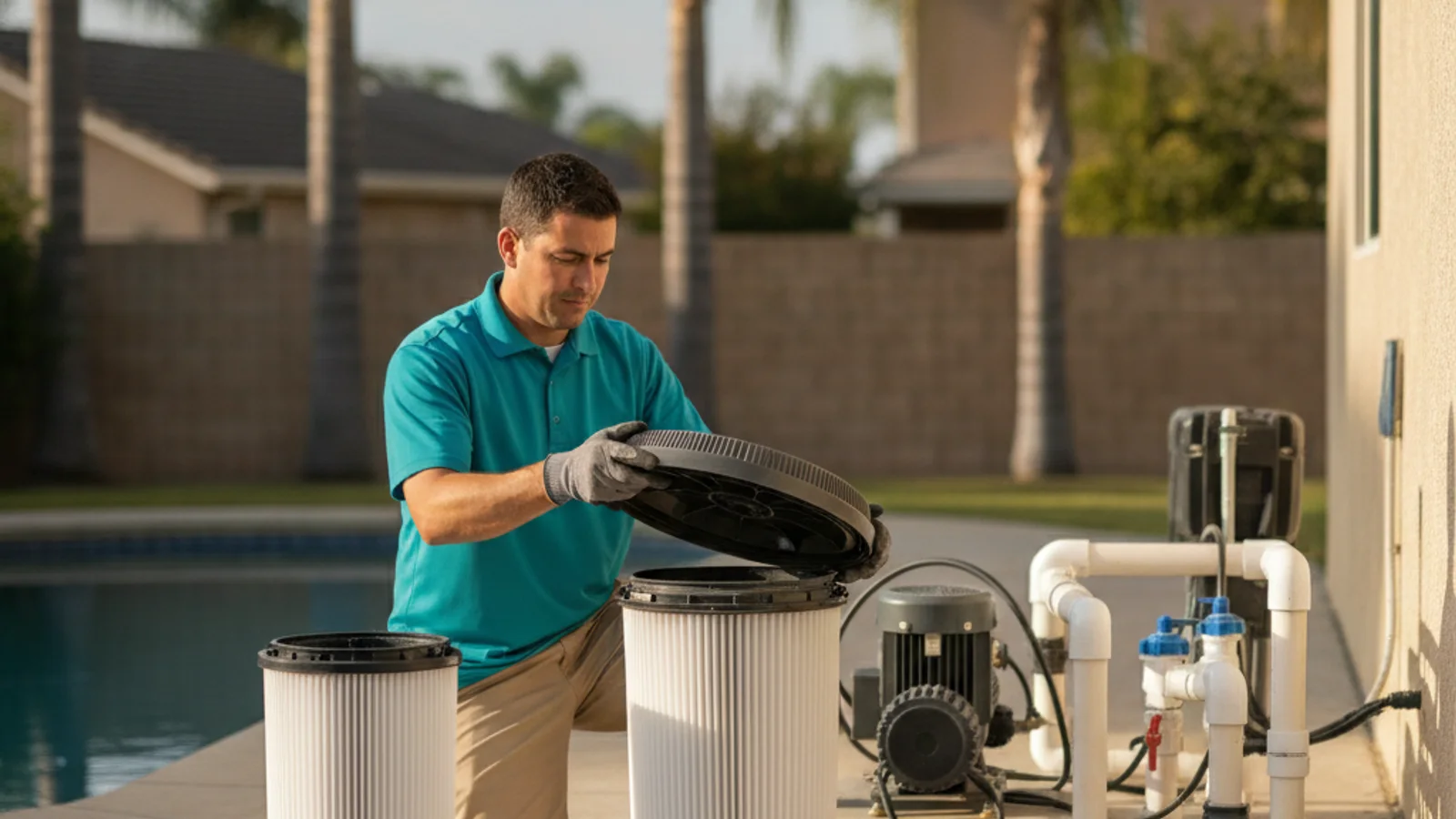
Replacing a pool filter in San Diego costs $700 to $1,800 for a new filter installed, depending on the type and size you choose. Swapping only the worn media inside a filter that is otherwise sound costs far less: a set of cartridges runs $60 to $350, DE grids run $150 to $400, and a sand change runs $250 to $500. Where your job lands comes down to filter type, pool size, and whether the tank itself has cracked, corroded, or scaled beyond saving.
Refresh Pool Pros connects San Diego homeowners with vetted pool repair specialists who can tell you which of those two jobs you actually have before anyone quotes the bigger one. This guide breaks down real price ranges by filter type, why filters wear out faster in this climate, and when it pays to fold a filter swap into a larger equipment upgrade.
How much does pool filter replacement cost in San Diego?
A new pool filter installed in San Diego runs $700 to $1,800, covering the unit, the plumbing connections, and the labor to set it. Most of that spread is the filter type and the pool size. A small cartridge filter for a spa or compact pool sits near the bottom, while a large DE filter for a big pool with heavy debris load reaches the top. Labor alone to remove an old filter and set a new one typically runs $150 to $350, and the rest is the equipment.
Most homeowners who think they need a new filter actually need new media. If the tank, lid, clamp band, and internal parts are still sound, you replace only what wears out inside. That is a much smaller number: $60 to $350 for a set of cartridges, $150 to $400 for a set of DE grids, or $250 to $500 for fresh sand. A good technician checks the housing before quoting the whole unit, because reading the filter pressure gauge usually tells them which job it is.
Cartridge, DE, or sand: which filter should you replace it with?
The three filter types differ in filtering fineness, upfront cost, and how they handle San Diego’s water rules. Here is how they compare when it is time to buy new:
- Cartridge filters, $700 to $1,500 installed. They filter down to about 10 to 15 microns, use no backwash water, and fit San Diego’s water-conscious rules well. Cartridges cost $15 to $90 each and need replacing every two to five years.
- DE filters, $900 to $1,800 installed. They filter the finest, down to 2 to 5 microns, for the clearest water. The grids need periodic replacement, and DE powder has to be added after each cleaning, so ongoing effort is higher.
- Sand filters, $600 to $1,200 installed. They cost the least upfront and are simple to run, but they filter the coarsest at 20 to 40 microns. The sand bed needs changing every five to seven years, and backwashing sends water down the drain.
For most San Diego backyard pools, a cartridge filter is the practical middle choice: fine filtering, no backwash waste, and a media cost that stays reasonable. Owners of larger pools or those who want the clearest possible water often stay with DE. Our guide on the best pool equipment brands covers which manufacturers hold up best in coastal air.
Should you replace the media or the whole filter?
Replace the media when the housing is healthy; replace the whole unit when the housing has failed. A simple way to decide:
- Media spent, tank and lid sound: new cartridges, grids, or sand, $60 to $500.
- Tank cracked, clamp won’t seal, or heavy corrosion: full filter replacement, $700 to $1,800.
- Filter was undersized for the pool from day one: replace with a properly sized unit, since an undersized filter clogs fast and strains the pump.
- Pressure stays high right after a thorough cleaning: scaled-out media, replace it before it drags down the pool pump.
Age matters too. If the filter is 12 or more years old on its original tank, new media buys time, but the housing around it is living on borrowed years. A cracked tank under pressure is a flooding risk at the equipment pad, not just a filtering problem.
Why do pool filters wear out faster in San Diego?
It comes down to run time and water chemistry rather than weather. San Diego pools rarely close for winter, so filters here run more hours per year than filters in states with a real off-season. More run hours means media logs more use before it gives out. A cartridge that might last five years in a seasonal climate often lands closer to three here.
Hard water does the rest. The City of San Diego supply runs 10 to 14 grains per gallon, and El Cajon and La Mesa homes on Helix Water District see 16 to 20 grains, some of the hardest municipal water in California. That calcium deposits on cartridge pleats and inside sand beds, and it does not fully rinse off. Scaled media loses flow permanently, so the clean baseline pressure creeps up year over year until replacement is the only fix. Coastal pools in San Diego neighborhoods face salt air on top of hard water, which corrodes clamp bands and metal filter parts faster than inland. Inland pools in Chula Vista and Escondido trade the salt air for heavier calcium load.
Does it pay to replace the filter during an equipment upgrade?
Yes, if the filter is near the end of its life, because most of the cost is labor and mobilization you only pay once. When a technician is already at the pad swapping a pump, heater, or automation panel, adding the filter to that visit avoids a separate service call. A filter sized to match a new variable-speed pump also runs more efficiently than an old undersized tank the upgrade would otherwise leave behind. If you are already planning work at the pad, our pool equipment upgrade guide and the salt cell replacement cost breakdown cover the other pieces worth doing at the same time.
Refresh Pool Pros connects homeowners across San Diego with vetted pool repair specialists who diagnose the filter before ordering parts, so you pay for a $200 media swap when that is the real fix and a full unit only when the housing is truly done. The same network handles pool equipment upgrades and leak detection when a pressure problem turns out to be more than a dirty filter.
Frequently asked questions
How much does pool filter replacement cost in San Diego?
Installing a new pool filter in San Diego runs $700 to $1,800, including the unit and labor, depending on whether you choose cartridge, DE, or sand and how large the pool is. If the housing is still sound and only the media is spent, the cost drops sharply: a set of replacement cartridges runs $60 to $350, a set of DE grids runs $150 to $400, and a sand change runs $250 to $500. The main price drivers are filter type, filter size, and whether the tank itself has cracked or corroded.
Do I need a whole new filter or just new media?
Replace only the media if the tank, lid, clamp band, and internal manifold are still in good shape. Cartridges, DE grids, and sand all wear out on a schedule while the housing around them lasts much longer, so most filter jobs are a media swap, not a full replacement. Replace the entire unit when the tank is cracked or badly scaled, when the clamp or lid no longer seals, or when the filter was undersized for the pool from the start.
Which is cheapest to own: cartridge, DE, or sand?
Sand filters have the lowest upfront cost, roughly $600 to $1,200 installed, but they filter the least finely and the sand bed still needs replacing every five to seven years. Cartridge filters cost more upfront, around $700 to $1,500 installed, use no backwash water, and suit San Diego’s water-conscious rules well. DE filters run highest, near $900 to $1,800 installed, and filter the finest, but the grids need periodic replacement and DE powder has to be added after each cleaning.
Why do pool filters wear out faster in San Diego?
Two local factors shorten filter life here: year-round pool season and hard water. Because San Diego pools rarely close for winter, filters run more hours per year than filters in colder states, so media logs more use before it gives out. On top of that, hard municipal water, 10 to 14 grains per gallon in the City of San Diego and 16 to 20 in Helix Water District areas, deposits calcium on cartridge pleats and sand beds that no cleaning fully reverses. Scaled media loses flow permanently and has to be replaced sooner.
How long does a pool filter last?
The housing usually lasts 10 to 15 years, while the media inside it wears out much sooner. Filter cartridges typically last two to five years, DE grids last several years with care, and a sand bed lasts five to seven years before the grains round off and stop trapping debris. In San Diego, heavy calcium and long run times tend to push those figures toward the shorter end unless the pool is cleaned by pressure rather than by the calendar.
Should I replace the filter during an equipment upgrade?
If the filter is near the end of its life, yes, because most of the cost is labor and mobilization that a bundled job only pays once. When a pump, heater, or automation upgrade already has a technician at the equipment pad, adding a filter swap avoids a second service call later. A filter sized to match a new variable-speed pump also runs more efficiently than an old undersized tank the upgrade would otherwise leave in place.
If your filter pressure won’t come down after a cleaning or the tank is cracked or corroded, call Refresh Pool Pros at (858) 400-4598 to get matched with a vetted San Diego specialist who will tell you whether you need a $200 media swap or a new filter before you pay for either.
Frequently asked questions
How much does pool filter replacement cost in San Diego?
Installing a new pool filter in San Diego runs $700 to $1,800, including the unit and labor, depending on whether you choose cartridge, DE, or sand and how large the pool is. If the housing is still sound and only the media is spent, the cost drops sharply: a set of replacement cartridges runs $60 to $350, a set of DE grids runs $150 to $400, and a sand change runs $250 to $500. The main price drivers are filter type, filter size, and whether the tank itself has cracked or corroded.
Do I need a whole new filter or just new media?
Replace only the media if the tank, lid, clamp band, and internal manifold are still in good shape. Cartridges, DE grids, and sand all wear out on a schedule while the housing around them lasts much longer, so most filter jobs are a media swap, not a full replacement. Replace the entire unit when the tank is cracked or badly scaled, when the clamp or lid no longer seals, or when the filter was undersized for the pool from the start.
Which is cheapest to own: cartridge, DE, or sand?
Sand filters have the lowest upfront cost, roughly $600 to $1,200 installed, but they filter the least finely and the sand bed still needs replacing every five to seven years. Cartridge filters cost more upfront, around $700 to $1,500 installed, use no backwash water, and suit San Diego's water-conscious rules well. DE filters run highest, near $900 to $1,800 installed, and filter the finest, but the grids need periodic replacement and DE powder has to be added after each cleaning.
Why do pool filters wear out faster in San Diego?
Two local factors shorten filter life here: year-round pool season and hard water. Because San Diego pools rarely close for winter, filters run more hours per year than filters in colder states, so media logs more use before it gives out. On top of that, hard municipal water, 10 to 14 grains per gallon in the City of San Diego and 16 to 20 in Helix Water District areas, deposits calcium on cartridge pleats and sand beds that no cleaning fully reverses. Scaled media loses flow permanently and has to be replaced sooner.
How long does a pool filter last?
The housing usually lasts 10 to 15 years, while the media inside it wears out much sooner. Filter cartridges typically last two to five years, DE grids last several years with care, and a sand bed lasts five to seven years before the grains round off and stop trapping debris. In San Diego, heavy calcium and long run times tend to push those figures toward the shorter end unless the pool is cleaned by pressure rather than by the calendar.
Should I replace the filter during an equipment upgrade?
If the filter is near the end of its life, yes, because most of the cost is labor and mobilization that a bundled job only pays once. When a pump, heater, or automation upgrade already has a technician at the equipment pad, adding a filter swap avoids a second service call later. A filter sized to match a new variable-speed pump also runs more efficiently than an old undersized tank the upgrade would otherwise leave in place.
Need professional help in San Diego County?
Refresh Pool Pros provides every service in this post. Call for a free quote.