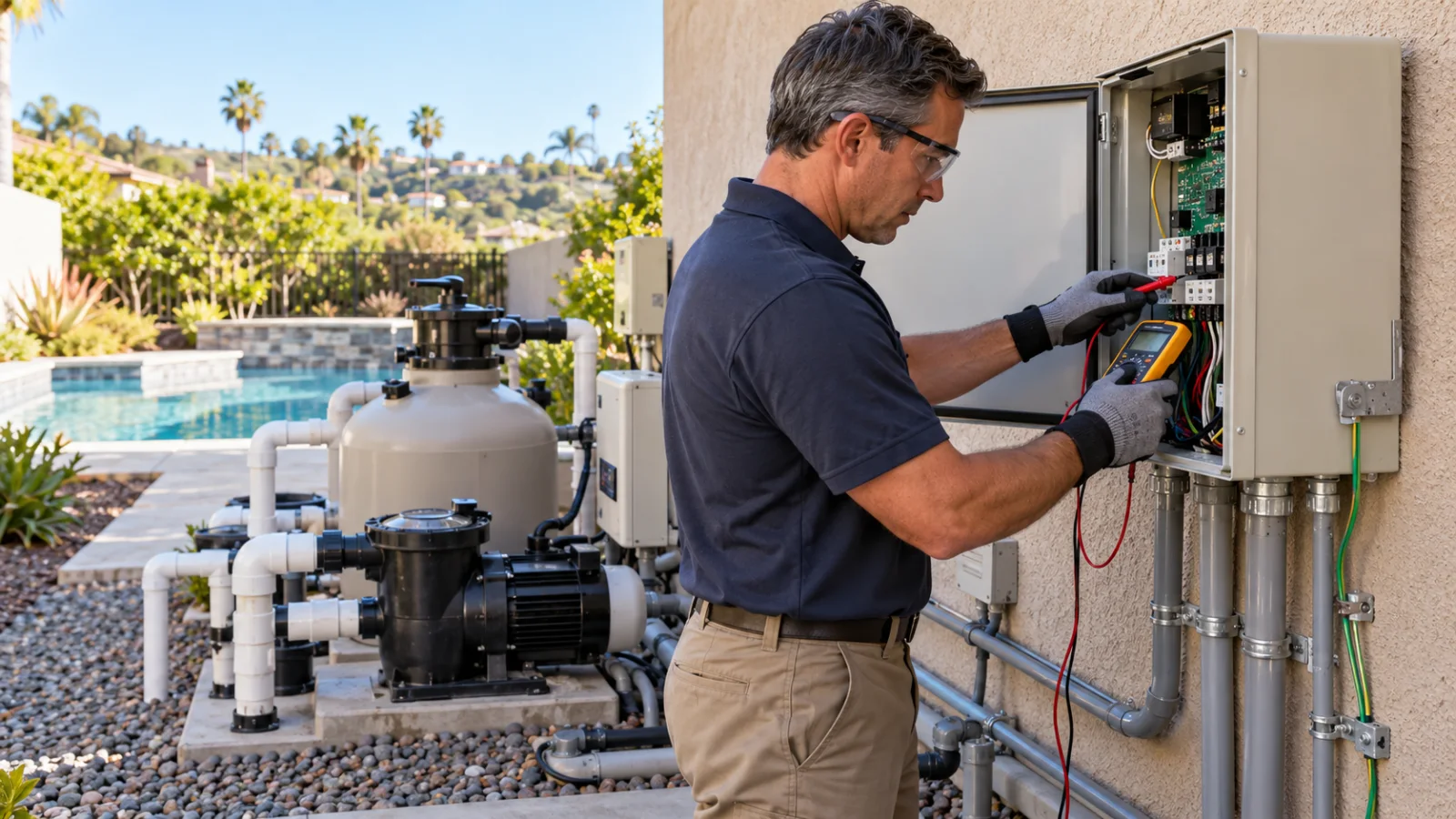
A breaker that trips again, a dead automation panel, a pump that will not energize, or lights that behave differently after rain can all lead to the same search for pool electrical repair. They do not all have the same cause. The useful first step is to keep people away from a possible hazard and get a written diagnosis that separates the failed pool equipment from the circuit feeding it.
Refresh Pool Pros connects San Diego County homeowners with licensed independent pool professionals. We do not open panels, test circuits, or perform repairs. The matched pro evaluates the pool system and identifies whether the work also requires coordination with another properly licensed trade.
Start with the safety boundary
Do not touch pool electrical equipment when it is wet or while you are standing in water. FEMA’s flood safety guidance gives that direct instruction and says electricity should be turned off only if it is safe to do so. Never cross water or reach through a wet equipment area to operate a breaker.
Ready.gov’s preparedness guide says the electrical system should be checked by an electrician before power is turned back on after wet conditions. A cabinet that looks dry outside may still have water, residue, or damaged components inside. Drying time by itself is not a safety inspection.
If the deck, panel, conduit, or equipment pad is wet, keep people and pets away and arrange qualified help. If conditions are dry but a breaker or GFCI keeps tripping, stop cycling it. Repeated resets do not identify the fault and can keep re-energizing the affected circuit.
For equipment surrounded by rainwater, use the more specific flooded pool equipment guide rather than approaching the pad.
One symptom can cross several systems
Pool equipment brings water-moving components, controls, and an electrical supply together on one pad. A pump that will not run might have a failed motor or onboard control. It might also be receiving no usable supply. A dead heater display could begin inside the heater, at an automation command, or upstream of the equipment. A light problem could sit at the fixture, junction box, control, or circuit.
That is why a responsible diagnosis does not start with a guessed part. It starts with the exact symptom and the equipment affected. Tell the pro:
- what was operating when the problem began;
- whether the fault appeared after rain, service, or another equipment change;
- which controls or displays still respond;
- whether a breaker or GFCI tripped;
- whether there is heat, odor, discoloration, sound, or visible water, observed from a safe distance.
Do not remove covers to collect better notes. A photo of the closed equipment and its label is enough if the area is dry and safely reachable.
What the pool professional separates during diagnosis
The first boundary is between a failed pool component and the electrical path serving it. The pro should identify the affected equipment, reproduce the symptom only when safe, and document which control or circuit is involved.
On the pool-equipment side, that may mean the pump motor and its onboard controls, an automation relay or controller, a heater control, a valve actuator, or a light circuit component. The goal is not to replace the first silent device. It is to determine whether that device is failing or simply not receiving the command or supply it needs.
On the electrical side, the finding may point toward the disconnect, breaker, visible conduit, wiring, connections, or another part of the supply path. The pro should also note visible bonding concerns without declaring a repair from a photograph. Bonding, grounding, and ordinary equipment wires are not interchangeable labels. The written scope should use the term that applies to the finding, not lump every conductor into “the ground.”
When the needed work crosses the matched pro’s scope, the proposal should say so and identify the coordination required with another properly licensed trade. That is better than one vague line for “pool electric” that leaves the homeowner unsure who is doing what.
Common calls and the page that goes deeper
A broad electrical diagnosis is useful when the failed system is not yet known. Once the problem is isolated, a component-specific repair page may be more helpful.
- A pump that hums, stops, or shows an onboard fault belongs in the pool pump repair guide.
- A controller that has power but will not command equipment belongs in pool automation repair.
- A wet or damaged light splice has its own pool junction box repair guide.
- A broader failure involving multiple devices can begin with pool equipment repair.
These pages are not substitutes for testing. They help name the part of the system so the request reaches the right specialist.
What a written repair scope should contain
Ask for a proposal that identifies the fault, the repair, and the proof that the repair worked. A strong scope includes:
- The affected equipment and circuit or control.
- The observed failure and the diagnostic finding.
- The component, connection, or supply work included.
- Any separate trade, permit, or inspection coordination the pro says is required.
- Parts, labor, access work, and restoration that are included or excluded.
- The operational check performed after the repair.
If two pros propose different fixes, compare the findings before comparing totals. A replacement motor, a control repair, and a supply correction are not competing prices for the same task. They are different diagnoses.
Do not accept a proposal that depends on repeatedly resetting protection devices without identifying why they operate. Do not assume a new pump will fix an upstream supply problem. Likewise, do not authorize circuit work as a substitute for confirming whether the pool component itself failed.
Before hiring, use the official CSLB license check to verify current license information. Ask each provider to state their own scope in the proposal.
After rain or water exposure
Water changes the order of operations. Safety and inspection come before attempts to restart the system. Leave wet or submerged equipment off. Do not open an automation enclosure, touch a pump, or stand at a flooded pad to look for a reset button.
Once the area is safe, the qualified professionals can determine which components were exposed and whether the issue is limited to pool equipment, extends to the electrical system, or involves both. The finding should name what was inspected. A blanket statement that the pad “dried out” does not replace that inspection.
If the equipment is dry and the issue has no connection to rain, the same diagnostic structure still applies: component, control, supply, and written boundary. It prevents a broad symptom from turning into an unsupported replacement.
When to call
Call when pool equipment will not energize, a breaker or GFCI will not stay set, automation stops commanding equipment, lights fail, or water has reached electrical components. Keep the system off and the area clear when wet conditions or repeated trips are involved.
Call Refresh Pool Pros at (858) 400-4598 and we’ll connect you with a licensed local pool professional. The matched independent pro diagnoses and performs work within their scope and identifies any other properly licensed trade coordination; Refresh Pool Pros does not perform electrical repair.
Frequently asked questions
Who should I call for a pool electrical problem?
Start with a licensed professional who can separate a failed pool component or control from a supply, wiring, conduit, or bonding issue. The written finding should say who is responsible for each part of the repair and whether another properly licensed trade must be coordinated.
Should I reset a pool breaker that keeps tripping?
Repeated tripping is a fault signal, not a repair. Stop cycling the control and arrange an on-site diagnosis. If the panel, deck, or equipment is wet, do not touch it or cross standing water to reach a switch or breaker.
What does a pool electrical diagnosis include?
The pro should document the failed symptom, identify the affected circuit or component, inspect controls and visible connections, and separate equipment failure from the electrical supply. The proposal should name the repair, any required coordination, and the test used to confirm operation afterward.
Can wet pool equipment be turned back on after it dries?
Dry appearance alone does not establish that wet electrical equipment is safe. FEMA says not to touch wet electrical equipment or stand in water, and Ready.gov says the electrical system should be checked by an electrician before power is restored. Leave affected equipment off until it receives the appropriate inspection.
Does Refresh Pool Pros perform electrical work?
No. Refresh Pool Pros is a referral marketplace. It connects San Diego County homeowners with licensed independent pool professionals, and the matched pro identifies whether the scope also needs coordination with another properly licensed trade.
Need professional help in San Diego County?
Refresh Pool Pros connects you with a licensed specialist for any service in this post.