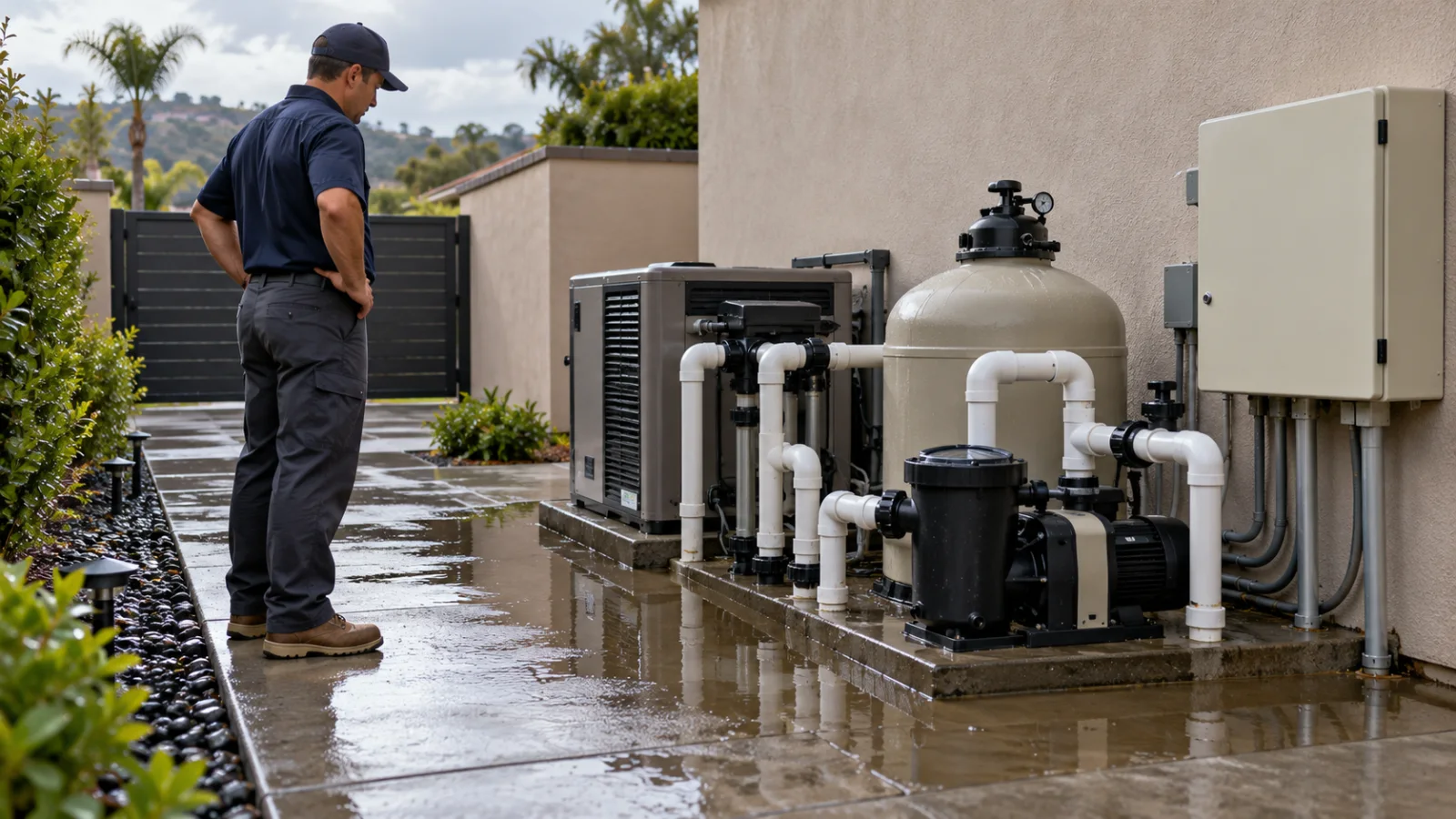
Standing water around a pool pump, heater, automation cabinet, outlet, or conduit is not a normal “try it and see” problem. Water can hide the safe path to a switch and can reach components that look dry from across the yard.
If pool equipment flooded after rain, stay out of the water and leave the equipment alone. Do not touch a wet cabinet, pump, plug, timer, or breaker. Do not wade across the pad to shut anything off. The first job is keeping people away. The equipment inspection comes after the area can be approached safely.
Refresh Pool Pros is a referral service. We match San Diego homeowners with licensed independent pool pros. We do not enter the flooded area or perform electrical or pool work ourselves.
The first decision is whether you can stay on dry ground
FEMA says not to touch electrical equipment if it is wet or while you are standing in water. FEMA also says electricity should be turned off only if it is safe to do so. That qualification matters at a pool equipment pad.
If reaching the switch, disconnect, or breaker requires stepping into water, leaning over wet equipment, or touching a damp enclosure, do not attempt it. Keep other people and pets away and call qualified help. If there is an immediate life-safety threat, use the appropriate emergency service.
Do not assume a plastic pump housing makes the area harmless. The visible pump is only one part of the pad. Controls, conduit, wiring, heater components, outlets, and bonding connections may also be present. A homeowner should not have to identify which part is energized before deciding to stay away.
The FEMA flood safety guidance is the right baseline: do not touch wet electrical equipment, do not operate it while standing in water, and turn power off only when that can be done safely.
What not to do after the rain stops
Do not press a start button to see whether the pump still works. Do not open an automation enclosure. Do not unplug a wet cord, remove a pump lid, or reset a tripped breaker. Do not place a portable pump in the flooded area unless a qualified professional has established that the setup and power source are safe.
Most importantly, do not treat visible drying as an all-clear. The surface of a cabinet can dry while moisture or debris remains where you cannot see it. Ready.gov’s preparedness guide says wet appliances should be checked by a professional and the electrical system checked by an electrician before power is turned back on.
That guidance does not mean every wet pad needs the same repair. It means inspection comes before restart. The findings determine what can return to service and what needs repair or replacement.
Avoid adding another hazard while trying to remove the water. Extension cords, shop vacuums, and portable pumps all bring electrical equipment into the scene. Leave dewatering and access planning to qualified help if the area around the pad is wet.
Record the event from a safe location
A short visual record helps the pool pro understand what was exposed, even if the water recedes before the appointment. Take photos only from dry ground. Do not move closer for a serial number if doing so crosses the wet area.
Useful photos include:
- The whole equipment pad and surrounding yard
- The highest visible water or debris line on the slab or equipment bases
- The pump, filter, heater, and control enclosure in one wide view
- Conduit, outlets, disconnects, and cords visible from the safe position
- The route water took toward and away from the pad
Write down whether the equipment was running when the water arrived, whether power went out, and whether you heard or smelled anything unusual. Do not recreate a sound or condition for the camera. Report only what happened on its own.
If you can see a model label from dry ground, include it. A clear label can help the matched pro prepare for the inspection. If not, leave it for the on-site visit.
Floodwater is different from a dry-weather pad leak
The distinction matters after the immediate safety issue is controlled. Rainwater can collect across the slab and touch several components at once. A plumbing leak may create a smaller puddle that returns when the system operates. Both can leave a wet pad, but they call for different findings.
Do not run the system to distinguish them while electrical exposure is unresolved. Once qualified professionals say the area is safe to inspect, the water path and your photos can help separate storm entry from a leaking component.
Our article about standing water at the pool equipment pad covers dry-weather leak diagnosis. A pad that was surrounded by stormwater starts with this page’s electrical-safety response instead. If the pool itself reached the coping, see what to do when a pool overflows after rain.
What a qualified inspection should cover
The inspection should begin with the exposure boundary. Ask which equipment or connections were reached by water and what evidence supports that finding. The professional should not rely only on the fact that the slab now looks dry.
A pool specialist can identify the affected pool-system components and explain the equipment-specific scope. An electrician may need to evaluate the electrical system before power is restored. Which professionals are required depends on what got wet and what work is proposed. Refresh Pool Pros does not decide a trade’s legal scope from a photograph.
Ask for a written list of the inspected components, the items cleared for service, and the items that remain off. If the proposal includes replacement, ask the pro to identify the damage or failed check that supports it. If it includes electrical work, ask who performs that portion and verify the contractor using the official CSLB license lookup.
The inspection should also address why water reached the pad. That may be a drainage or grading question rather than a failed pool component. A repair proposal and a future water-management recommendation should be separated so you can understand each scope.
Restart only after the affected systems are cleared
A quiet, sunny day after a storm can make the event feel finished. It is not finished if wet equipment has not been checked. Leave affected circuits and pool equipment off until the appropriate qualified professionals say they can return to service.
Ask who gives that clearance. A pool pro can address the pump, filter, heater, valves, and automation as pool equipment. An electrician can address the electrical system where that inspection is needed. The written result should make the handoff clear rather than leaving the homeowner to guess.
When the system is eventually restarted, the professional should control that step. The homeowner does not need to stand over equipment or reset breakers to prove that the repair worked.
When to call
Call when stormwater reaches the equipment slab, surrounds a pump or heater, touches a control enclosure, or blocks the dry route to a shutoff. Stay out of the water and do not restart equipment after it merely looks dry.
Call Refresh Pool Pros at (858) 400-4598 and we’ll connect you with a licensed independent pool specialist. The pro we match performs the inspection and any physical pool work; Refresh Pool Pros is the referral service.
Frequently asked questions
Should I turn off pool equipment if the pad is flooded?
Only if the shutoff can be reached and operated without entering water or touching wet equipment. FEMA says not to touch wet electrical equipment or stand in water while handling it. If the safe route is uncertain, stay away and call a qualified professional.
Can I restart a pool pump after the water dries?
Dry appearance alone does not prove equipment is safe. Ready.gov advises professional checks of wet appliances and an electrician's check of the electrical system before power is restored. Leave affected pool equipment off until the appropriate qualified pros inspect it.
What should I photograph after a pool equipment pad floods?
From dry ground, photograph the highest visible water mark, the pump, filter, heater, control enclosure, conduits, and the route the water took. Include equipment labels only if you can do so without approaching wet components.
Is this the same as a leaking pool equipment pad?
No. Rainwater that surrounds multiple components is a flooding event. A dry-weather puddle that returns while the system runs may point to a plumbing or equipment leak. The safety-first response to wet electrical equipment comes before diagnosing either cause.
Who should inspect flooded pool equipment?
The right inspection may involve a licensed pool specialist and an electrician, depending on what got wet. Refresh Pool Pros matches homeowners with licensed independent pool pros and does not perform the physical inspection or repair.
Need professional help in San Diego County?
Refresh Pool Pros connects you with a licensed specialist for any service in this post.