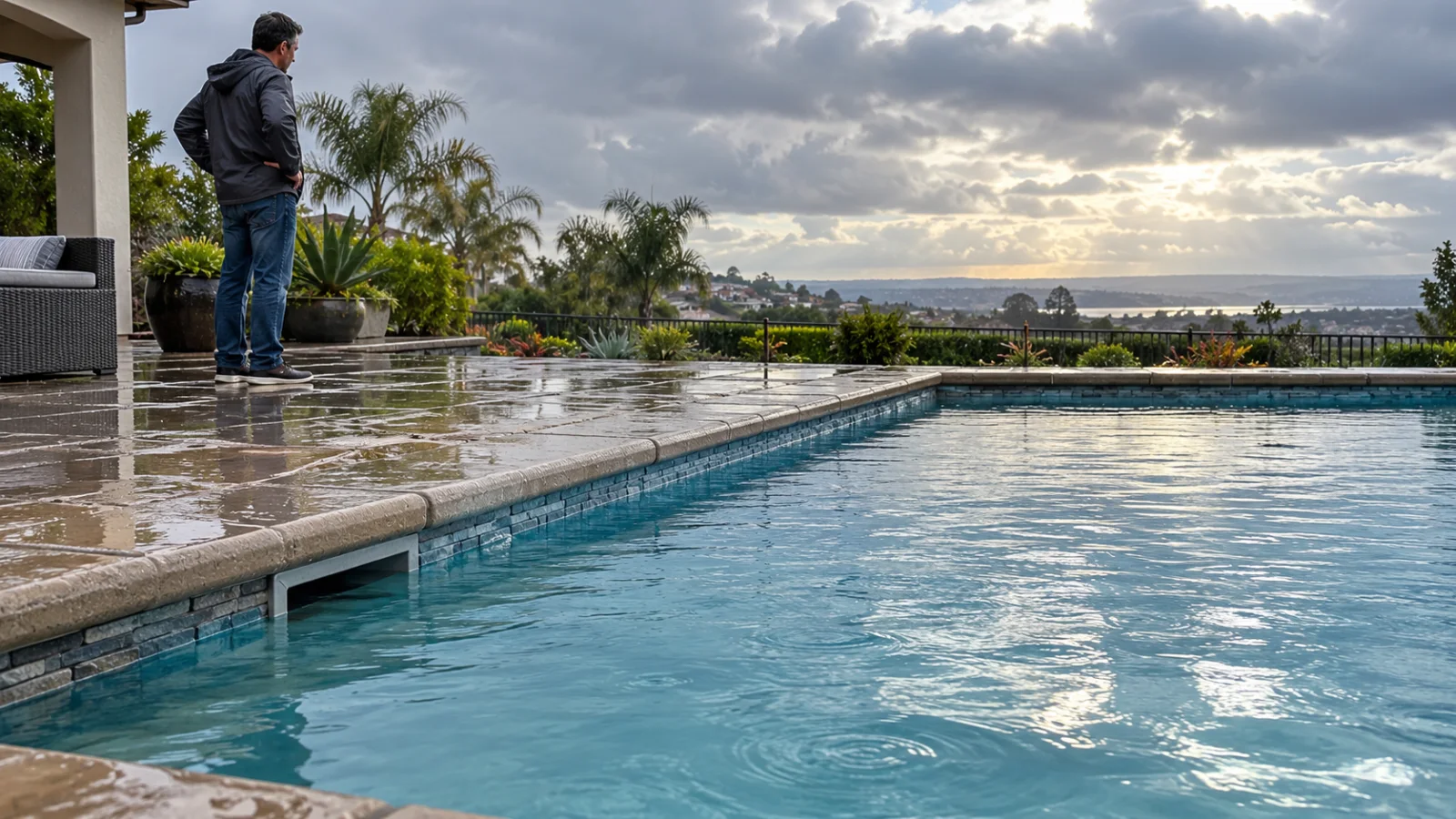
A pool overflowing after rain creates two different questions. The first is immediate: is water moving toward a doorway, slope, equipment pad, or public gutter? The second is diagnostic: did the storm simply fill the pool, or is an automatic filler still adding water after the rain stopped?
You do not need to answer either question by opening valves or placing a pump in the water. Start with a safe record of what is happening. A licensed pool specialist can use that record to inspect the pool, check the filler and overflow path, and explain the next step for the property.
Refresh Pool Pros matches San Diego homeowners with licensed independent pros. We do not drain, repair, or operate pool equipment ourselves.
First steps when the pool reaches the coping
Stay on a dry path and look at the entire yard before approaching the pool. If water has reached the equipment pad, an outlet, a control enclosure, or an extension cord, keep your distance. Do not cross standing water to reach a switch or breaker. Our guide to pool equipment flooded after rain covers that separate electrical-safety situation.
If the area is dry enough to observe safely, take four useful photographs:
- The waterline against a fixed tile, skimmer opening, or coping joint
- Any water leaving the pool area and the direction it is traveling
- The autofill cover and nearby deck, without opening or adjusting anything
- The equipment pad from a dry location
Note whether rain is still falling and whether the waterline continues to rise after it stops. Also note whether a hose was left on or whether the automatic filler can be heard running. These observations are more useful than a guess about the cause.
Keep children and pets out of the overflow path. Wet coping and deck surfaces deserve ordinary caution. If water is entering the house or threatening people, use the appropriate property-emergency help rather than treating the situation as a routine pool appointment.
Rainwater and an autofill problem can look alike
Heavy rain adds water across the whole pool surface. A stuck or misadjusted automatic filler adds water through its supply. Both can leave the same visible result: a waterline at or above its usual mark.
The timing helps separate them. A level that stops rising when the rain ends points to the storm event. A level that continues to climb during dry weather gives the specialist a reason to inspect the filler and its supply. This is an observation, not a remote diagnosis. A pool may also have more than one issue.
Do not force an unfamiliar deck lid or turn an unlabeled valve. If your pool uses a Paramount Paralevel unit, the manufacturer’s Paralevel FAQ provides model-specific checks. Other fillers may work differently. Our pool autofill stuck-on guide explains what to record and what to leave for a pro.
The useful question for the service call is simple: did the waterline stabilize after the weather cleared? Tell the matched specialist when you first noticed the high level, whether it changed in dry weather, and whether the filler supply was already shut off by a safe, known valve.
Do not improvise a discharge into the street
High water creates an understandable urge to place a pump in the pool and send a hose downhill. In San Diego, the destination of that hose matters.
The City of San Diego’s official Pools, Spas & Fountains fact sheet says pollutants and construction materials from pools, spas, and fountains must be kept out of the storm-drain system. The fact sheet describes landscape use only where qualifying water can be absorbed without runoff or erosion. It also describes sanitary-sewer discharge through an on-site sink or lateral cleanout after Public Utilities approval.
Those are conditional routes, not blanket permission. The fact sheet includes water-quality and temperature requirements, and rules can depend on the address and jurisdiction. A San Diego mailing address does not always mean the property is inside the City of San Diego.
The conservative action is to avoid pumping pool water into a driveway, gutter, street, canyon, or storm drain. Ask the licensed pro and the relevant local agency to confirm the current route and conditions for your property before water is discharged.
If stormwater is already flowing across the coping naturally, photograph where it goes. Do not redirect it toward electrical equipment or a neighbor’s property. The specialist needs to see the actual path before recommending a correction.
What a licensed pool pro should inspect
An overflow visit should begin with the event, not with a sales pitch. The pro should ask when the rain started, when the water reached the top, whether the level continued to rise, and where the water traveled.
The physical inspection can then focus on the parts tied to that record:
- The current waterline and the fixed point used in your photos
- The automatic filler and its accessible supply components
- Any dedicated overflow opening or route that is visible at the pool
- The deck and yard path where water moved
- The equipment pad if water approached it
Ask for the finding in plain language. “The storm added water” and “the filler did not stop” are different findings. So are “the existing overflow route carried water” and “water crossed the deck toward the equipment.” A written scope should identify which condition the proposed work addresses.
Confirm the contractor on the official CSLB license lookup before approving work. Refresh Pool Pros provides the match, while the independent service company evaluates and quotes its own work.
Questions to ask before approving a correction
Start with the diagnosis: what evidence shows that a part failed rather than the storm simply raising the waterline? Ask the pro to show you the filler response, the water path, or the component named in the proposal.
Then ask what the correction changes. Is the scope limited to the filler? Does it address an existing overflow route? Does it include work near electrical equipment? Will any water need to be discharged, and who will confirm the lawful route and required approval?
Do not accept a vague direction to “drain it to the curb.” The City fact sheet is specific enough to make that answer worth checking. A careful proposal should separate the pool repair from any water-discharge step and identify who is responsible for each.
Finally, ask how the result will be checked. The useful closeout is not a promise that San Diego will never get another heavy rain. It is a clear demonstration that the repaired filler stops as intended, that the normal waterline is understood, and that the homeowner knows whom to call if water again moves toward the pad or structure.
When to call
Call when the pool reaches the coping, the level keeps rising after the rain ends, or runoff is moving toward the equipment pad. Keep people away from wet electrical components and do not pump water into the street by guesswork.
Call Refresh Pool Pros at (858) 400-4598 and we’ll connect you with a licensed independent pool specialist. The pro we match performs the inspection and any physical work; Refresh Pool Pros is the referral service.
Frequently asked questions
What should I do first when my pool overflows after rain?
Keep people away from any wet electrical equipment, photograph the waterline and the path of any runoff, and note whether the pool is still rising. Do not improvise a discharge into the street or storm drain. A licensed pool pro can inspect the pool and identify a lawful next step for your address.
Can I pump excess pool water into a San Diego storm drain?
Do not assume you can. The City of San Diego says pool, spa, and fountain pollutants must be kept out of the storm-drain system. Its fact sheet lists conditions and approved routes for qualifying water, so confirm the current rule for your address before anyone discharges water.
Does an overflowing pool mean the autofill is broken?
Not by itself. Rain can raise the waterline without an autofill fault. Photograph the level after the rain ends and note whether the level continues to rise in dry weather. A pro can then separate stormwater from a filler that is not shutting off.
Should I run the pool equipment after heavy rain?
Do not touch or start equipment if the pad, controls, plugs, or wiring are wet or surrounded by water. If the pad is dry and the concern is only the high waterline, ask a licensed pool specialist to check the system rather than changing valves or controls by guesswork.
Who handles an overflowing pool in San Diego?
A licensed pool specialist can inspect the waterline, autofill, overflow route, and equipment. Refresh Pool Pros is a referral service that matches homeowners with licensed independent pros. We do not perform the physical work.
Need professional help in San Diego County?
Refresh Pool Pros connects you with a licensed specialist for any service in this post.