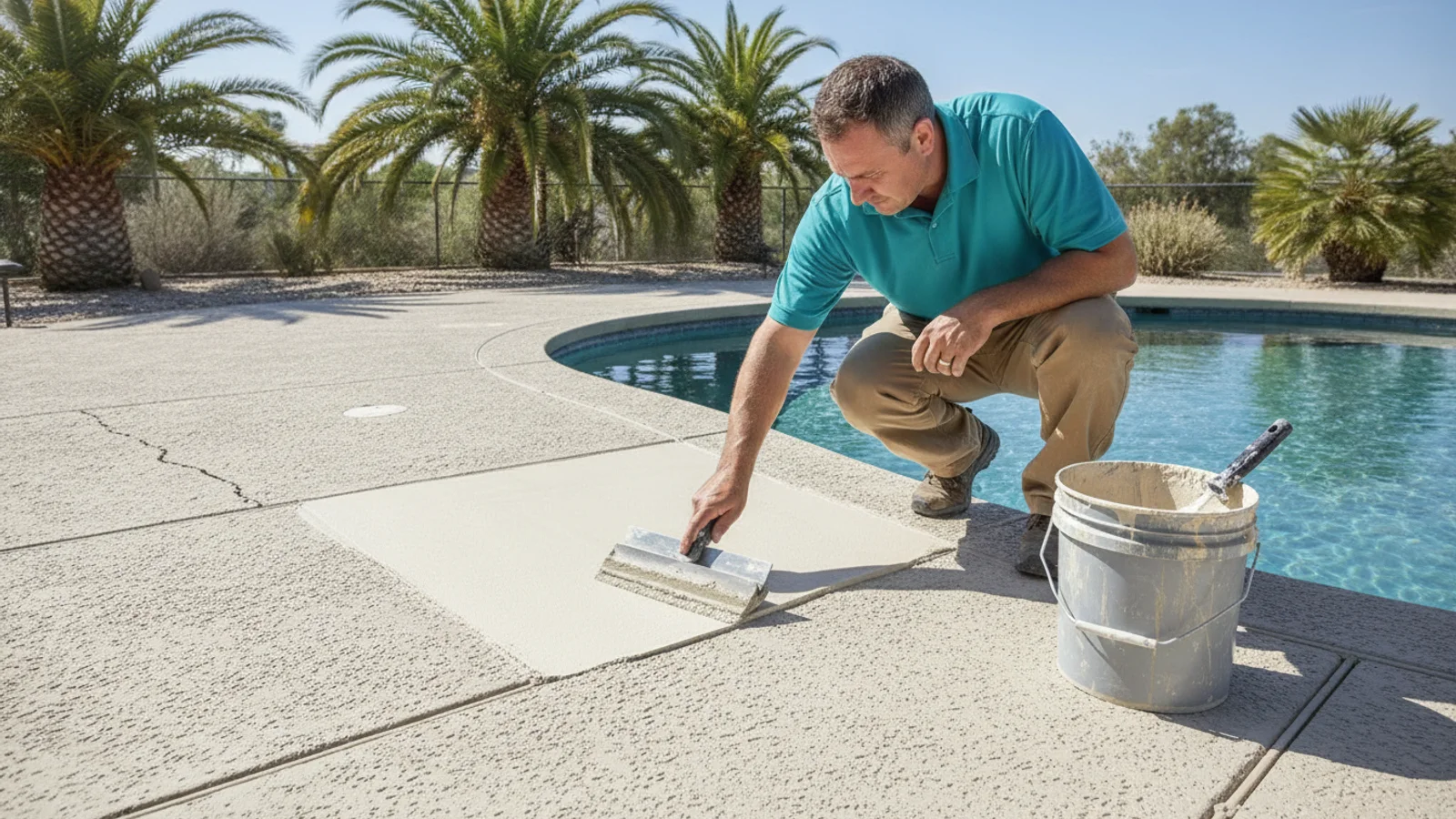
Pool deck resurfacing in San Diego costs $2,000 to $7,000 for a sprayed coating over existing concrete, $6,000 to $15,000 for a stamped concrete overlay, and $12,000 to $30,000 or more for pavers, based on a typical 700 square foot deck. Which number applies to you depends less on taste and more on what’s actually wrong with the concrete underneath.
Refresh Pool Pros connects San Diego homeowners with vetted pool repair contractors who resurface decks alongside pool resurfacing, coping, and tile work. This guide breaks down what each deck option actually costs, why San Diego decks crack in the first place, and when it’s worth doing the deck at the same time as the rest of the pool.
How much does pool deck resurfacing cost in San Diego?
A sprayed acrylic or cool-deck coating is the cheapest way to refresh a tired concrete deck, running $2,000 to $7,000 for a standard 700 square foot deck, or about $3 to $9 per square foot. It’s a thin, textured layer applied directly over the existing slab, which keeps the price down but also means it only performs as well as the concrete underneath.
Stamped concrete overlays cost more, typically $6,000 to $15,000 for the same size deck, or roughly $7 to $20 per square foot. The overlay is thicker than a coating and gets textured and colored to mimic stone, tile, or wood grain, which is why it costs more but also lasts longer and hides more of the old slab’s flaws.
Pavers sit at the top of the price range, usually $12,000 to $30,000 or more for a full deck once base excavation, compaction, and labor are included. National averages put paver installation around $12 to $45 per square foot, but San Diego labor costs typically push jobs toward the higher end of that range. The payoff is a deck that isn’t tied to the old concrete at all, so a single cracked or stained paver gets swapped instead of forcing a full redo.
What’s the difference between a coating, stamped concrete, and pavers?
The real difference isn’t looks, it’s how each option relates to the concrete already in your yard.
- Coating: sprayed directly onto the existing slab. Cheapest and fastest, but any crack in the slab underneath eventually telegraphs through the new surface.
- Stamped concrete overlay: a thicker layer bonded to the old slab, textured and colored before it cures. Covers more cosmetic damage than a coating and lasts longer, but a structural crack in the base slab can still show up over time.
- Pavers: individual units set on a compacted base, independent of the old concrete. Costs the most upfront, but a damaged section is a spot repair, not a full deck replacement, and the base can be built to handle soil movement better than a rigid slab can.
If your existing deck is basically sound and just faded or rough, a coating solves it for the least money. If the slab has isolated cracking or you want a different look without a full tear-out, an overlay is the middle ground. If the deck has moved, spalled in multiple spots, or you’re already tearing it out, pavers are worth the extra cost because they won’t inherit whatever caused the damage in the first place.
Why do San Diego pool decks crack in the first place?
Two different causes show up depending on where you live in the county. Inland neighborhoods like El Cajon, Santee, and Ramona sit on expansive clay soils that swell when winter rain soaks in and shrink hard during the dry season. That seasonal movement flexes the concrete slab enough to crack it over several years, the same soil behavior that cracks pool shells and pops waterline tile in those same neighborhoods.
Along the coast in La Jolla and Pacific Beach, the culprit is usually salt air working on the steel rebar inside the slab. Once rust starts, the expanding metal pushes outward and pops chunks of concrete off the surface, a failure mode called spalling. You’ll recognize it as small craters with exposed, rusted rebar rather than a clean crack line. Standard age and control joints placed too far apart add to both patterns regardless of location. A deck crack that runs toward the equipment pad or under the coping is worth a look from a leak detection specialist before you resurface over it, since covering a crack that’s actually feeding a leak just hides the problem for another season.
Does the deck material affect how hot it gets in San Diego sun?
It does, and it’s a bigger deal here than in coastal cities with milder summers, since inland valleys routinely hit the 90s from June through September. Plain dark concrete absorbs heat fast enough to be genuinely painful on bare feet within a few minutes of full sun. Cool-deck style coatings are formulated with a lighter, textured finish specifically to reflect more heat and stay walkable at midday. Pavers and stamped concrete also run cooler than bare dark concrete, but color is the bigger lever than material category. A dark paver in direct sun still gets hot; a light-colored coating in the same spot won’t.
What does the resurfacing process actually involve?
Regardless of which option you pick, the prep work looks similar. A contractor pressure washes the deck to strip grime and old coating, then patches or grinds down cracks and any spalled sections so the new surface has a sound base to bond to. Coatings and overlays get primed before the finish coat goes on, and pavers get a compacted gravel and sand base before the units are set and swept with polymeric sand to lock the joints.
Cure time is where the options diverge most. A coating can often be walked on within a day and swim-ready within two to three. A stamped overlay typically needs three to five days before foot traffic and a full week or more before it’s cured enough for regular pool use. Pavers are walkable almost immediately after installation since there’s no wet material curing, though the joint sand needs a day or two to fully settle.
Should the deck be redone with the pool shell or tile?
If the deck already shows cracking, or the old coating is peeling and rough, yes, bundle it. Resurfacing the shell or replacing waterline tile already means the pool is drained, equipment is staged, and a crew is on site for days. Adding deck work to that same mobilization avoids paying setup costs twice. It also means the new deck edge gets built to meet the new coping and tile lines cleanly, instead of butting fresh tile against an old, uneven, or mismatched deck surface installed years apart.
If the deck is in good shape and only the shell or tile needs work, there’s no reason to touch it early. A sound deck with a fresh coating can outlast the interval between two separate pool resurfacing cycles.
How long does a resurfaced pool deck last?
A sprayed coating typically holds up 5 to 10 years before it needs a fresh coat, depending on sun exposure, pool chemical splash, and foot traffic. A stamped concrete overlay usually lasts 10 to 15 years. Pavers last the longest at 20 years or more, largely because a damaged section gets replaced individually instead of triggering a full redo.
San Diego’s combination of hard water splash, UV exposure, and, depending on location, either expansive soil or salt air, tends to shorten all three timelines somewhat compared to milder inland U.S. climates. That’s also why a deck often needs attention on a different schedule than the pool shell itself: the two surfaces face different stresses even though they sit a few feet apart.
Frequently asked questions
How much does pool deck resurfacing cost in San Diego?
A sprayed acrylic or cool-deck coating over existing concrete runs $2,000 to $7,000 for a typical 700 square foot deck, or roughly $3 to $9 per square foot. A stamped concrete overlay costs more, usually $6,000 to $15,000 for the same size deck. Pavers run the highest, often $12,000 to $30,000 or more once base prep and labor are factored in, since San Diego installers typically land at the higher end of the national per-square-foot range.
What's the difference between a deck coating, stamped concrete, and pavers?
A coating is a thin acrylic or cementitious layer sprayed over your existing concrete slab, which is why it's the cheapest option but only lasts as long as the slab underneath stays sound. A stamped concrete overlay is thicker and can add texture and pattern, giving a few more years of life and a different look for a moderate step up in price. Pavers are individual units set over a compacted base, not tied to the old slab at all, which is why they cost the most but also why a single cracked paver can be swapped without redoing the whole deck.
Why do San Diego pool decks crack in the first place?
Inland areas like El Cajon, Santee, and Ramona sit on expansive clay soils that swell when wet and shrink when dry, which flexes the concrete slab enough to crack it over time, the same soil movement that cracks pool shells and tile in those neighborhoods. Along the coast in La Jolla and Pacific Beach, salt air corrodes the rebar inside the slab, and rusting rebar expands and pops chunks of concrete off the surface, a problem called spalling. Standard aging and poorly placed control joints add to both patterns.
Does the deck material affect how hot it gets in San Diego sun?
Yes, and it matters more here than in milder climates because inland valleys regularly hit the 90s in summer. Plain dark concrete gets hot enough to make bare feet uncomfortable within minutes. A light-colored cool-deck coating is formulated to reflect more heat and stays noticeably cooler underfoot. Pavers and stamped concrete run cooler than bare dark concrete too, but color choice matters more than material for keeping the surface walkable at midday.
Should I redo the deck at the same time as resurfacing the pool or retiling?
If the deck is already showing cracks or the coating is failing, yes, it's worth bundling. Resurfacing the shell or replacing waterline tile already means a drained pool, staging equipment, and a crew on site, so adding deck work avoids paying for a second mobilization later. It also lets the deck edge and the new tile or coping line up cleanly instead of being installed against an older, uneven surface.
How long does a resurfaced pool deck last?
A sprayed coating typically lasts 5 to 10 years before it needs another coat, depending on sun exposure and foot traffic. A stamped concrete overlay usually holds up 10 to 15 years. Pavers last the longest, often 20 years or more, since a damaged section can be replaced without touching the rest of the deck. San Diego's hard water and UV exposure shorten all three somewhat compared to milder inland climates, which is part of why coastal and inland decks often need attention on different timelines than the pool shell itself.
Need professional help in San Diego County?
Refresh Pool Pros provides every service in this post. Call for a free quote.