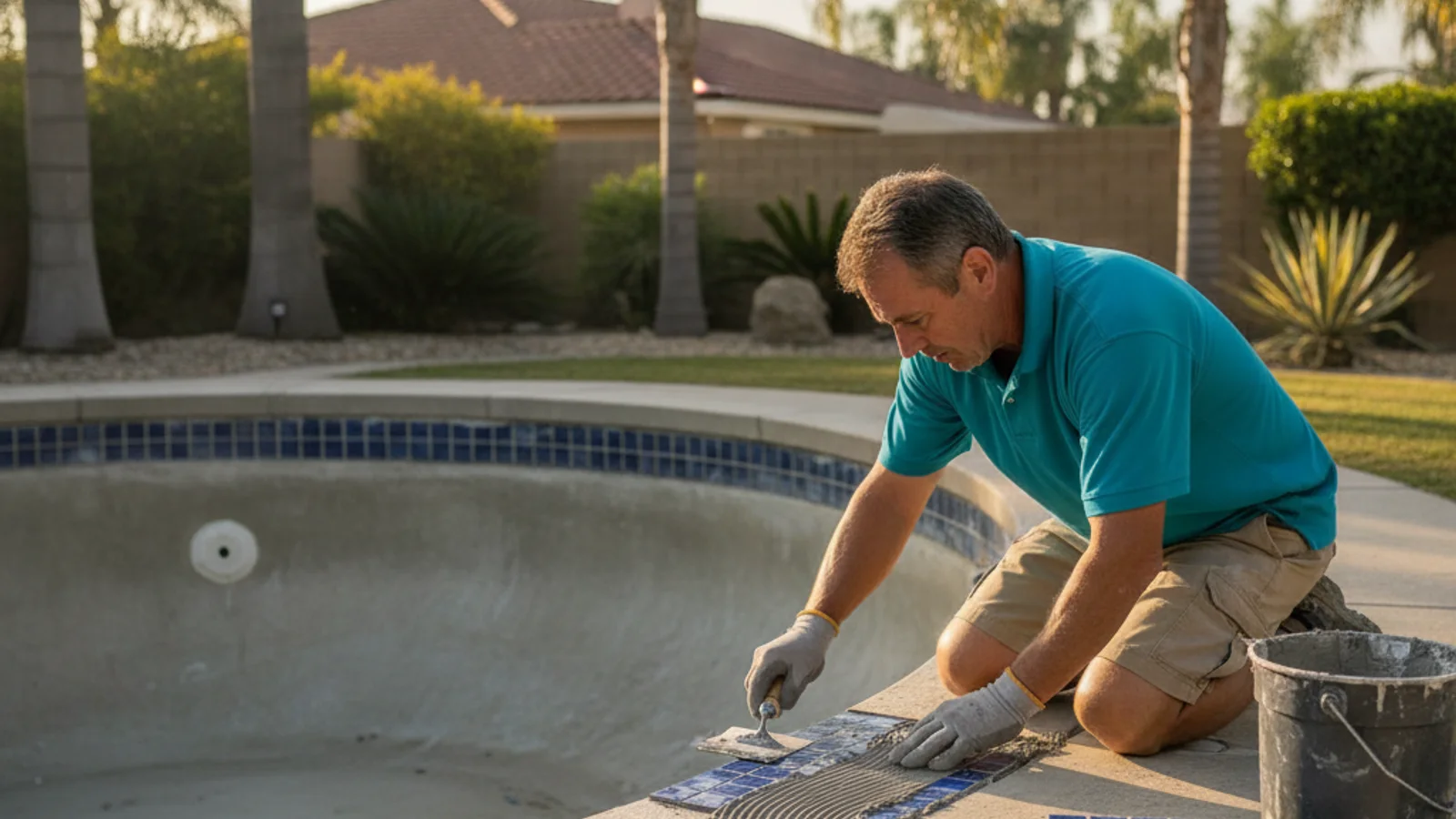
Pool tile repair in San Diego costs $300 to $800 for a small section of loose or fallen tile, while replacing the full waterline band runs $2,500 to $7,500 for a standard pool. Cleaning calcium scale off otherwise sound tile is cheaper, typically $400 to $1,200 for professional bead blasting. Where your project lands depends on linear footage, the tile you pick, and whether the bond beam behind the tile needs repair before anything new goes on.
Refresh Pool Pros connects San Diego homeowners with vetted pool repair specialists who can tell you which of those three jobs you actually have before anyone quotes the biggest one. This guide breaks down real price ranges, why tile fails in a climate that never freezes, and when it pays to fold tile work into a larger renovation.
How much does pool tile repair cost in San Diego?
Resetting a small section of loose or fallen waterline tile runs $300 to $800 in most of San Diego County. That covers dropping the water level, chipping out failed thinset, resetting or matching the tiles, and regrouting. The price climbs when the original tile is discontinued and the contractor has to hunt down a close match, or when more tiles sound hollow than first appeared. Tile that pops in one spot rarely fails alone, so a good specialist taps the whole line before quoting. If more than a quarter of the band is loose, repair pricing stops making sense and replacement becomes the honest recommendation.
What does it cost to replace all the waterline tile?
Full waterline tile replacement on a standard San Diego pool runs $2,500 to $7,500, driven mostly by perimeter footage and tile choice. A typical backyard pool carries 80 to 120 linear feet of waterline band. Standard 6 inch ceramic or porcelain tile sits at the lower end, around $25 to $45 per linear foot installed. Glass tile, handmade tile, or custom patterns push $50 to $100 or more per linear foot, which is how a large pool with premium glass reaches five figures. Bond beam repair, new expansion joint work, or replacing coping at the same time adds to the total but usually saves money versus doing each piece separately.
Why is calcium scale such a problem on San Diego pools?
San Diego’s municipal water is hard, and that hardness ends up as white crust on your tile. The City of San Diego supply runs 10 to 14 grains per gallon, and Helix Water District customers in El Cajon and La Mesa see 16 to 20 grains, some of the hardest municipal water in California. Every refill adds calcium, evaporation concentrates it, and the waterline is where it deposits. Early-stage calcium carbonate cleans off with professional bead blasting for $400 to $1,200. Left for years, it converts to calcium silicate, which bonds so hard that blasting can damage the glaze, and replacement becomes the cleaner path. Scale isn’t only cosmetic either: heavy buildup traps moisture behind the tile and accelerates the bond failure that pops tiles off.
Should I repair the loose tiles or retile the whole waterline?
Repair when the failure is small and the bond beam is sound; replace when the failure is spread out or the beam has moved. A practical way to decide:
- A few tiles down, rest sound, no cracks: reset and regrout, $300 to $800.
- Tile intact but ugly with scale: professional cleaning, $400 to $1,200.
- Hollow sound along long runs, dated or discontinued tile: full waterline replacement, $2,500 to $7,500.
- A crack tracking through tile and grout, or tile failing alongside water loss: beam or shell repair first. New tile over a moving crack fails again, and unexplained water loss is a job for leak detection before any cosmetic work.
Age tips the math too. If the pool is 20 or more years old on its original tile, a repaired section buys time, but the surrounding thinset is the same age as what just failed.
Why do tiles fall off a pool in the first place?
In San Diego it’s almost never frost. The common causes are aging thinset reaching the end of its bond life, water chemistry that’s run hot or hard for years, and movement in the bond beam. Inland neighborhoods in Chula Vista, Santee, and El Cajon sit on expansive soils that swell and shrink with the seasons, flexing the beam enough to crack grout and break tile bonds. Along the coast in La Jolla and Pacific Beach, salt air works on grout and metal trim the same way it corrodes fittings at the equipment pad. Once one grout joint opens, water gets behind the tile, and each swing between hot afternoons and cool nights works the loose section wider. That’s why a two-tile problem in spring is often a two-foot problem by fall, and why cracked plaster and failing tile so often show up on the same inspection.
Does it make sense to retile during resurfacing?
Yes, if the tile is anywhere near the end of its life, because both jobs need the pool drained and share the same crew mobilization. Resurfacing is the natural moment to retile: the pool is already empty, the bond beam is exposed, and the tile line has to be protected or reworked during plastering anyway. Most pool resurfacing quotes in San Diego carry waterline tile as a line item, and bundling typically costs meaningfully less than draining twice a year apart. If you’re weighing that timing, our guides on pool resurfacing cost and the signs a pool needs resurfacing cover the other half of the decision.
Refresh Pool Pros connects homeowners across San Diego with vetted pool repair specialists who handle tile, beam, and finish work honestly, and the network covers every corner of the county. Because tile failure sometimes travels with bigger issues, the same network includes pros for pool renovation and equipment work when an inspection turns up more than cosmetics.
Frequently asked questions
How much does pool tile repair cost in San Diego?
Repairing a small section of loose or fallen waterline tile in San Diego runs $300 to $800, depending on how many tiles have come off and whether matching tile is still available. Replacing the entire waterline band typically runs $2,500 to $7,500 for a standard pool, with premium glass tile pushing the total higher. The price is driven by linear footage, tile choice, and the condition of the bond beam behind the tile.
Why does pool tile fail in San Diego if it never freezes here?
The usual culprits are age, water chemistry, and movement in the bond beam rather than frost. Thinset and grout from the 1970s through 1990s simply reach the end of their bond life. Hard municipal water leaves calcium scale that traps moisture behind tile, and expansive soils in inland areas shift the beam enough to crack grout lines. Once water gets behind one tile, its neighbors usually follow.
Can calcium scale be cleaned off instead of replacing the tile?
Yes, in most cases. Professional bead blasting or media blasting removes calcium carbonate scale without harming the tile, and in San Diego it typically runs $400 to $1,200 depending on pool size and buildup. If the deposits have hardened into calcium silicate after years of neglect, or the glaze underneath is already etched, cleaning may not restore the look and replacement becomes the better spend.
Should I retile while the pool is being resurfaced?
If the tile is near the end of its life, yes. Resurfacing already requires draining the pool and mobilizing a crew, so adding the waterline tile to that project saves a second drain and a second setup fee later. Most San Diego resurfacing quotes offer tile as a line item, and doing both at once usually costs meaningfully less than doing them as separate projects a year apart.
How long does pool tile repair take?
A small repair of a few loose tiles is usually done in a day, often without fully draining the pool if the water can be dropped below the waterline. A full waterline replacement typically takes two to four days: lowering the water, removing old tile, repairing the bond beam if needed, setting new tile, grouting, and curing before refill. Add time if coping or resurfacing work is part of the same project.
Is loose tile a sign of a bigger problem?
Sometimes. A few tiles popping after 20 years is normal wear. But a long run of hollow-sounding tile, a visible crack tracking through the grout line, or tile failure paired with unexplained water loss can point to a cracked bond beam or a leak behind the shell. A good tile contractor checks the beam before resetting anything, because new tile over a moving crack fails again quickly.
If your waterline tile is falling, hollow, or buried under scale, call Refresh Pool Pros at (858) 400-4598 to get matched with a vetted San Diego tile specialist who will tell you whether you need a $400 cleaning or a $4,000 retile before you commit to either.
Frequently asked questions
How much does pool tile repair cost in San Diego?
Repairing a small section of loose or fallen waterline tile in San Diego runs $300 to $800, depending on how many tiles have come off and whether matching tile is still available. Replacing the entire waterline band typically runs $2,500 to $7,500 for a standard pool, with premium glass tile pushing the total higher. The price is driven by linear footage, tile choice, and the condition of the bond beam behind the tile.
Why does pool tile fail in San Diego if it never freezes here?
The usual culprits are age, water chemistry, and movement in the bond beam rather than frost. Thinset and grout from the 1970s through 1990s simply reach the end of their bond life. Hard municipal water leaves calcium scale that traps moisture behind tile, and expansive soils in inland areas shift the beam enough to crack grout lines. Once water gets behind one tile, its neighbors usually follow.
Can calcium scale be cleaned off instead of replacing the tile?
Yes, in most cases. Professional bead blasting or media blasting removes calcium carbonate scale without harming the tile, and in San Diego it typically runs $400 to $1,200 depending on pool size and buildup. If the deposits have hardened into calcium silicate after years of neglect, or the glaze underneath is already etched, cleaning may not restore the look and replacement becomes the better spend.
Should I retile while the pool is being resurfaced?
If the tile is near the end of its life, yes. Resurfacing already requires draining the pool and mobilizing a crew, so adding the waterline tile to that project saves a second drain and a second setup fee later. Most San Diego resurfacing quotes offer tile as a line item, and doing both at once usually costs meaningfully less than doing them as separate projects a year apart.
How long does pool tile repair take?
A small repair of a few loose tiles is usually done in a day, often without fully draining the pool if the water can be dropped below the waterline. A full waterline replacement typically takes two to four days: lowering the water, removing old tile, repairing the bond beam if needed, setting new tile, grouting, and curing before refill. Add time if coping or resurfacing work is part of the same project.
Is loose tile a sign of a bigger problem?
Sometimes. A few tiles popping after 20 years is normal wear. But a long run of hollow-sounding tile, a visible crack tracking through the grout line, or tile failure paired with unexplained water loss can point to a cracked bond beam or a leak behind the shell. A good tile contractor checks the beam before resetting anything, because new tile over a moving crack fails again quickly.
Need professional help in San Diego County?
Refresh Pool Pros provides every service in this post. Call for a free quote.