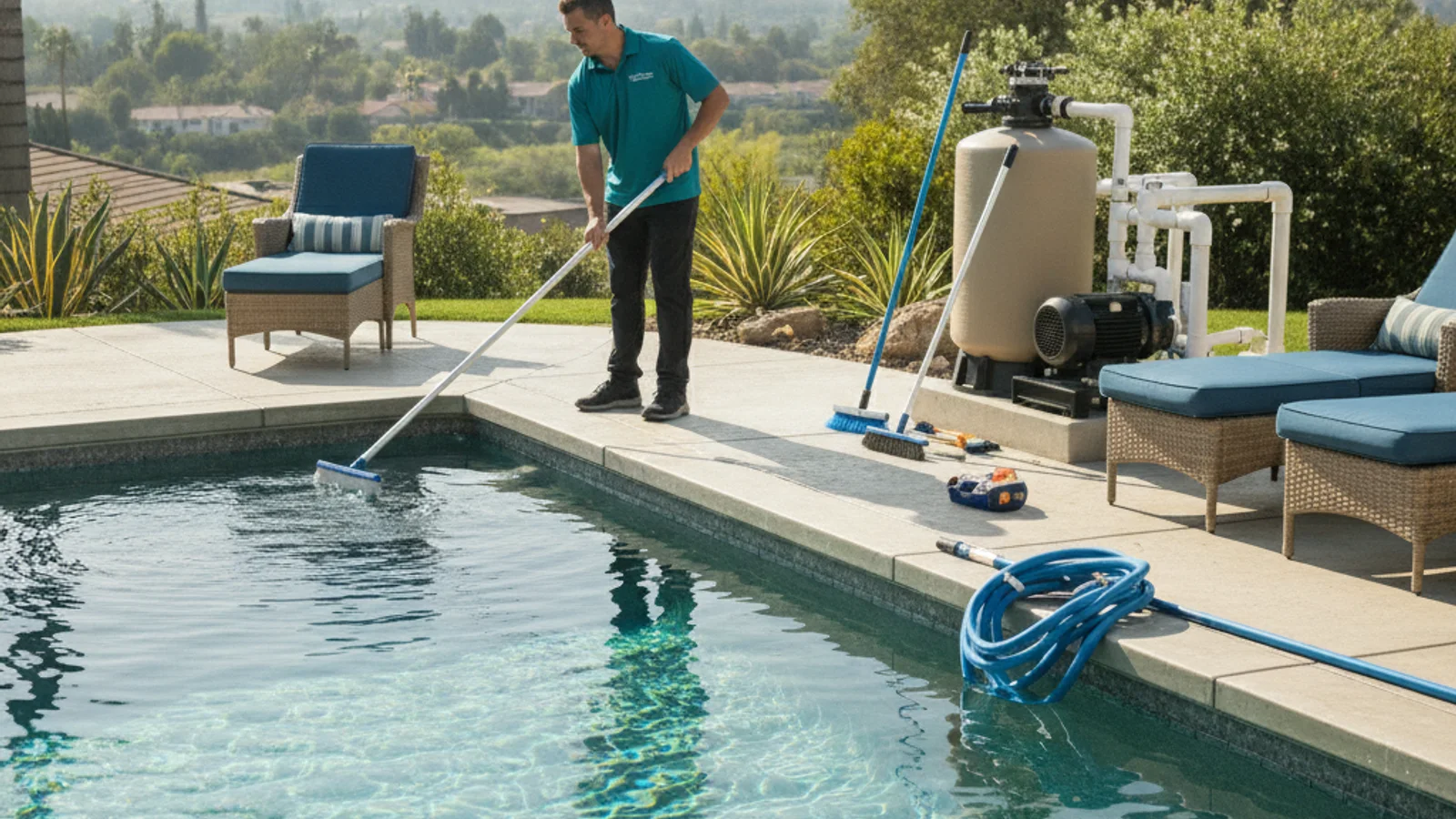
Fiberglass, plaster, and pebble aren’t really three competing options for the same decision. Fiberglass is a shell material chosen when a pool is built, while plaster and pebble are surface finishes applied over an existing gunite or concrete shell, most often during a resurfacing project. A homeowner planning new construction is choosing between a fiberglass shell or a gunite shell that gets plastered or pebbled later. A homeowner with an aging gunite pool is choosing between plaster and pebble, since converting to fiberglass would mean demolishing what’s already in the ground.
What’s the real difference between fiberglass, plaster, and pebble
Fiberglass is a one-piece shell, manufactured off-site and dropped into an excavated hole, with a gel-coat surface baked in. How soon that gel coat needs attention depends on sun and heat exposure, water chemistry and balance history, bather load, and installation quality, so inspect the surface and ask the licensed contractor for written warranty terms. Plaster is a cement-based coating troweled onto a gunite or concrete shell after the pool is built, forming the smooth white surface found in most San Diego pools built before the 2000s. Pebble is also a cement-based coating, but it embeds small aggregate stones into the mix instead of leaving a smooth finish, which adds texture, color depth, and durability that plain plaster doesn’t have. Quartz sits between plaster and pebble on cost and hardness, though it’s a less common ask in San Diego than the other three.
Fiberglass vs plaster vs pebble for an existing pool renovation
For a pool that already exists, fiberglass isn’t on the table unless a homeowner is willing to demolish the current shell and start over, which few renovation budgets support. The real decision for a gunite pool coming up on resurfacing is plaster versus pebble, and that comparison comes down to budget versus how long the homeowner plans to own the house. Plaster costs less upfront and gets the job done in the same timeframe as pebble, typically a week or two once the pool is drained. Pebble costs more but roughly doubles the years before the next resurfacing job, which matters most to owners who plan to stay put for a decade or longer.
Cost comparison across all three finishes
A HomeGuide general US resurfacing-only planning range is about $6 to $8 per square foot for plaster and about $7 to $15 per square foot for pebble, not including refill. Those figures are planning estimates, not company or local rates, and a licensed independent pro provides the actual quote after discussing and assessing the job. New fiberglass or gunite construction is a separate bid, not a resurfacing comparison, so request those quotes on their own. A pool resurfacing specialist in our network can quote both plaster and pebble side by side for an existing pool so the cost gap is clear before committing.
Which finish holds up best to San Diego water
Water hardness shortens the life of plaster faster than it does pebble or fiberglass. Much of San Diego County runs moderate to hard water pulled from imported Colorado River supply, and that mineral content drives the scaling and etching that leaves plaster looking chalky or stained years before pebble would show the same wear. Fiberglass gel coat resists staining better than either cement finish since it’s non-porous, though it can still dull from UV exposure over many years in full sun. Homeowners in harder-water zones such as East County or parts of North County Inland tend to see plaster fail sooner than the same pool would on a softer coastal water supply, which pushes many of them toward pebble on their next resurfacing cycle.
What to ask about fiberglass, plaster, and pebble repairs
Record the finish type and photograph the visible surface, including any etching, staining, cracking, or chalking you can see. Ask what repair or resurfacing scope is in the quote, and request written warranty and care terms. Note leaks at fittings, skimmers, or plumbing separately when you request the quote.
How plaster and pebble compare for a resurfacing quote
HomeGuide’s general US resurfacing-only planning range, in the cost comparison above, is about $6 to $8 per square foot for plaster and about $7 to $15 per square foot for pebble, not including refill. For 1,000 square feet of surface, that is about $6,000 to $8,000 for plaster and about $7,000 to $15,000 for pebble. Compare those planning figures with the quotes you receive, and ask what scope, product care, and warranty terms cover. For anyone building new rather than renovating, the fiberglass-versus-gunite decision is a separate conversation from choosing a plaster or pebble finish on an existing shell.
Talk to a renovation specialist before deciding
The right finish depends on the pool’s current condition. Photograph the surface, describe the visible issue, and ask a pool repair technician in our network what pool resurfacing or patch scope a quote covers. If the pool is losing water alongside surface wear, mention that when you request a pool leak detection check. Resurfacing prepares the pool for a new finish, so ask what the quote includes. Homeowners converting to salt water during the same renovation should ask about salt water conversion timing and request written product care and warranty terms. Pools near San Diego with pumps or filters that also need work can include pool equipment in the same discussion.
Frequently asked questions
Can you convert a plaster pool to fiberglass?
No, not without full demolition. Fiberglass pools are pre-formed shells set into the ground during original construction, so an existing gunite or concrete pool can’t be converted to fiberglass without tearing it out and starting over. The realistic renovation choice for an existing gunite pool is between plaster, quartz, and pebble finishes applied over the shell that’s already there.
Is pebble finish worth the extra cost over plaster?
HomeGuide’s general US resurfacing-only planning range is about $6 to $8 per square foot for plaster and about $7 to $15 per square foot for pebble, not including refill. Whether pebble is worth it depends on how long you plan to keep the pool and what a licensed independent pro quotes after discussing and assessing the job.
What should I ask before a fiberglass, plaster, or pebble repair quote?
Record the finish type and photograph the damaged area, including chips, cracks, or color mismatch. Ask what repair scope is in the quote, whether color or aggregate matching is included, and request written product care and warranty terms.
Does San Diego’s water affect which finish lasts longest?
Yes. Much of San Diego County runs on moderate to hard imported water, and that mineral load etches and stains plaster faster than pebble or fiberglass. Homeowners in harder-water zones like East County often get more years out of pebble or a well-maintained fiberglass shell than they would from plain white plaster.
What should I ask about pool finish care and warranty in San Diego?
Record the finish type and photograph the visible condition. Ask what scope is in the quote for this pool, and request the written product care and warranty terms.
Not sure which finish makes sense for your pool? Call Refresh Pool Pros at (858) 400-4598 and we’ll connect you with a licensed renovation specialist for a straight assessment and quote.
Need professional help in San Diego County?
Refresh Pool Pros connects you with a licensed specialist for any service in this post.