Weak flow, unexplained water loss, and failed lights each point toward different repairs. For fountain repair in San Diego, the first step is identifying how the feature moves water and whether it connects to a pool. Our fountain and water feature service page is the direct route to a licensed local specialist.
Standalone fountains versus pool-integrated features
A freestanding courtyard fountain isn’t diagnosed like a pool spillway. The distinction affects which pump, valves, controls, and plumbing need inspection.
Standalone fountains usually recirculate water from their own basin. The pump may sit inside that basin or in a nearby equipment enclosure. The feature can have its own intake, filter screen, nozzles, lighting, and control equipment. A problem stays within that system unless it involves another shared utility or drain.
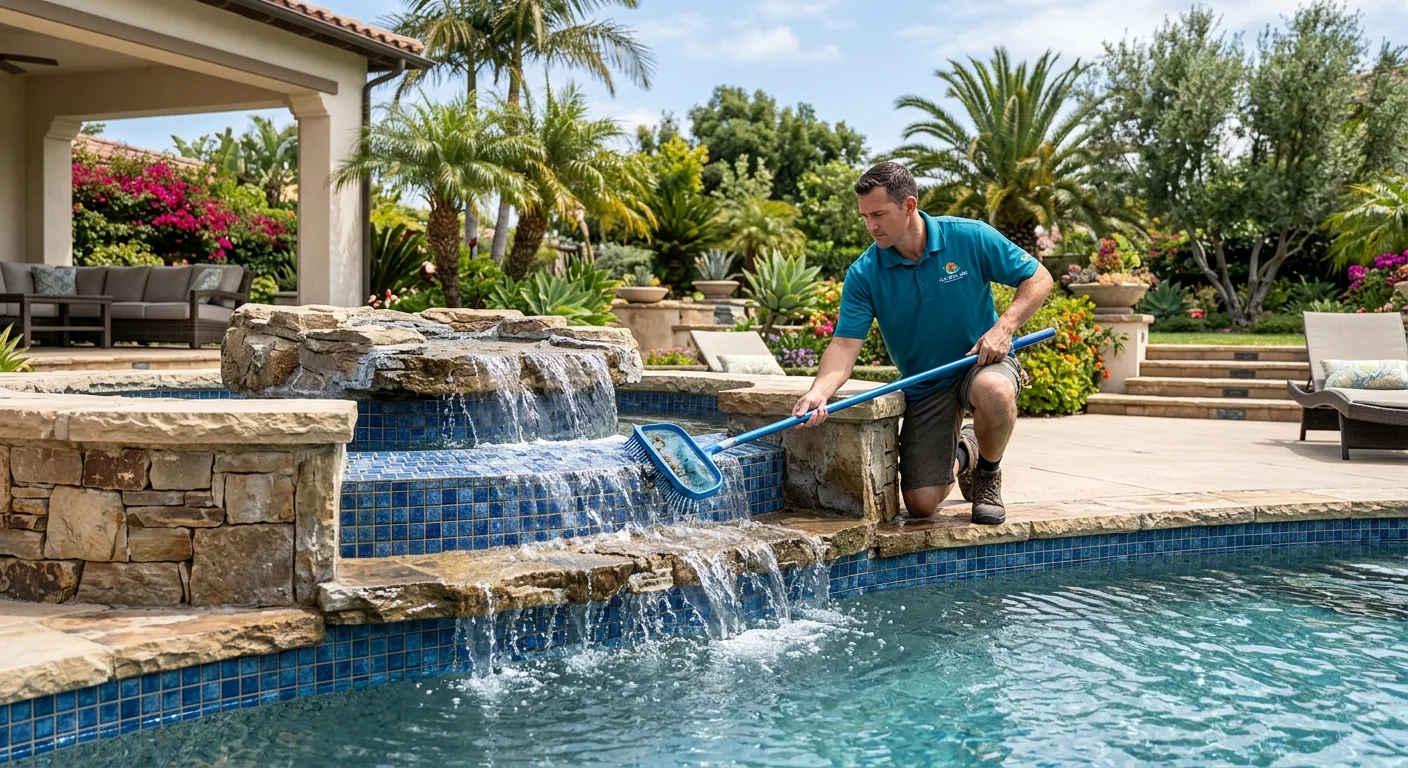
Pool-integrated features can be more complicated. A raised spa spillway, sheer descent, deck jet, or tiled wall may draw from the pool system. Some use a dedicated pump. Others depend on the pool pump, valves, automation, and return plumbing. Weak flow at the feature could therefore begin somewhere beyond the visible fountain.
San Diego homes contain both arrangements. A compact North Park courtyard may have a small standalone basin. A larger Rancho Bernardo or Chula Vista yard may pair several features with one pool equipment area. Photos of the basin, equipment, controls, and feature in operation can help a specialist understand the layout.
Note whether the problem affects only the fountain. Changes in pool circulation, pump behavior, or water level also matter. When the fault appears to involve shared pool equipment, pool repair service may be the better starting point.
Before hiring, check the contractor through the official CSLB license lookup. The lookup is more reliable than a badge shown on an advertisement.
Pumps, nozzles, and the clogs that stop the flow
Flow problems range from one uneven nozzle to a completely still basin. The pattern helps narrow the inspection.
A blocked nozzle may produce a crooked stream or reduced flow at one outlet. If every outlet weakens together, the specialist may inspect the intake, pump, valves, and shared supply path. Leaves, grit, and loose decorative material can collect around accessible openings. Mineral residue can also narrow small nozzle passages.
The water level matters too. A pump may struggle to draw water when the basin falls below its intended operating level. That low level may come from splash, a fill problem, or a leak. Refilling the basin repeatedly can hide the underlying pattern without explaining it.
Sounds and control behavior provide more clues. Record whether the pump is silent, humming, cycling, or running without visible flow. Also note whether the problem began after cleaning, landscaping, equipment work, or a control change. Those details help the pro inspect the likely part of the system first.
Avoid forcing wire, drill bits, or sharp tools into decorative nozzles. Small openings and finished surfaces can be easy to mark. A specialist can remove the nozzle when appropriate and check the passage from both sides.
The goal isn’t simply to replace a pump. It’s to confirm that water can reach the pump, pass through it, and exit through the intended outlets. That sequence keeps a hidden blockage or valve issue from being mistaken for a failed motor.
Leaks in basins, liners, and shared plumbing
A fountain that needs frequent refilling deserves a closer look. Water can leave through the basin, a fitting, concealed plumbing, or the normal spray pattern.
Start by recording the conditions. Note whether the level falls while the feature is off, only while it runs, or during both periods. Look for damp soil, lifted finish material, moisture near equipment, or water traveling beyond the intended catch basin. Don’t assume the closest wet spot marks the source. Water can follow joints and hidden surfaces before it appears.
Standalone fountains may need inspection around penetrations, drains, liners, seams, and pump connections. Pool-integrated features add shared valves and buried lines to the diagnostic path. A spillway can also send water outside the pool when its flow is uneven or wind changes the landing point.
The pool level offers another useful observation. If both the feature basin and pool appear affected, tell the specialist before the visit. The system may need a broader plumbing assessment instead of a surface patch.
A visible crack doesn’t automatically prove where water escapes. The pro may need to isolate sections and compare operating conditions. That process helps separate a basin problem from a line or fitting problem.
Keep a short log rather than guessing at a daily loss figure. Photos taken from the same angle can document the waterline without inventing a measurement. For current regional water information, use the San Diego County Water Authority as the local source.
Lighting and controls on water features
Lighting failures can appear alone or alongside a flow problem. One dark fixture suggests a different inspection path than an entire feature that won’t activate.
First, record exactly what happens. The light may stay dark, flicker, display the wrong color, or stop responding to a controller. A scheduled feature may work manually but not follow its programmed sequence. Those differences help separate fixture, connection, control, and automation issues.
Pool-integrated features often depend on the same control area as other pool functions. Check whether the pool pump, spa mode, landscape lighting, or other programmed equipment changed at the same time. Don’t reset every schedule before recording the current settings. The original behavior can help the specialist trace the fault.
Standalone fountains may have a separate timer, controller, transformer, or switch. Share any visible manufacturer and model information with the pro. Clear photos are more useful than guessing which component failed.
Moisture inside a lens, damaged housings, loose fittings, and altered wiring should be shown to the specialist as found. Don’t treat a water-feature light as an ordinary dry-location bulb change. The pro can identify the equipment involved and explain the repair options for that installation.
Control upgrades sometimes become part of a larger yard project. If you’re already reconsidering finishes, spillways, or feature placement, review these San Diego pool remodel ideas before deciding which parts to keep.
Scale and staining on decorative surfaces
White crust, dark streaks, and discolored grout can change a water feature’s appearance. They don’t all call for the same cleaning method.
Scale often collects where water repeatedly crosses an edge or evaporates from a splash zone. Tile lines, spillway lips, nozzles, and textured stone make those deposits easy to notice. The buildup may also change a narrow stream or create an uneven sheet of water.
Color alone can’t identify every deposit. A white mark may be surface residue, material exposed beneath a worn finish, or something carried from nearby construction. Brown, green, or dark staining can also have several sources. The underlying tile, stone, plaster, metal, or grout affects the treatment choice.
Ask the specialist to identify both the residue and the surface before approving cleaning. An approach suited to glazed tile may not suit natural stone or a delicate decorative finish. A small test area can show how the material responds before the whole feature is treated.
Take photos while the surface is dry and while water is flowing. Dry images show texture and edges. Operating images show where water concentrates, misses the basin, or leaves persistent wet bands.
The repair plan may combine cleaning with a flow correction. Removing residue without addressing a misaligned nozzle or irregular spillway can leave the same visible pattern. Likewise, adjusting flow won’t restore an already stained finish. Treat the appearance and the operating cause as separate decisions.
Pool-integrated features versus courtyard fountain specialists
The local search results for fountain repair are dominated by dedicated fountain companies that restore standalone basins, concrete tiers, and courtyard installations. Refresh Pool Pros does not chase that work. We match homeowners whose water feature is tied to a pool: spa spillways, sheer descents, deck jets, and tiled walls that share pumps, valves, or automation with the pool. If the basin sits in a courtyard with its own pump and no pool connection, a dedicated fountain specialist is the better call.
When to call us
Call when the feature loses water, won’t circulate, develops uneven flow, or has lighting and control problems. Call us at (858) 400-4598 and we’ll connect you with a licensed local pool specialist.
Frequently asked questions
Who repairs backyard fountains in San Diego?
The right professional depends on whether the fountain is standalone or connected to a pool. Refresh Pool Pros can connect you with a licensed local pool specialist for pool-integrated fountains and water features.
Why has my fountain stopped flowing?
Possible causes include a blocked intake, clogged nozzle, low basin level, closed valve, control problem, or pump failure. A specialist can inspect the full water path before recommending a repair.
How can I tell whether a fountain is leaking?
Record when the water level falls and whether the feature is running. A specialist can compare those conditions and inspect the basin, fittings, plumbing, and nearby pool system.
Can scale be removed from a fountain?
The correct treatment depends on the deposit and the underlying surface. Have the material and residue identified before approving mechanical or chemical cleaning.
Need professional help in San Diego County?
Refresh Pool Pros connects you with a licensed specialist for any service in this post.