A San Diego hot tub can look clear on Friday and feel wrong by Sunday. A dependable maintenance schedule uses weekly checks, monthly cleaning, and quarterly inspections, with draining based on the spa manual and the condition of the water.
That rhythm catches gradual changes without turning every small variation into a repair project. Keep the manual nearby, record what you find, and adjust the schedule around actual use.
Why a spa goes off the rails faster than a pool
A hot tub concentrates heat, aeration, bathers, and water treatment in a compact space. Lotions, sunscreen, detergent residue, leaves, and dust can affect the water after a busy weekend. Jets also move water and air quickly, so foam or an unusual odor can become noticeable soon after use.
San Diego adds several local variables. Coastal homes from Point Loma through Encinitas often deal with damp marine air and salt film on outdoor surfaces. Inland areas such as Poway and El Cajon get hotter, drier conditions. Santa Ana winds can leave fine dust across covers, steps, and exposed water.
Those differences make observation more useful than a rigid calendar. A spa used most evenings needs closer attention than one opened occasionally. Wind, nearby landscaping, and an uncovered soaking session also change the workload.
Start by establishing a baseline. Note normal water clarity, jet strength, sound, temperature behavior, and test results. Later changes will be easier to recognize because you’ll have something specific to compare.
Use the spa manufacturer’s manual for its approved products and procedures. Follow every chemical label, including storage and handling directions. The CDC’s healthy swimming guidance is also a useful reference for general recreational water care.
Weekly, monthly, and quarterly tasks
A simple schedule works because each visit has a clear purpose. Keep a notebook near the spa or use a repeating phone reminder. Record results instead of relying on memory.
Every week
Open the cover and inspect the water before adding anything. Check clarity, surface foam, the waterline, and visible debris. Run the jets and compare the flow with your normal baseline. Listen for unfamiliar sounds and note any error message on the control panel.
Test the water with a fresh, properly stored kit. Measure the items required by your spa manual, then follow its target levels and product directions. Don’t guess from appearance or odor. Write down the readings and any adjustment you make.
Wipe residue from the waterline and the underside of the cover using methods approved by the manufacturer. Check that the cover sits correctly and isn’t collecting standing water.
Every month
Give the filter a closer inspection. Look between the pleats for trapped debris, discoloration, bent material, or damaged end caps. Clean the cartridge according to its label and the spa manual.
Inspect accessible jet faces, intake grilles, pillows, and cup areas. Don’t remove a guard or open an electrical enclosure as part of routine cleaning. Review the month’s testing log for recurring changes after certain use patterns.
Every quarter
Inspect the visible equipment area for moisture, staining, corrosion, pests, or loose-looking connections. Check the cover, cabinet panels, and accessible plumbing for changes. A quarterly review is also a good time to confirm that your routine still matches the manufacturer’s current instructions.
Filter cleaning and rotation
Filter care should follow condition and flow, not an arbitrary reminder alone. Inspecting the cartridge weekly doesn’t mean it needs a deep cleaning every week. It means you’ll see debris before it becomes packed between the pleats.
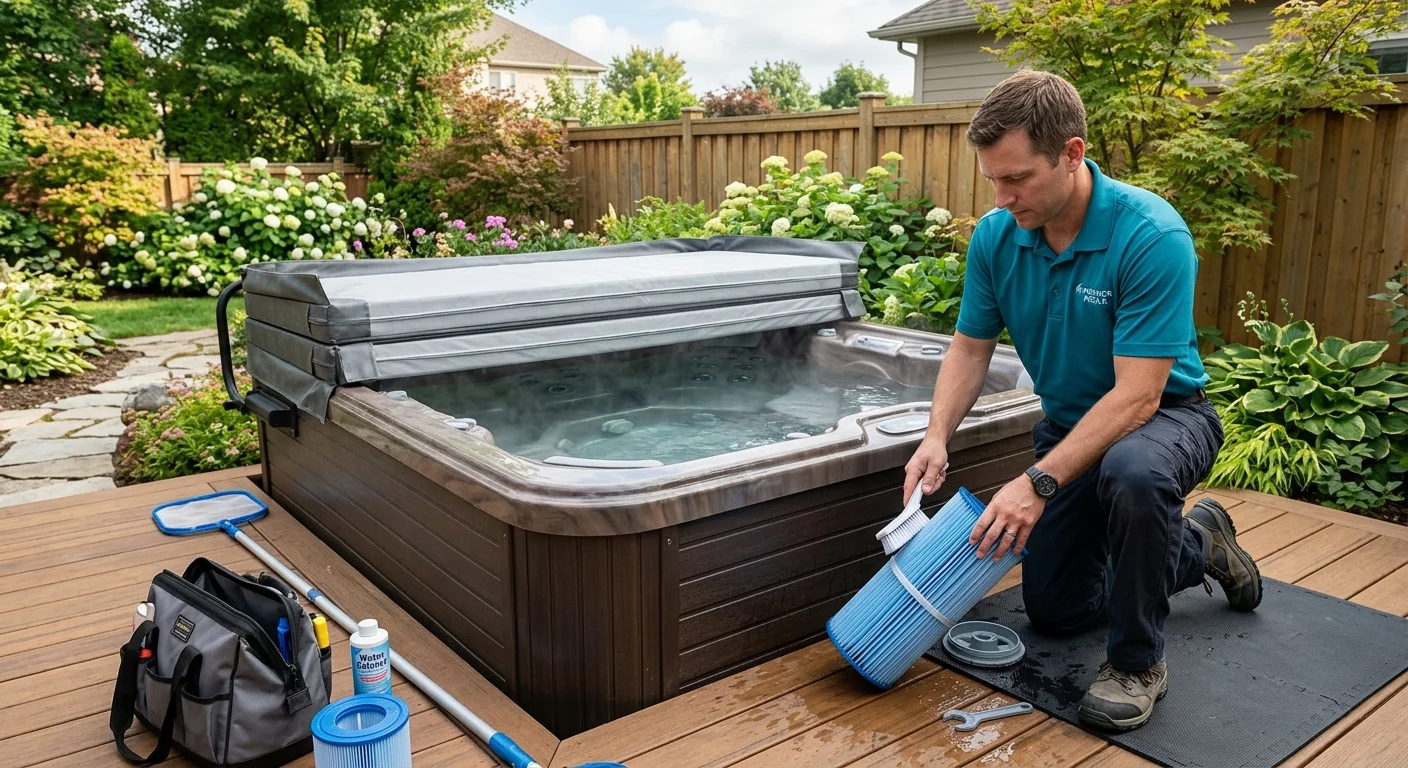
Turn the system off using the procedure in the spa manual. Remove the filter without forcing its cap, housing, or retaining parts. Rinse between the pleats with gentle water pressure. Work from top to bottom and rotate the cartridge as you go.
Use a filter-cleaning product only when the cartridge maker permits it. Follow its label for soaking, rinsing, and handling. Household cleaners can leave residue, so don’t substitute a product because it happens to be nearby.
Some owners keep a second compatible cartridge. That can make rotation easier while a cleaned filter dries, but the spare must match the spa’s specifications. Marking each cartridge helps you track which one is in service. Never assume two filters are interchangeable because they look similar.
Seat the cartridge exactly as the manual shows. Then restart the spa and confirm normal circulation. If weak flow returns soon after cleaning, don’t keep blaming the filter. The cause may sit elsewhere in the circulation system.
Persistent flow, heating, or control problems belong with a spa and hot tub service specialist. If the spa shares equipment or plumbing with the pool, a broader pool repair inspection may make more sense.
Draining and refilling on a sensible rhythm
There isn’t one drain-and-refill interval that fits every San Diego hot tub. Spa design, use, water treatment, debris, and refill water all affect the decision. Follow the manufacturer’s schedule, then use your testing log to judge whether the water is becoming harder to manage.
Persistent foam, cloudiness, residue, or chemistry that won’t remain within the manufacturer’s targets deserves attention. First check the filter, testing method, products, and recent use. If routine corrections don’t restore stable water, consult the manual or a local specialist before adding more products.
Plan the drain before opening a valve. Read the instructions for shutting down power, operating any drain connection, and protecting the empty shell. Confirm the acceptable discharge location with your city, water district, or wastewater provider. The correct direction may depend on the property and local rules. Current regional water information is available from the San Diego County Water Authority.
During the refill, follow the manufacturer’s specified fill point and startup sequence. Don’t energize the equipment early. Air trapped in the plumbing or an incorrect water level can complicate startup, so use the model-specific procedure.
Once circulation is running, test the fresh water. Add only the products listed for the spa, in the order and amounts directed by their labels. Record the starting readings and the refill date. That entry becomes the new baseline for judging future changes.
The maintenance misses that turn into repairs
The most common maintenance miss is treating every symptom as a chemistry problem. Weak jets, slow heating, repeated error codes, unexplained water loss, or moisture near equipment need diagnosis. Adding another product won’t correct a mechanical or electrical fault.
A second miss is ignoring small changes because the spa still runs. A new hum, damp cabinet edge, irregular circulation, or recurring reset is useful information. Write down when it happens, what mode the spa was in, and what the control panel displayed. Clear notes help a specialist narrow the issue.
Filter mistakes also create confusion. A cartridge can appear clean while debris remains deep in the pleats. It may also be installed incorrectly after cleaning. Confirm its orientation, retaining parts, and seating against the manual before assuming another component has failed.
The cover deserves attention too. Dirt on its underside can return to clean water. Poor fit can also allow more windblown debris inside. Along the coast, inspect for salt film. After Santa Ana conditions, check the folds and edges for dust before reopening the spa.
Stop routine troubleshooting when you find persistent leaking, heating failure, breaker trips, burning odors, or damaged wiring. Those signs fall outside preventive care. Our guide to spa and hot tub repair in San Diego explains what to document before a service visit. You can confirm a contractor’s current status through the official CSLB license lookup.
When to call us
Call when routine cleaning and manufacturer-directed adjustments don’t restore normal circulation, heating, or water condition. Call us at (858) 400-4598 and we’ll connect you with a licensed local pool specialist.
Frequently asked questions
What should I check every week in my hot tub?
Check water clarity, chemistry, circulation, the waterline, and the condition of the cover. Follow the spa manual and every product label when testing or adjusting the water.
How often should a hot tub filter be cleaned?
Inspect it weekly and clean it when the manual, pressure reading, or reduced flow indicates it is needed. The correct interval depends on use, debris, and the filter model.
How often should I drain and refill my hot tub?
There is no single schedule for every spa. Follow the manufacturer’s instructions and consider water condition, use, testing history, and local discharge guidance.
When does hot tub maintenance become a repair?
Persistent leaks, heating trouble, repeated error codes, breaker trips, or circulation problems need professional diagnosis rather than another chemical adjustment.
Need professional help in San Diego County?
Refresh Pool Pros connects you with a licensed specialist for any service in this post.