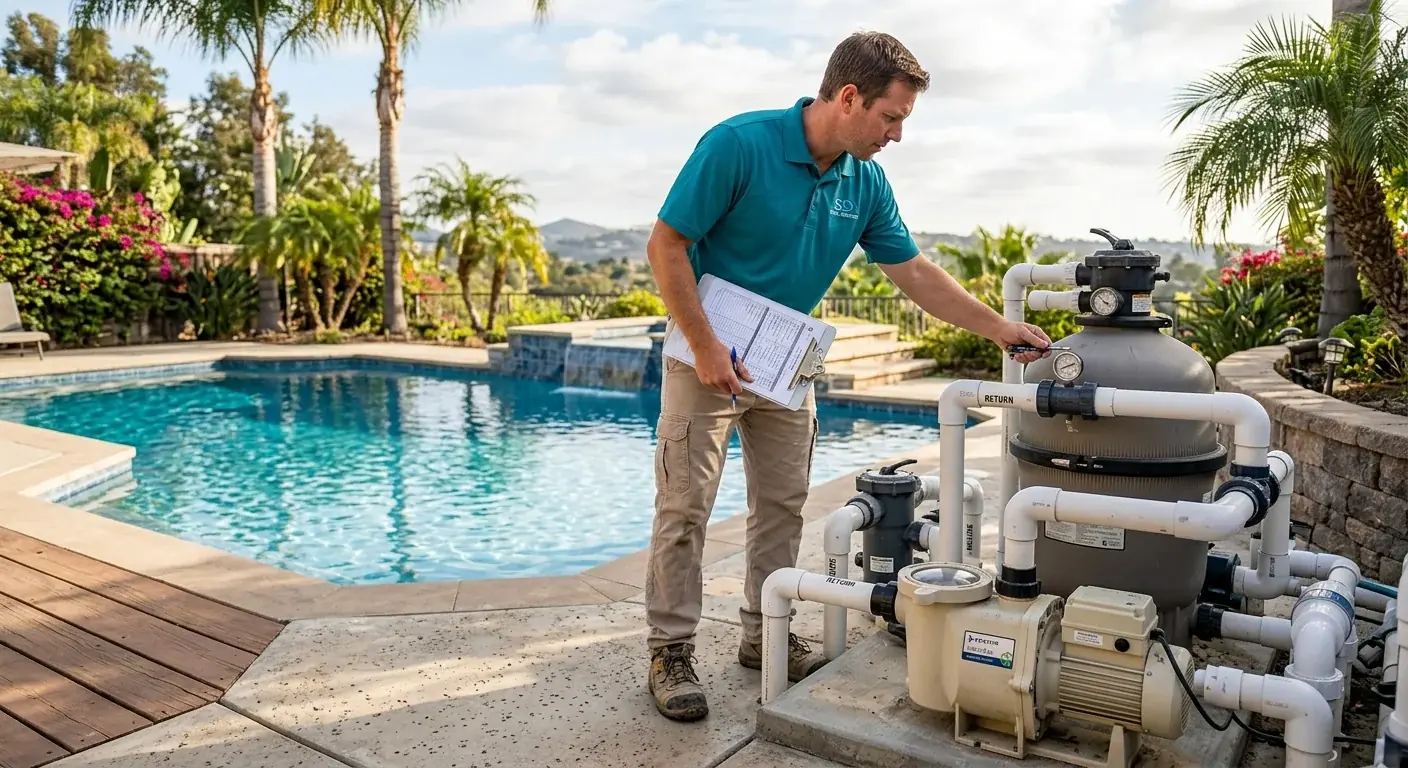
A pool inspection covers four systems: the shell, the plumbing, the equipment pad, and the safety features. A report that names only the equipment, or only the surface, has looked at a quarter of the pool. What separates a useful inspection from a walk-around is whether someone tested the things that do not show from the deck.
There are two different jobs sharing one name, and knowing which you need saves a wasted call. A pre-purchase inspection is documentation for a real estate transaction. A repair assessment is diagnosis before a fix. Refresh Pool Pros connects San Diego County homeowners with licensed specialists who do the second kind, and this guide covers both so you can tell them apart.
What does a pool inspection actually cover?
A complete inspection works through four systems in order.
The shell and finish. Cracks, hollow or drummy spots under the plaster, staining, chips at the waterline tile, and the condition of the coping and the expansion joint. Surface wear is normal. A crack that runs through the bond beam is not.
The plumbing. Whether the pool holds water, whether the skimmer and main drain pull correctly, and whether valves and actuators send water where they should. This is the part a visual pass cannot settle, because buried lines are buried.
The equipment pad. Pump, filter, heater, and any salt cell, automation panel, or timer. The inspector notes age, condition, obvious leaks, and whether anything has been replaced piecemeal, which usually means the rest of the pad is the same age as the house.
Safety features. Barriers and gates, drain covers, and electrical bonding at the pad. California requires a pool to carry at least two of seven drowning-prevention safety features, and that requirement attaches when a permit is issued for building or remodelling a pool at a private single-family home. It is not a blanket retrofit rule on every existing pool.
What is the difference between a pool inspection and a repair assessment?
They answer different questions.
A pre-purchase inspection answers “what condition is this pool in?” for someone who does not own it yet. It is ordered during escrow, produced by a licensed inspector, and written as a record. A good one describes what it found without steering you toward a particular contractor.
A repair assessment answers “why is this happening and what does fixing it take?” for someone who already owns the pool. It starts from a symptom: the heater will not fire, the pump is grinding, the water keeps dropping. It ends in a diagnosis and a quote.
Refresh Pool Pros routes the second kind. The specialists in the network handle pool repair, leak detection, equipment work, and resurfacing. If what you need is a report for a transaction, a licensed pool inspector is the right call, and we will tell you that on the phone rather than send someone out.
What does a San Diego pool inspection turn up most often?
The county splits into two patterns, and where the pool sits predicts what the report says.
Inland, the enemy is mineral load. Harder water scales heater elements, shortens pump seal life, and works on plaster faster than softer water does. Inspections through East County and the inland valleys flag heaters that have lost efficiency and surfaces that aged before their time. Your water provider publishes its own hardness figures, and they are worth reading before you argue with a heater quote.
On the coast, the enemy is salt air. Pools in La Jolla, Coronado, Del Mar, and Pacific Beach show corrosion on pump housings, unions, fasteners, and anything exposed at the pad. The shell often outlives the equipment.
Countywide, age is the third pattern. A pool that came with an older house is usually on its second or third set of equipment, and the pieces rarely got replaced at the same time. A newer pump bolted to an original filter is a common sight, and it tells an inspector roughly when each failure happened.
What does an inspection do when the pool is losing water?
It confirms the loss and narrows the side. It does not locate the leak.
The bucket test is the free first step and you can run it before anyone arrives. Set a weighted bucket on a step, fill it so the water inside matches the pool, and compare the two lines after 24 hours. Evaporation pulls both down by the same amount. If the pool has fallen further than the bucket, the difference is going somewhere else.
From there the pattern narrows it. Water lost only while the pump runs points at the pressure side. Water lost only when the pump is off points at the shell. Air in the pump basket points at a suction-side leak above the water line. Actually finding the spot takes pressure testing each line and electronic listening equipment, which is leak detection rather than inspection.
What should be in the report?
Four things, and a report missing any of them is worth asking about.
- Findings by system, not one undifferentiated list, so you can see whether the shell, the plumbing, the pad, or the safety features carry the problem.
- Severity, separating what needs attention now from what is simply worn.
- Photographs of anything named, especially cracks and corrosion.
- What could not be checked, which is the most useful line in any honest report. Buried plumbing, the area under a full pool cover, and anything behind a locked gate are common examples.
If a report reads as a list of everything that could ever be wrong with a pool, it was not written about your pool.
What happens after the inspection?
Findings sort into three piles. Cosmetic wear you can live with and plan for. Equipment nearing the end of its life, which is a budgeting question rather than an emergency. And active faults, which are the ones that get more expensive by waiting, because water escaping a line undermines what sits above it.
Homeowners in San Diego County most often move from a report straight into one of three jobs: equipment replacement, resurfacing, or leak location. Refresh Pool Pros matches you with a licensed specialist for whichever one the report points at. Pool work is CSLB C-53 licensed, and you can check any contractor’s licence at the CSLB licence lookup before work starts.
Call (858) 400-4598 with what the report said and we will route it to the pro who handles that specific work.
Frequently asked questions
What does a pool inspection cover?
A swimming pool inspection covers four systems: the shell and its finish, the plumbing and its water-tightness, the equipment pad, and the safety features. On the shell that means cracks, hollow spots, staining, and the waterline tile. On the plumbing it means whether the pool holds water and whether the lines and valves route correctly. On the pad it means the pump, filter, heater, and any salt cell or automation. Safety covers barriers, drain covers, and bonding. A report that only names one of the four is not a full inspection.
Do I need a pool inspection before buying a house in San Diego?
A standard home inspection usually walks past the pool or looks at it briefly, because a pool is its own system with its own failure modes. If the house has a pool and you want its condition documented before you close, order a separate pool inspection. The two most expensive things a pool can hide are a leak in a buried line and a shell that needs resurfacing, and neither is visible from the deck.
What do inspectors find most often on San Diego pools?
Scale on heater elements and pump seals is the most common finding inland, where the water carries a heavier mineral load. On the coast the pattern is corrosion instead, on pump housings, unions, and exposed hardware, driven by salt air. Countywide the other recurring items are surfaces at the end of their service life, equipment older than the rest of the pad, and safety features that no longer meet the requirement.
Can a pool inspection tell me if the pool is leaking?
It can tell you the pool is losing water, and it can point at the likely side. It usually cannot tell you exactly where. Confirming a leak takes a bucket test, and locating it takes pressure testing on each line plus electronic listening equipment. If an inspection flags water loss, leak detection is the next step, not a guess at the repair.
Who inspects a pool in San Diego?
Pre-purchase reports come from inspectors who specialise in pools and spas. Condition assessments before a repair or a resurface come from pool repair specialists. Pool work is CSLB C-53 licensed, so check any contractor's licence at the CSLB licence lookup before work starts, whichever route you take.
Need professional help in San Diego County?
Refresh Pool Pros connects you with a licensed specialist for any service in this post.