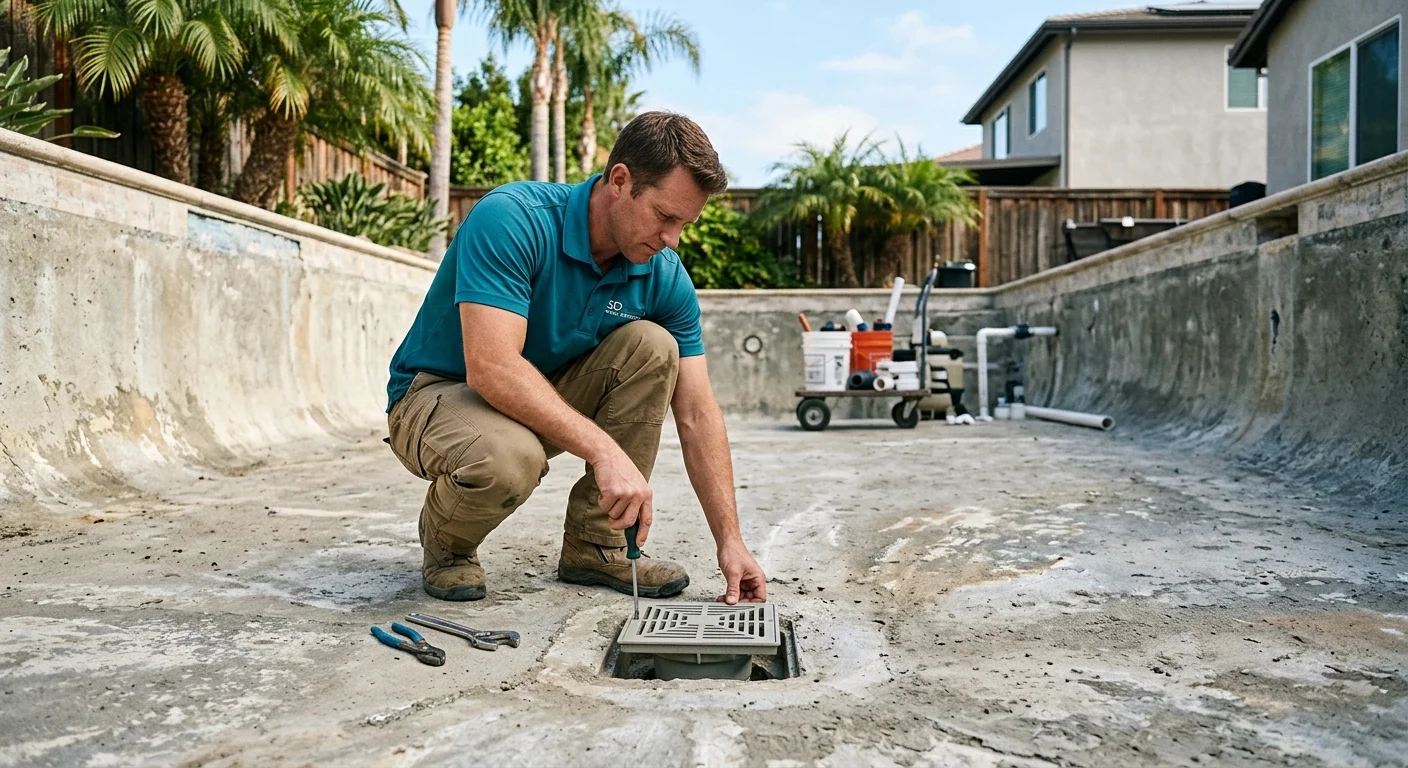
Weak flow near the pool floor can point to a suction-line problem. A pool drain cleaning service can test that line, find the restriction, and determine whether clearing or repair makes sense. The pump, valves, and skimmer must also be checked before blaming the drain.
What the main drain does and why it is not for draining the pool
The name creates an easy misunderstanding. A pool’s main drain isn’t like a bathtub drain. It’s a floor-level suction outlet connected to the circulation system.
When the plumbing and valves allow it, water moves from that outlet toward the pump. The water then continues through the pool equipment before returning to the pool. The exact layout varies, so floor suction won’t feel identical in every pool.
Cleaning the main drain means addressing the outlet or its connected line. It doesn’t mean pulling a plug and letting the pool empty. Don’t lower the water as a diagnostic step unless the specialist handling the job calls for it.
The first useful step is documenting the pool’s layout. Note the skimmer locations, equipment-pad position, and available valve labels. Tell the pro about recent pump work, plumbing changes, or deck repairs. Even an unlabeled valve can affect the diagnosis.
Access also matters across San Diego County. A pool behind a narrow City Heights side yard presents a different setup than one reached by hillside steps near La Mesa. Mention locked gates, stairs, alley access, and tight equipment areas when requesting service.
A specialist can then determine whether you need line cleaning or broader pool repair. That distinction matters because weak circulation doesn’t identify one failed part by itself.
Signs the main drain line is blocked or collapsed
A blocked line may change how the system behaves when that suction branch is selected. The pattern matters more than any single symptom.
Possible warning signs include:
- Suction drops when flow shifts toward the main drain.
- The pump struggles to stay filled under one valve setting.
- Air appears at the pump after the main drain branch opens.
- The skimmer works better than the floor suction outlet.
- Debris around the outlet returns after careful removal.
- Circulation changes without an obvious filter or basket issue.
These signs don’t prove that the pipe is blocked. A valve problem, pump-side air leak, clogged basket, or equipment restriction can produce a similar result. The useful question is what changes when each suction source is tested separately.
A collapsed or leaking buried line is harder to identify from the deck. Surface symptoms alone can’t show whether the pipe is obstructed, leaking, disconnected, or physically damaged. That takes line isolation and testing.
Don’t push a rod, wire, or improvised tool through the drain cover. The cover and outlet should remain undisturbed until a qualified specialist checks their condition. Stop running the circulation system if the pump can’t maintain normal water flow during the problem.
Tell the pro when the symptoms began and what happened beforehand. A recent equipment change, construction near the deck, or debris event can help narrow the search. Clear observations are more valuable than guessing that the underground pipe has collapsed.
Anti-entrapment covers and why a broken one stops the job
A main drain cover is part of the suction outlet assembly, not a decorative cap. If it’s cracked, loose, missing, or held by damaged hardware, shut the circulation system off. Keep swimmers out until a qualified pro checks the outlet.
That condition also stops ordinary line-clearing work. The specialist needs to inspect the cover before applying suction or other clearing methods. Clearing a restriction doesn’t make a damaged cover acceptable for use.
Don’t substitute a cover because it looks close in size. The pro should identify the existing outlet, its mounting points, and the correct compatible replacement. Random screws, adhesives, or makeshift plates aren’t suitable repair choices.
This page doesn’t state a universal cover dimension or installation rule. Those details weren’t confirmed in the approved sources for every pool configuration. Ask the specialist to explain how the selected cover matches the installed outlet and current requirements.
Photograph the cover from the deck if you can do so safely. Don’t enter the water or reach into the outlet to get a closer image. A wide photo of the pool floor and equipment area may also help the pro understand the layout.
Once the outlet is safe to inspect, diagnosis can continue. Cover replacement and line clearing may be related tasks, but they solve different problems. One addresses the outlet assembly. The other addresses flow through the connected plumbing.
How a blocked line is located and cleared
Diagnosis should begin at the equipment pad, not with excavation. A pro can document valve positions, inspect accessible fittings, and compare how the pump behaves across available suction sources. This helps separate a main drain problem from a system-wide flow problem.
The next step is isolating the suspected line where the plumbing allows it. The specialist may test whether the branch moves water and whether it maintains test pressure. The pool’s layout and accessible connection points determine which test methods fit.
If testing supports a blockage, the pro can select controlled clearing equipment for that plumbing. The method should fit the pipe route and suspected material. A camera may help in some accessible lines, but it won’t suit every bend, connection, or pool layout.
After clearing, the system needs another comparison. The pro should confirm whether flow improved and whether the line behaves differently under the same valve settings. Simply moving debris without checking the result leaves the diagnosis unfinished.
A line that won’t clear, won’t maintain test conditions, or still behaves abnormally may need further investigation. That’s where pool leak detection and repair can help identify whether water is escaping from buried plumbing. Testing should guide any recommendation to open decking or expose a pipe.
Before work begins, ask for a written scope. It should identify the line being tested and the proposed next step. If buried repair is recommended, ask what test result supports it.
For contractor work, confirm the pro’s license through the official California Contractors State License Board lookup. Refresh Pool Pros connects homeowners with licensed independent local specialists. The matched specialist performs the physical work.
When the problem is the line and when it is the pump
The clearest distinction comes from comparing branches. If the skimmer side maintains flow but the main drain side causes an immediate change, the line or its valve deserves closer testing. If every suction source behaves poorly, the problem may be elsewhere.
Start with observations the pro can repeat. Note whether the pump basket stays filled, when air appears, and which valve setting changes the sound or flow. Don’t adjust unknown valves while the system is running unless a specialist directs you.
A pump-side problem can imitate a blocked line. Air entering near the equipment pad, an obstructed basket, or a valve that isn’t opening fully may reduce circulation. A restriction elsewhere in the equipment can also affect more than one suction source.
Visible water around the pump adds another clue. Our guide to a pool pump leaking water in San Diego explains what to record before requesting repair. A wet equipment pad doesn’t automatically identify the main drain line as the source.
Ask the specialist to explain the comparison behind the diagnosis. Which suction branches were tested? Did the problem follow one valve position? Did the pump behave normally when that branch was isolated? Those answers help distinguish a line-cleaning job from pump repair.
Don’t approve deck cutting based only on weak floor suction. Buried work should follow testing that points to the line. Likewise, replacing the pump won’t resolve a confirmed obstruction inside one branch. A measured diagnosis protects the pool from unnecessary work.
Blocked line versus a leaking line versus a broken cover
Those are three different jobs. A blocked main drain line fails a flow or pressure test on that suction branch while the skimmer side still works. A leaking line loses water, often showing up on a bucket test or as wet ground, and belongs on pool leak detection rather than on a cleaning visit. A cracked, loose, or missing anti-entrapment cover is a stop-work safety condition even if the pipe itself is clear.
Do not treat pool main drain repair as a licence to open the deck. Ask which of the three the specialist proved, and get that in the written scope. This page does not publish an excavation price.
When to call us
Call when floor suction changes, the pump draws air on one branch, or the main drain line won’t operate normally. A missing or damaged drain cover also needs a licensed pool service pro before the system runs again.
Call us at (858) 400-4598 and we’ll connect you with a licensed local pool specialist.
Frequently asked questions
Can a pool drain cleaning service empty my pool?
Pool drain cleaning usually concerns the suction line beneath the floor outlet. It doesn't mean opening the drain to empty the pool.
What are the signs of a blocked pool main drain?
Possible signs include weak flow when the main drain line is selected, air entering the pump, or circulation that changes between suction sources. A pro should test the system because pump and valve problems can look similar.
Can a blocked main drain line be cleared without digging?
A specialist may first isolate and test the line, then choose clearing equipment suited to the plumbing. Digging shouldn't be recommended until testing points to a buried failure.
What should I do if the main drain cover is broken?
Turn the circulation system off and keep swimmers out. A missing or damaged anti-entrapment cover is a stop-work condition until a qualified pro checks the outlet.
Should I repair the main drain line or the pump?
That depends on testing. A line problem may affect one suction branch, while a pump or equipment-pad problem may affect circulation across several branches.
Need professional help in San Diego County?
Refresh Pool Pros connects you with a licensed specialist for any service in this post.