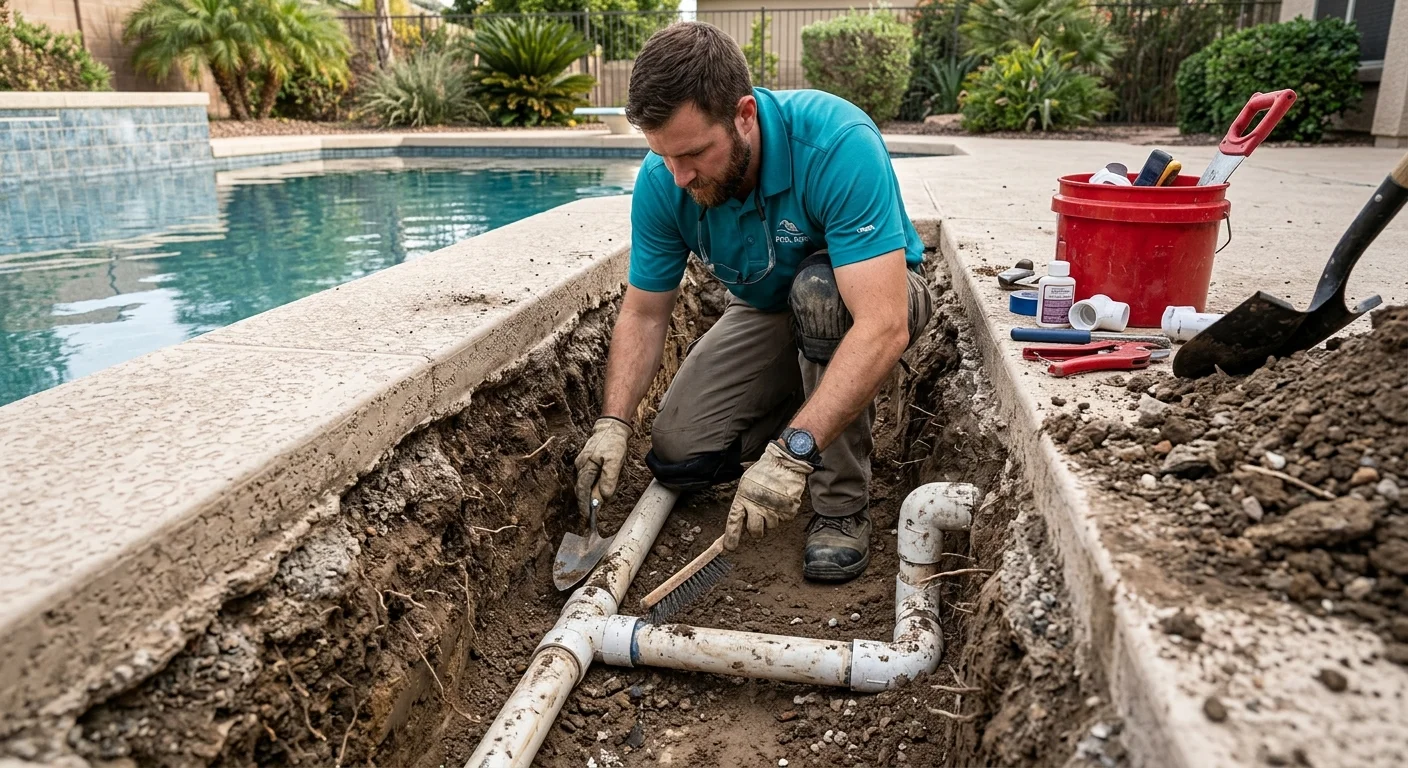
Water loss that remains after visible equipment leaks are ruled out may point to buried plumbing. If you’re searching for pool plumbing repair in San Diego County, start with line-specific leak detection before opening the deck. The repair plan depends on the damaged line, its route, and the surfaces above it.
The lines buried between the pool and the pad
The pool shell and equipment pad are joined by several plumbing runs. Suction lines carry water from pool outlets toward the pump. Return lines carry filtered water back toward the pool. A property may also have separate plumbing for a spa, heater loop, water feature, or cleaning system.
Each run follows its own route underground. Pipes can pass beneath concrete, pavers, planting beds, lawn, or retaining areas. The shortest visible distance between the pool and pad may not match the actual route. Previous remodeling can make that route harder to follow.
That difference matters on San Diego County properties. A narrow side yard in Clairemont may limit equipment access. A hillside layout near La Mesa can place plumbing at changing elevations. In Chula Vista or National City, later hardscape may cover pipes installed with the original pool. Coastal North County homes may also have several outdoor improvements between the shell and equipment area.
A buried leak can occur along a pipe or at a fitting, connection, or transition. The failed line must be identified before choosing where to excavate. Opening the nearest slab without testing can expose sound plumbing while leaving the actual leak untouched.
Start by gathering any plans, remodeling records, or construction photos you have. Photos taken before decking or landscaping went down can be especially helpful. Equipment labels and valve positions also help a specialist map which buried run serves each pool function.
Signs that point underground rather than at the equipment
Check the visible equipment area before blaming a buried line. Look around the pump, filter, heater, valves, and exposed connections. Damp concrete, mineral residue, or water appearing during operation may keep the investigation at the pad.
When the pad remains dry, the pattern of water loss becomes more useful. A change when the pump runs can help a specialist decide which circuits to isolate. Air returning through pool inlets or collecting near the pump may also guide testing. These signs aren’t proof by themselves.
A return-side leak may release water underground without creating an obvious puddle. Soil, drainage, and hardscape can move or hide that water. A suction-side problem may show itself through air or unstable pump operation. A separate spa or heater-related loop may behave differently when its valves change position.
Water can also escape through the pool shell, light niche, fittings, or other penetrations. That’s why a plumbing symptom shouldn’t be treated as a final diagnosis. Our guide to how pool leak detection works explains how a specialist separates plumbing loss from other possible sources.
Write down what you observe before the appointment. Note which valves were open and whether the pump was running. Photograph any wet areas or changes around the deck. Clear observations can help the pro reproduce the problem without relying on guesswork.
Locating a buried line without excavating the whole yard
Good leak location begins by dividing the system into testable sections. A specialist may isolate a suction line, return line, spa circuit, or heater loop. Controlled pressure testing can then show which section fails to hold as expected.
The next step is narrowing the failure within that run. A pro may use listening equipment to detect activity around escaping air or water. Tracer methods may also help when the pipe layout and site conditions allow them. No single method fits every buried line.
Existing plans provide a starting route, but field conditions still matter. Valves may have changed during an earlier remodel. A deck extension may cover an old connection. Landscaping can also hide the point where plumbing leaves the equipment area.
A location should be treated as a supported target, not automatic certainty. Thick decking, nearby irrigation, background equipment noise, and an unknown pipe route can affect the search. Ask the specialist what evidence supports the proposed access point. Also ask how the line was isolated from the rest of the system.
Professional pool leak detection is especially useful when several buried circuits cross the same area. The goal is to identify the failed run and reduce unnecessary excavation. That can protect more of the surrounding deck and landscaping, though some access may still be required for the repair.
Before cutting begins, confirm which line is affected and where it connects. The written scope should identify the planned access area. It should also explain what happens if the opening doesn’t reveal the failure.
Repair versus reroute versus reline
A spot repair replaces or reconnects the failed portion of an existing line. It may make sense when testing identifies a limited problem with workable access. The opening still needs enough room for the pro to inspect and complete the connection.
A reroute creates a different path around the damaged section. The old section is taken out of service rather than followed through every covered area. This option may avoid a large deck section, but the new route still needs suitable connections and protection.
Relining treats the pipe from inside instead of replacing the full buried run. It isn’t suitable for every diameter, bend, connection, or type of damage. Ask the pro to confirm that the line was inspected for the proposed method. The scope should state which portion will be lined and how the result will be checked.
The decision shouldn’t rest on excavation alone. Consider the condition of the remaining line, access at both ends, valve layout, and surfaces above the route. A short opening through plain concrete is a different restoration problem from a route beneath stone, steps, or a finished outdoor kitchen.
For broader equipment or plumbing work, a licensed specialist can coordinate the diagnosis with the needed pool repair. Ask for separate descriptions of plumbing work and surface restoration. Also confirm who handles permits if the proposed scope requires one.
Check the contractor through the official CSLB license lookup before signing. Ask whether the pro offers a written warranty, and get those terms directly from that contractor.
Restoring decking and landscaping afterwards
Restoration planning should happen before the first cut. The plumbing repair and the finished surface are separate parts of the job. Confirm whether the same contractor handles both or whether another trade will close the opening.
Ask how large the initial access area needs to be. The answer may change after the pipe is exposed. A clean saw cut can define an opening in concrete, while pavers may be lifted and stored. Planting beds require a plan for soil, roots, irrigation, and removed materials.
Matching an existing finish deserves its own conversation. Concrete, grout, stone, and pavers can change with age and exposure. A repaired section may remain visible even when the work is neat. Ask what materials will be reused and what replacement material is available before excavation begins.
Drainage and finished elevation also matter. The restored area shouldn’t create an unintended low point around the pool or equipment pad. Confirm how base material will be replaced and how the surface will meet the surrounding deck. If landscaping is involved, identify any irrigation lines before digging.
Before the opening is closed, photograph the completed plumbing. Include wide views and closer images of connections. Record measurements from fixed features such as the pool edge or equipment pad. Those records can make future service easier and preserve the new route after the surface disappears.
The final scope should explain testing, backfill, deck repair, cleanup, and landscaping responsibilities. Don’t assume those items are included because excavation appears in the plumbing proposal. Clear boundaries prevent a repaired pipe from leaving an unfinished yard.
When to call us
A suspected buried line leak needs a licensed pool pro when plumbing must be isolated, tested, opened, rerouted, or relined. Call us at (858) 400-4598 and we’ll connect you with a licensed local pool specialist.
Frequently asked questions
How can I tell if my pool leak is in an underground pipe?
Changes linked to pump operation, recurring air in the system, or water loss with no visible equipment leak can point toward buried plumbing. These clues don't confirm the location, so the lines should be isolated and tested.
Can a pool pro locate a buried leak without removing the whole deck?
A specialist may narrow the location by isolating lines, pressure testing them, and using listening or tracer equipment. Access conditions and the type of failure affect how precisely the leak can be located.
Should a damaged pool line be repaired, rerouted, or relined?
The choice depends on the failed section, access, pipe condition, route, and surfaces above it. Ask the licensed pro to explain why the proposed method fits that specific line.
How do I check a California pool contractor's license?
Use the official California Contractors State License Board lookup. Confirm the license status and classification before signing a contract.
Need professional help in San Diego County?
Refresh Pool Pros connects you with a licensed specialist for any service in this post.