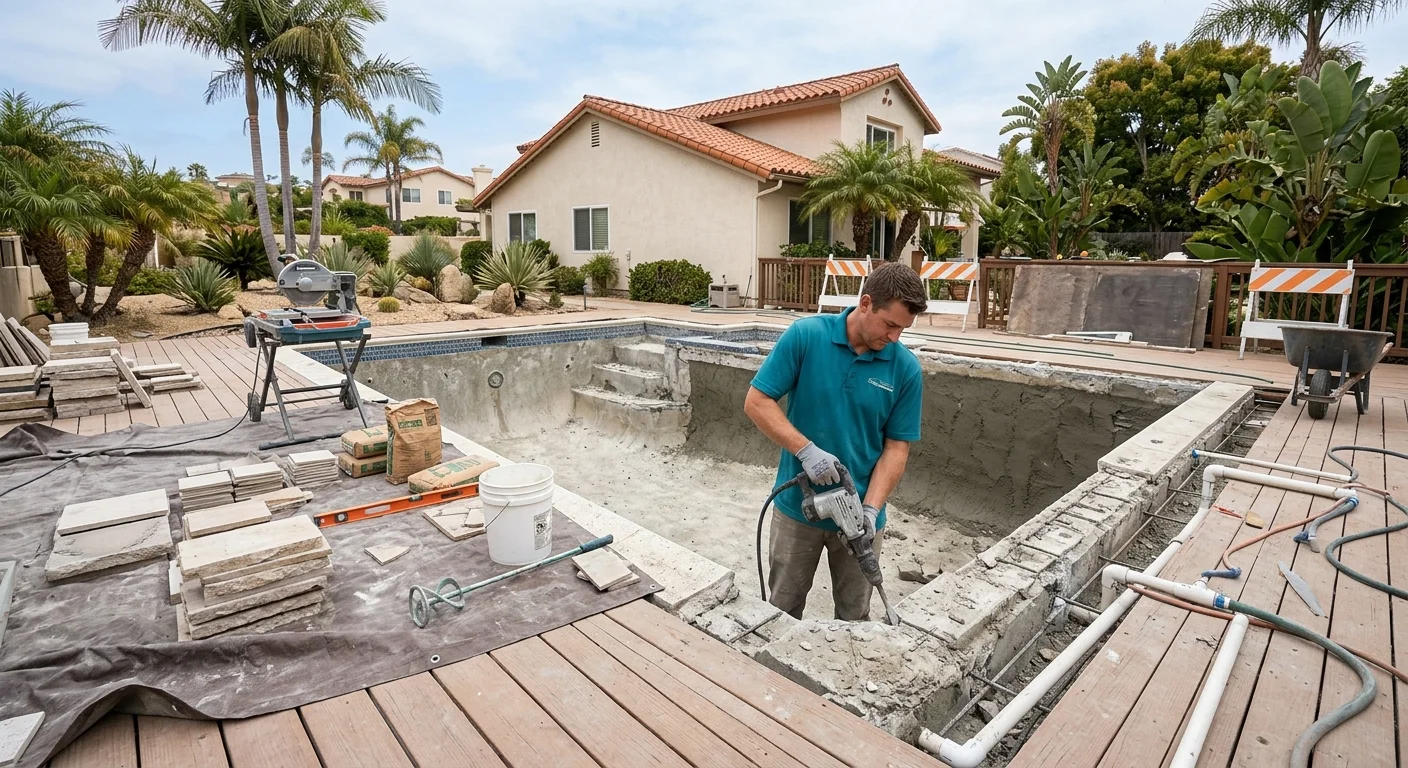
A search for pool renovation near me often starts with one concern: how long will the pool be unavailable? Plan on weeks for surface-focused work and potentially months for a broader remodel. The dependable answer comes from a written, phase-by-phase schedule for your exact San Diego property.
The phases in order, from demo to startup
A renovation schedule starts before anyone removes the old finish. The contractor first defines the scope, documents existing conditions, and confirms your selections. That includes the interior finish, tile, coping, decking, plumbing, lighting, and equipment included in the contract.
Permit review and material ordering may follow. Their place in the schedule depends on the project. Some materials must be confirmed before demolition because later phases depend on their dimensions, finish, or installation method.
Site preparation comes next. The contractor plans access, protects nearby areas, and prepares the pool for demolition. Demo then exposes the shell and areas hidden by the old surface. The contractor can compare those conditions with the original scope before moving forward.
Repairs and rough work happen before the new finish. Depending on the contract, this phase may involve the shell, plumbing, tile, coping, deck edges, or equipment connections. Each trade needs a clear handoff to the next one. Covering unfinished work can create delays later.
Surface preparation follows approved repairs. The new interior finish is then applied through the pool resurfacing and replastering process. Filling, startup, water care, equipment adjustments, and the final walkthrough come afterward.
A surface-only project has fewer dependencies than a full remodel. Adding decking, plumbing, structural work, or equipment creates more handoffs. Ask for a schedule showing each phase, who approves it, and what must happen before the next phase begins.
What holds a job up most often
Scope changes can move every date that follows them. A tile change may affect ordering. Added deck work may change access or trade sequencing. Moving plumbing or equipment can introduce permit questions. Make major choices before demolition whenever possible.
Our guide to San Diego pool remodel ideas and planning can help you define the work before requesting proposals. Use it to separate necessary repairs from optional design changes. That makes contractor schedules easier to compare.
Concealed conditions are another common source of uncertainty. The old finish can hide damage that wasn’t visible during the first inspection. Contractors should document newly exposed conditions and explain how they affect the scope. Get any resulting schedule change in writing.
Materials can also control the sequence. A contractor shouldn’t promise an installation date until required products are confirmed. Ask whether each selection is ordered, available, or still awaiting confirmation. A product name in a proposal doesn’t always mean it has reached the jobsite.
Access and staging deserve early attention. A narrow side yard, limited deck space, or shared access point can affect how the work is organized. Discuss gates, pets, landscaping, parking, and material storage before demo starts.
Finally, look for dependencies between trades. Tile may need completion before another surface step begins. Equipment work may depend on plumbing. A useful schedule identifies these handoffs instead of presenting one unexplained completion date.
Before signing, verify the contractor through the official CSLB license check.
Weather, permits, and inspection waits
San Diego weather doesn’t remove weather risk. Surface products can have specific temperature, moisture, and application requirements. Wind, rain, heat, and direct exposure may affect a planned work window. The contractor should follow the written requirements for the selected material.
Ask how weather decisions will be made and documented. A generic countywide forecast may not reflect conditions at your property. Coastal exposure and an inland yard can present different jobsite conditions on the same day.
Permit requirements depend on the actual scope and local jurisdiction. An Encinitas address and a La Mesa address shouldn’t rely on the same permit assumptions. Ask the contractor which city or County of San Diego office serves the property. Then confirm the current requirements with that office.
No single inspection wait applies across every San Diego County project. Current timing should come directly from the permitting office and the contractor handling the file. The schedule should identify which phases require approval before work continues.
California also has a specific safety rule tied to certain permitted projects. When a permit is issued for construction or remodel of a pool at a private single-family home, state law requires “at least two of the following seven drowning prevention safety features.” It’s a two-of-seven rule, not a blanket statement that every existing pool needs a fence. Review the current California pool safety statute and confirm how it applies with the permitting authority.
Keep permits and inspections visible on the project calendar. They aren’t background paperwork. They can control when the next physical phase begins.
Curing and startup, the part you cannot rush
The finish application isn’t the practical end of a renovation. The selected material may require its own curing and startup process. That process can affect filling, water treatment, brushing, circulation, equipment settings, and when normal use begins.
There isn’t one responsible curing period for every finish. Plaster, pebble, and other materials can carry different written instructions. Ask the contractor to provide the requirements for the exact product installed. Don’t substitute a general online timeline for that document.
Startup responsibilities should also be clear. The contract should identify who handles the initial water testing, treatment, brushing, circulation checks, and equipment adjustments. It should also state what the homeowner must do after the contractor’s work ends.
Get the readiness date in writing after startup begins. That date shouldn’t be guessed from the day the finish was applied. It should reflect the material instructions and the actual condition of the pool.
Keep all product information, startup records, and contractor notes together. These documents provide a clearer handoff than a verbal reminder at the end of the job. They also help you avoid conflicting instructions from unrelated sources.
If the pool includes new equipment, ask whether its commissioning affects startup. A finish schedule and an equipment schedule may overlap, but they aren’t automatically the same. The contractor should explain how both fit into the final handoff.
Planning around a summer you want to use
Start with the first date when the pool truly matters. That might be a family visit, school break, or planned gathering. Work backward from that date instead of treating it as the contractor’s target completion day.
Your calendar should include design decisions, contract review, material confirmation, permit steps, demolition, repairs, finish work, inspections, curing, and startup. Add room for concealed conditions and weather. A schedule with no contingency isn’t a dependable plan.
Decide which features are essential before requesting proposals. Our guide to San Diego pool renovation trends can help you compare current design directions without changing the scope midway through construction.
Ask each contractor for the same schedule details:
- The included renovation phases
- Decisions required before work starts
- Materials that must be confirmed
- Permit and inspection responsibilities
- Dependencies between trades
- Curing and startup requirements
- The process for documenting delays
- The condition that marks the pool ready for use
Compare the assumptions, not just the proposed finish date. One schedule may exclude permitting or startup. Another may include both. Those aren’t equivalent timelines.
Avoid planning an important gathering immediately against the projected completion date. The calendar should protect the time you want to use the pool. It shouldn’t place every risk on the final week.
A good contractor will connect dates to completed phases. If the scope changes, request a revised schedule showing the effect. That gives you a practical plan instead of a moving verbal estimate.
When to call us
Call when your project involves resurfacing, structural repairs, plumbing changes, equipment work, or a permit-dependent remodel. Call us at (858) 400-4598 and we’ll connect you with a licensed local pool specialist.
Frequently asked questions
How long does a pool renovation take in San Diego?
A surface-only renovation is generally planned in weeks, while a broader remodel may extend into months. Your contractor's written schedule should separate active work, inspections, curing, and startup.
What commonly delays a pool renovation?
Scope changes, material decisions, concealed damage, permit steps, inspections, weather, and required startup procedures can all affect the completion date.
Does every pool renovation require a permit?
Permit needs depend on the work and the jurisdiction serving the property. Ask the contractor to identify required permits and confirm them with the appropriate city or county office.
When can a renovated pool be used again?
Wait for the licensed contractor to complete the required startup and confirm the pool is ready. Follow the written instructions for the specific interior finish and equipment.
Need professional help in San Diego County?
Refresh Pool Pros connects you with a licensed specialist for any service in this post.