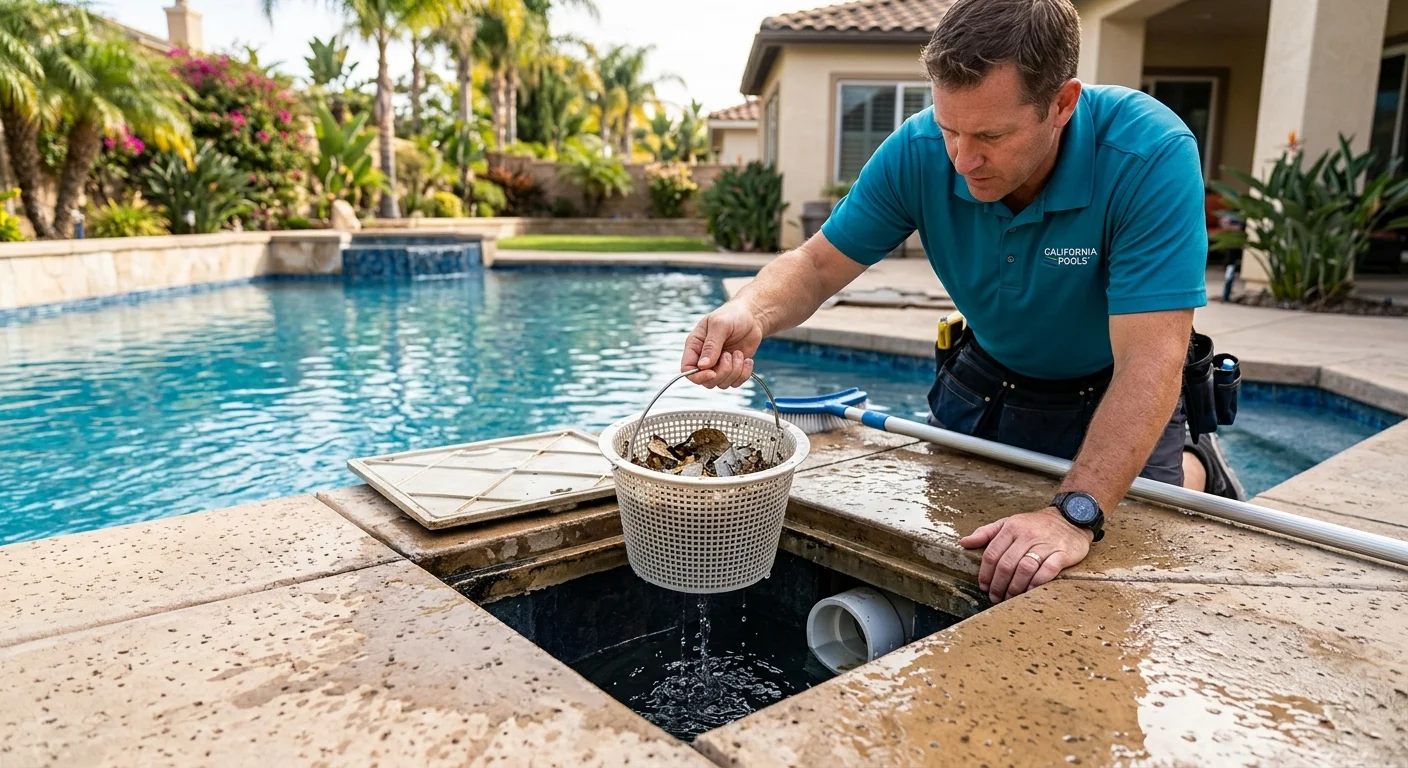
Pool skimmer repair starts by separating three possible problems: a shell leak, a plumbing leak, or restricted flow. A crack near the throat may lose water only while the pool reaches that height. Weak suction, however, can come from the basket, weir door, valves, filter, pump, or suction line.
How a skimmer is built into the shell
An in-ground skimmer sits behind the pool wall near the waterline. Its wide opening, called the throat, connects the pool to the skimmer body. The lid in the deck provides access to the basket below.
Water enters through the throat and passes the weir door. It then moves through the basket before entering the suction plumbing. The basket catches leaves and larger debris before they reach the pump and filter.
Several materials meet in this small area. The pool finish surrounds the throat inside the pool. The skimmer body sits behind that finished surface. Plumbing leaves the body underground, while the deck surrounds the access lid above.
Those connections matter during diagnosis. A visible line in the finish might be superficial. It might also cross the joint between the shell and skimmer throat. A crack deeper inside the body can stay hidden beneath the deck.
The inspection should follow the whole path. That includes the throat, body, basket well, buried fitting, and suction pipe. Looking only at the visible opening can miss the actual failure.
Access also changes from one San Diego property to another. A City Heights side yard, a La Mesa slope, and an open Poway deck present different working conditions. The repair method must fit the actual pool, deck, and route to the equipment.
The crack at the throat and why it leaks at one water level
A throat crack creates a useful water-level pattern. Water can escape while the surface sits above the damaged area. The loss may slow or appear to stop after the surface drops below it.
That pattern is a clue, not a final diagnosis. Normal evaporation, splash-out, rain, and an automatic filler can blur the result. A second leak below the skimmer can also keep the water falling after the throat becomes exposed.
The crack may sit where the skimmer meets the pool shell. It can also appear within the plastic throat or nearby finish. A gap that looks small from the pool may continue behind the visible surface.
A pro can compare the resting waterline with the suspected opening. The inspection may include controlled testing around the throat and skimmer body. If the evidence points underground, the suction plumbing needs separate evaluation.
A plumbing leak behaves differently because the line runs below the skimmer. Water loss may change when circulation runs, but that observation alone doesn’t identify the exact fitting or pipe. Several components can affect the same symptom.
Repeated filling can hide the pattern and waste water. The San Diego County Water Authority provides regional water information, but it doesn’t diagnose private pool leaks. For testing at the pool, see how pool leak detection and repair can isolate the likely source before deck work begins.
Weir doors, baskets, and weak suction that is not a leak
Weak suction at the skimmer doesn’t automatically mean the body is cracked. Flow must pass several components before reaching the pump. A restriction anywhere along that route can reduce the pull you notice at the opening.
Start with the visible parts. A packed basket limits flow. A damaged basket can let debris enter the line. The weir door should move freely rather than sticking closed or lying loose inside the throat.
The water level also affects performance. If the opening can’t receive a steady supply of water, the skimmer may draw air. That can create unstable flow without proving that the skimmer shell leaks.
The system settings matter too. A pool may divide suction between the skimmer and another intake. A valve position can send less flow through the skimmer. A dirty filter, pump problem, air leak, or blocked line can produce a similar complaint.
Compare the symptom across the system. Weak skimmer flow paired with poor circulation elsewhere suggests a broader equipment issue. Normal flow elsewhere may point back toward the skimmer branch, valve, or suction line.
Water near the equipment doesn’t prove the skimmer is responsible. Check our guide to standing water around a San Diego pool equipment pad for other possible locations. A proper diagnosis keeps a flow problem from becoming an unnecessary shell repair.
Repairing versus replacing the skimmer body
The right repair depends on where the failure sits. A localized gap at the throat may be reachable from inside the pool. The pro must identify the surrounding material, prepare the area, and choose a repair compatible with that location.
A surface patch isn’t automatically the right answer. If the skimmer and shell continue moving separately, the opening can return. Covering the visible line without finding its depth may also leave the real leak untouched.
Replacement becomes more likely when the skimmer body itself is split, distorted, or damaged around a buried connection. It may also make sense when the failed area can’t be reached or prepared from the pool side. The deck and plumbing access then become part of the scope.
Ask the pro to separate diagnosis from repair in the written proposal. The scope should identify the suspected failure, planned access, materials, deck work, and testing after completion. It should also explain what changes if opening the area reveals more damage.
For regulated California pool work, verify the individual contractor through the official CSLB license lookup. Refresh Pool Pros refers homeowners to licensed independent local pros and doesn’t perform the physical repair.
Our pool repair service can connect you with a specialist for the skimmer, shell, or related circulation problem.
What the deck has to survive for a replacement
Replacing a buried skimmer body usually requires access from above. The contractor may need to cut a controlled opening around the lid, remove material, expose the body, and reach the connected plumbing.
That work puts several nearby finishes in play. The cut must account for the deck surface, coping, pool finish, and skimmer throat. The contractor also needs enough room to remove the old body and position the replacement correctly.
A narrow opening can limit access to the buried fittings. A wider opening affects more of the deck finish. The right boundary depends on what lies beneath the surface, so the final repair area may not match the lid’s footprint.
The remaining deck must stay supported during excavation. Existing cracks, previous patches, and movement around the skimmer deserve attention before cutting begins. Otherwise, demolition can expose a larger weak area than the visible problem suggested.
Appearance is another practical concern. Fresh concrete or another new patch may not match a weathered deck exactly. Ask where the cut lines will fall and how the repaired section will meet the surrounding finish. That conversation should happen before work starts.
Access through the property matters as well. Gates, steps, slopes, planters, and nearby structures can affect how debris leaves and materials enter. San Diego County’s varied lots make an on-site inspection more useful than a repair plan based only on photos.
After replacement, the scope should include testing the skimmer body and its connections before the deck opening is closed. That checkpoint gives the pro a chance to inspect the buried work while it remains visible.
When to call us
Call when the water repeatedly settles near the skimmer, suction stays weak after basic basket checks, or replacement may require opening the deck. A licensed pool pro can inspect the shell, skimmer body, and connected suction plumbing.
Call us at (858) 400-4598 and we’ll connect you with a licensed local pool specialist.
Frequently asked questions
How can I tell whether my pool skimmer is leaking?
A water level that repeatedly settles near the skimmer throat can point to a crack or failed joint there. It doesn't prove the location, so a pro may need to test the shell and plumbing.
Can a cracked pool skimmer be repaired without opening the deck?
Some localized throat cracks can be reached from the pool side. A damaged skimmer body or buried connection may require opening the surrounding deck.
Does weak skimmer suction always mean there is a leak?
No. A full basket, stuck weir door, restricted filter, valve setting, pump issue, or blocked suction line can also reduce flow.
Who should replace an in-ground pool skimmer in California?
Ask for a licensed contractor qualified for pool work and verify the individual contractor through the official CSLB lookup.
Need professional help in San Diego County?
Refresh Pool Pros connects you with a licensed specialist for any service in this post.