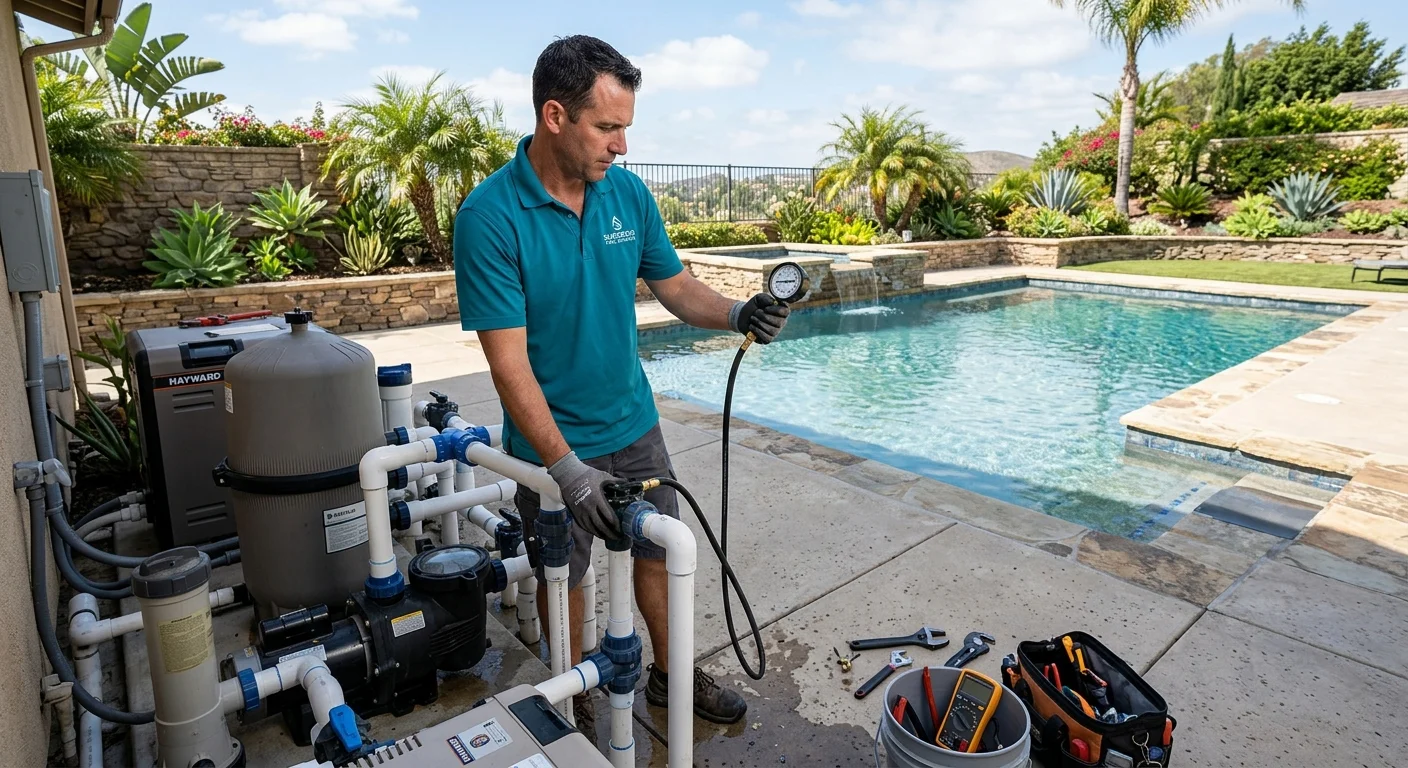
A pump that loses prime or draws steady bubbles may have a suction-side problem. Pool suction line repair in San Diego should begin with isolation and testing, not immediate deck cutting. The goal is to prove which line failed and where access makes sense.
What the suction line does and where it runs
The suction side carries pool water toward the pump. Common suction points include the skimmer and main drain. Some pools also have a dedicated vacuum line. Each line may travel underground before reaching valves near the equipment pad.
That direction matters during diagnosis. A loose fitting above ground can admit air without releasing much visible water. An underground opening can also behave differently while the pump is running. Water loss alone doesn’t identify the exact pipe or location.
Start by mapping every available suction line. A pro can identify the valves, note which suction points respond, and check exposed connections around the pump. That equipment-pad inspection helps separate a buried plumbing concern from a lid, fitting, valve, or pump issue.
If water appears around the pump itself, read our guide to a pool pump leaking water in San Diego. A visible pump leak and an underground suction leak need different repair plans.
Pool layouts also vary across San Diego County. Equipment may sit beside the house, behind a wall, or above the pool. Pipes may cross concrete, pavers, planting beds, or narrow side yards. Those site details affect access, but they don’t prove where the leak sits. Testing comes first.
Symptoms that point at the suction side rather than the return
Suction-side trouble often affects how the pump draws water. You may see persistent air under the clear pump lid. Return jets may release bubbles. The pump may struggle to establish or hold prime. A skimmer may also pull weakly when its valve is opened.
These signs point toward the suction side, but they aren’t a final diagnosis. A low water level, blocked basket, closed valve, worn seal, or restricted line can create overlapping symptoms. Checking the visible system prevents unnecessary digging.
Return-side leaks behave differently because return pipes carry water away from the filter and back to the pool. A break there may release more water while the pump runs. It usually doesn’t pull air toward the pump in the same way. Wet soil or shifting deck material can be a clue, but surface moisture can’t identify the pipe by itself.
Watch what changes when individual suction lines are selected. If bubbles appear when one line opens and ease when it closes, that pattern gives the pro a useful lead. It still needs confirmation under controlled testing.
Pool water loss can also come from the shell, fittings, lights, or equipment. Our guide explains how pool leak detection works across those possible sources. For professional testing and repair matching, see our pool leak detection service.
How pressure testing isolates the bad line
Pressure testing turns a broad suspicion into a line-specific finding. The pro first identifies the plumbing route as far as the visible layout allows. The selected line is then isolated from the rest of the circulation system.
Both ends need controlled test access. Depending on the plumbing, that may involve the skimmer, a dedicated suction fitting, or connections at the equipment pad. The line is sealed with suitable test plugs. A gauge then shows whether the isolated section holds the applied test pressure.
A falling gauge reading can support a leak finding within that isolated section. A stable result shifts attention elsewhere. Each available line should be treated as a separate test path. Testing everything together can confirm a system leak without showing which branch failed.
The test result still doesn’t reveal the exact underground point. A specialist may narrow the location with listening equipment or other leak-location methods. Site noise, soil conditions, pipe depth, bends, and nearby utilities can affect what the pro can isolate.
Ask for the findings in plain language. The explanation should name the tested line, how it was isolated, and what result supported the diagnosis. It should also distinguish confirmed evidence from a likely route based on the visible layout.
Before authorizing regulated pool work, verify the contractor through the California Contractors State License Board license check. Refresh Pool Pros connects homeowners with licensed independent pool specialists. The matched specialist performs the testing and repair.
Repair options: spot repair, reroute, or reline
A confirmed leak doesn’t automatically mean removing the entire pipe. The repair path depends on location confidence, access, pipe condition, and the surrounding hardscape.
A spot repair targets the failed section. It makes sense when the leak location is narrow enough to justify focused excavation. The pro opens the surface, exposes the pipe, replaces or repairs the damaged area, then retests the line. This approach protects more of the surrounding deck when the diagnosis is precise.
A reroute abandons the damaged underground path and creates a new route. It can avoid a difficult crossing beneath a wide deck or built feature. The new path still needs a workable connection at both ends. Valve placement, elevation changes, and future access should be discussed before choosing it.
Relining places a new inner pathway within an eligible existing pipe. It may reduce excavation, but it isn’t available for every suction line. Pipe size, tight bends, fittings, transitions, and access points can rule it out. Ask the specialist to explain why the specific line is a candidate.
No repair method should be selected from symptoms alone. A low excavation proposal isn’t useful if it targets the wrong branch. Likewise, the least disruptive method may not suit a badly configured or inaccessible line.
Compare bids by scope rather than price alone. Look for the confirmed line, proposed access point, repair method, retesting plan, and surface-restoration responsibility. We don’t publish a standard price because each route and access condition differs. Get the full scope in writing from the matched contractor.
What the deck and landscaping have to survive
Underground plumbing repair affects more than the pipe. The access route may cross concrete, pavers, coping, planting beds, irrigation lines, drainage, or pool equipment connections. Before cutting begins, decide what gets removed and who restores it.
Ask the specialist to mark the proposed opening. A small test mark on a site plan or photo can prevent misunderstandings. Confirm whether nearby pavers can be lifted and reused. For concrete, ask how the patch boundary will be chosen. Color and texture matching should be discussed before work starts.
Landscaping deserves the same attention. Identify irrigation tubing, lighting cable, drains, roots, and planted areas near the route. The pool contractor may need another trade for parts of the restoration. The written scope should state where the pool plumbing work ends.
San Diego access conditions can change within a short drive. A narrow Point Loma side yard presents different choices than an open lot in Poway. Chula Vista, La Mesa, Clairemont, and coastal neighborhoods also contain many different pool and deck layouts. The address needs its own access plan.
Document the area before work begins. Photograph deck joints, coping, pavers, walls, and planting edges. After the plumbing repair, ask for a final pressure test before the access area is closed. That sequence gives the pipe repair a clear checkpoint while it remains visible.
Also ask which party handles permits if the proposed scope requires one. The exact permit requirement for this repair wasn’t confirmed in the approved source ledger. The licensed contractor and the authority with jurisdiction should confirm it for your address.
When to call us
Call when suction-side symptoms persist or the repair may cross buried hardscape. A licensed pool specialist can isolate the line and explain the least disruptive sound repair. Call us at (858) 400-4598 and we’ll connect you with a licensed local pool specialist.
Frequently asked questions
How can I tell if my pool suction line is leaking?
Air bubbles, trouble holding prime, and changes when one suction line is isolated can point toward a suction-side leak. These symptoms aren't conclusive, so the line should be tested before excavation begins.
Can a pool suction line be repaired without removing the whole deck?
Often, the choices include a focused spot repair, a new route, or relining an eligible pipe. The right option depends on the confirmed leak location, pipe condition, access, and deck layout.
What is the difference between a suction-line leak and a return-line leak?
A suction line carries water toward the pump and can pull air inward while the pump runs. A return line carries filtered water back toward the pool and may push water outward through a break.
Who should repair an underground pool suction line?
Use a licensed pool contractor for regulated pool plumbing work. Confirm the contractor's license directly through the California Contractors State License Board before signing.
Need professional help in San Diego County?
Refresh Pool Pros connects you with a licensed specialist for any service in this post.