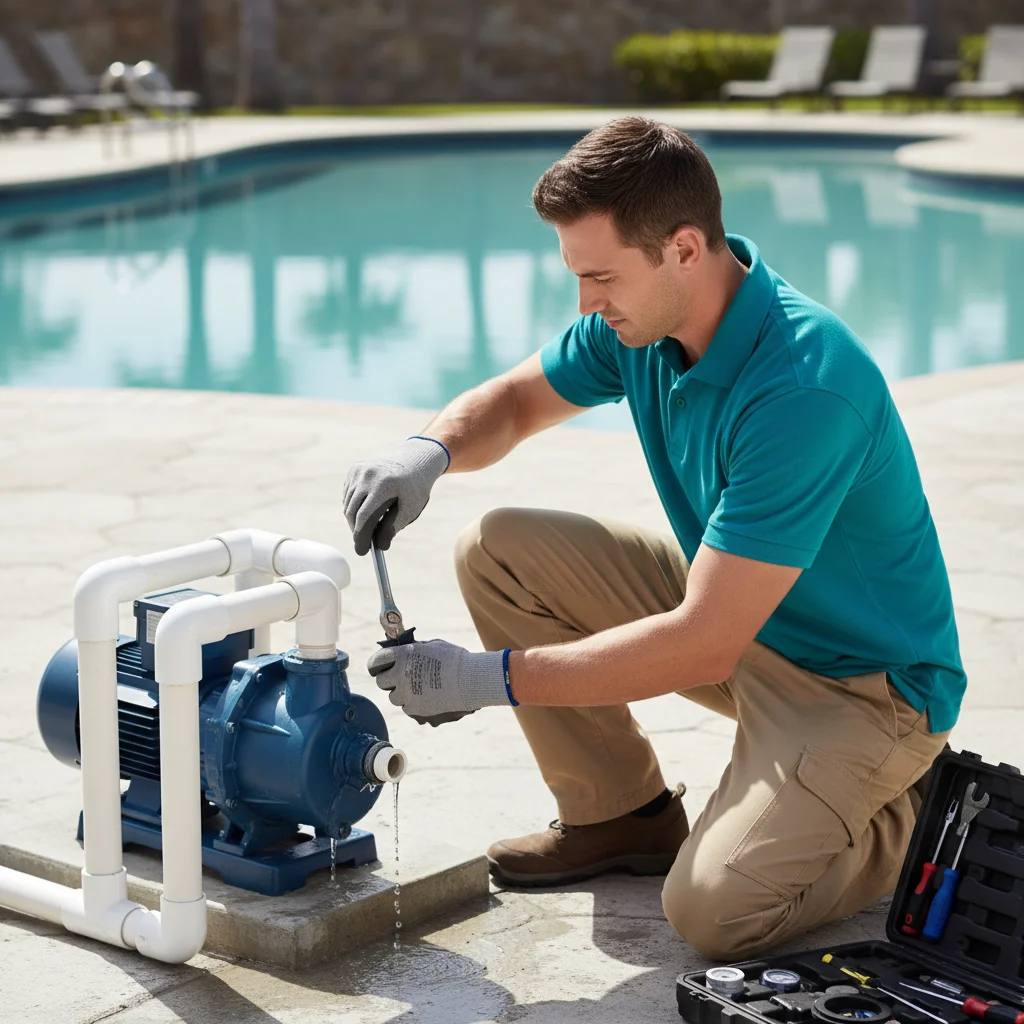
A pool pump repair in San Diego typically costs $80 to $350 depending on the part, while a full replacement runs $700 to $1,800 installed. The decision between the two comes down to a simple rule of thumb: repair a pump under 8 years old when the fix costs less than about half of a new unit, and replace it once it’s older or the repair keeps recurring.
Refresh Pool Pros connects San Diego homeowners with vetted pool repair specialists who diagnose the actual failure first and give an honest answer on whether it’s worth fixing. This guide breaks down what the common repairs cost, what tips the decision toward replacement, and why coastal San Diego pumps tend to wear out faster than inland ones.
What’s the rule of thumb for repair versus replace?
Repair the pump if it’s under 8 years old and the fix costs less than roughly half the price of a new unit, replace it if it’s older or the repair approaches that threshold. A second useful signal: if you’ve already paid for one repair on this pump in the past year or two, the next failure is usually close behind, and paying labor twice starts to cost more than replacing it once. California’s Title 20 rule also pushes most replacements toward variable-speed pumps anyway, so a pump that’s due for replacement often comes with an energy-savings upside a repair can’t offer. For more on that math, see our guide on whether a variable-speed pump is worth it in San Diego.
What does each common pool pump repair actually cost?
Motor bearing replacement, which sounds like a loud grinding or growling coming from the pump, typically costs $150 to $350. A leaking shaft seal, usually visible as water pooling under the motor housing, runs $100 to $250 and is one of the most common repairs a technician sees. A bad capacitor, which causes the pump to hum without spinning or fail to start, costs $80 to $200 to replace. A worn or cracked impeller, which shows up as weak flow or a pump that struggles to prime, runs $120 to $300. Most single-issue repairs land in this $80 to $350 range, with labor making up a meaningful share of the cost regardless of the part.
What pushes a pump from “fix it” to “replace it”?
A cracked motor housing, a pump that won’t start on a new capacitor, or a motor that’s seized are all signs the unit is past repairing economically. Age matters just as much as the symptom: an 8-plus year old single-speed pump needing a $250 seal repair is a reasonable candidate to fail again within a year or two, especially with San Diego’s coastal air working against it. At that point, the $250 repair plus the near-certain next repair often adds up to more than the $700 to $1,800 a full replacement costs installed, without the energy savings a new variable-speed pump would have provided from day one.
Why do San Diego pool pumps wear out earlier near the coast?
Salt air within a few miles of the ocean, common in La Jolla, Coronado, Pacific Beach, and Ocean Beach, corrodes motor housings, unions, and electrical connections noticeably faster than pumps running in inland yards. That corrosion tends to show up first as a weeping shaft seal or a corroded connection at the motor, which is often the first repair call on a coastal pump. Inland pools in areas like El Cajon and Santee face a different pressure: long, hot run cycles through summer that stress bearings and seals from heat rather than salt. Either environment shortens the pump’s realistic lifespan below the 8 to 12 year average a shaded, low-corrosion yard would otherwise get.
What happens if a failing pump gets ignored?
A pump running weak or losing prime doesn’t just clean the pool poorly, it can starve downstream equipment of flow. A heater that isn’t getting adequate water flow will often shut down on a safety switch rather than run damaged, and a filter starved of flow lets debris and algae get a foothold faster than normal. A pump that’s audibly struggling, running hot to the touch, or cycling on and off on its own is worth having looked at before it takes the heater or filter down with it.
How do I get an honest answer on repair versus replace?
The most reliable answer comes from a technician actually opening the pump and checking the motor, seal, and impeller rather than guessing from symptoms over the phone. A pool pump leaking water at the seal plate, for example, can be a simple seal swap on a younger pump or a sign the whole housing needs to go on an older one, and there’s no way to tell which without a hands-on look. A trustworthy repair pro tells you the age-adjusted math, not just the cheapest fix available that day.
Refresh Pool Pros connects San Diego homeowners with vetted pool repair specialists who diagnose the actual failure and give a straight recommendation on repair versus replacement, not an upsell. For the full cost breakdown on a new unit, see our guide on pool pump replacement cost in San Diego. Homeowners across San Diego and the coastal communities where salt air takes its toll can get matched with a specialist who already knows what these pumps typically need at each stage of their life.
Frequently asked questions
How do I know if my pool pump needs repair or full replacement?
As a rule of thumb, repair a pump under 8 years old if the fix costs less than about half the price of a new pump. Replace it if the pump is older, the repair would run more than half the cost of a new unit, or you’ve already repaired it once in the last year or two. A grinding motor, a cracked housing, or a pump that won’t start at all usually points to replacement.
What’s the most common pool pump repair and how much does it cost?
Shaft seal replacement is the most common repair, usually caused by a pump leaking water from underneath the motor, and it typically costs $100 to $250. Motor bearing replacement, which shows up as a loud grinding sound, runs $150 to $350. Capacitor swaps for a pump that hums but won’t start cost $80 to $200, and impeller replacement for reduced flow runs $120 to $300.
Is it cheaper in the long run to just replace an old pool pump?
Often, yes. A pump over 8 years old that needs a $250 repair is a reasonable candidate for a second failure within a year or two, which means paying labor twice. A new variable-speed pump also cuts energy costs 50 to 80 percent, so replacing an aging single-speed pump frequently pays for itself through lower SDG&E bills on top of avoiding a repeat repair.
Does San Diego’s coastal air affect how long a pool pump lasts before repairs are needed?
Yes. Salt air within a few miles of the coast in areas like La Jolla, Coronado, and Pacific Beach corrodes motor housings, seals, and electrical connections faster than inland yards see. Pools in these areas tend to need seal and bearing repairs earlier in the pump’s life, which is worth factoring in when deciding whether a repair is worth it on an already older coastal pump.
Can a bad pool pump damage other equipment if I don’t fix it?
Yes. A pump that’s lost prime or is running weak can starve the filter and heater of adequate flow, which triggers pressure switches, shortens heater life, and can leave the pool under-filtered enough for algae to take hold. A pump making a lot of noise, running hot, or cycling on and off is worth addressing before it takes another piece of equipment down with it.
Hearing a grinding noise or seeing water under the pump housing? Call Refresh Pool Pros at (858) 400-4598 for a straight repair-or-replace answer from a vetted San Diego pool pump specialist.
Frequently asked questions
How do I know if my pool pump needs repair or full replacement?
As a rule of thumb, repair a pump under 8 years old if the fix costs less than about half the price of a new pump. Replace it if the pump is older, the repair would run more than half the cost of a new unit, or you've already repaired it once in the last year or two. A grinding motor, a cracked housing, or a pump that won't start at all usually points to replacement.
What's the most common pool pump repair and how much does it cost?
Shaft seal replacement is the most common repair, usually caused by a pump leaking water from underneath the motor, and it typically costs $100 to $250. Motor bearing replacement, which shows up as a loud grinding sound, runs $150 to $350. Capacitor swaps for a pump that hums but won't start cost $80 to $200, and impeller replacement for reduced flow runs $120 to $300.
Is it cheaper in the long run to just replace an old pool pump?
Often, yes. A pump over 8 years old that needs a $250 repair is a reasonable candidate for a second failure within a year or two, which means paying labor twice. A new variable-speed pump also cuts energy costs 50 to 80 percent, so replacing an aging single-speed pump frequently pays for itself through lower SDG&E bills on top of avoiding a repeat repair.
Does San Diego's coastal air affect how long a pool pump lasts before repairs are needed?
Yes. Salt air within a few miles of the coast in areas like La Jolla, Coronado, and Pacific Beach corrodes motor housings, seals, and electrical connections faster than inland yards see. Pools in these areas tend to need seal and bearing repairs earlier in the pump's life, which is worth factoring in when deciding whether a repair is worth it on an already older coastal pump.
Can a bad pool pump damage other equipment if I don't fix it?
Yes. A pump that's lost prime or is running weak can starve the filter and heater of adequate flow, which triggers pressure switches, shortens heater life, and can leave the pool under-filtered enough for algae to take hold. A pump making a lot of noise, running hot, or cycling on and off is worth addressing before it takes another piece of equipment down with it.
Need professional help in San Diego County?
Refresh Pool Pros provides every service in this post. Call for a free quote.