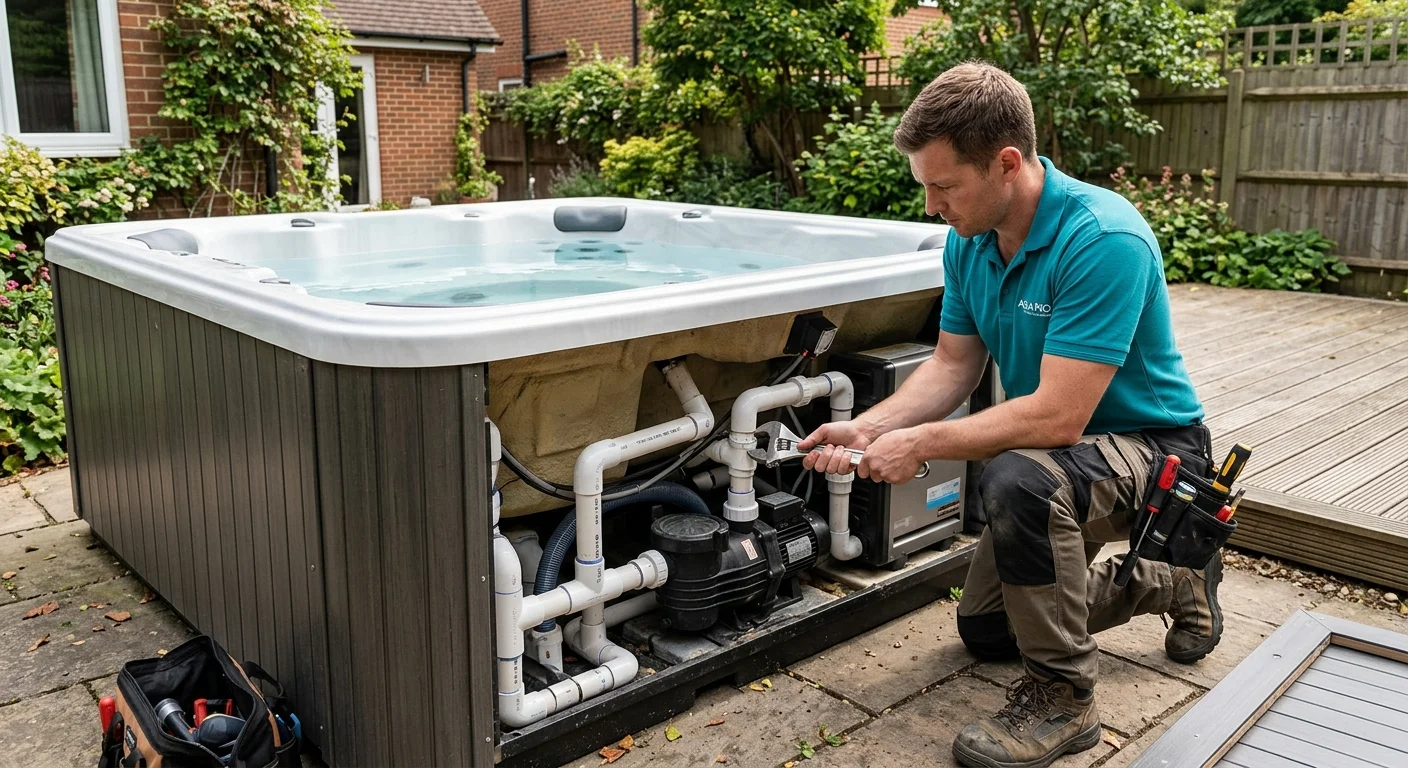
A falling waterline or fresh cabinet puddle needs a leak-specific diagnosis. If you’re searching for spa leak repair in San Diego, we can connect you with a licensed San Diego County specialist who handles hot tubs and attached spas.
Where spas leak: unions, heater, pump seal, shell
A spa can lose water from several closely packed components. Finding moisture inside the cabinet doesn’t identify the failed part. Water often travels along pipes, insulation, or the equipment base before becoming visible.
Common inspection points include:
- Unions: These threaded connections join plumbing to pumps, heaters, and other equipment. Moisture may appear around the connection or collect beneath it. The connection, gasket, and nearby pipe all need inspection.
- Heater assembly: Water near the heater may come from a union, plug, fitting, or an internal component. The wettest visible spot isn’t always the original source.
- Pump seal: A failing seal may release water near the point where the pump and motor meet. That can resemble a loose fitting when space is tight.
- Shell and fittings: Cracks may develop in the visible shell or around jets, lights, drains, and other penetrations. The specialist must distinguish a shell problem from a fitting or pipe hidden behind it.
Small drips can leave mineral residue or a clean path through dusty equipment. Wet foam may also show where water has traveled. Those clues matter, but they don’t replace testing.
A general spa problem can involve controls, heating, or circulation without any water loss. Our spa and hot tub service page explains the broader service. For a wider equipment overview, see our San Diego spa and hot tub repair guide. This page stays focused on leaks.
Telling a plumbing leak from a shell leak
The waterline’s stopping point can help narrow the search. It doesn’t prove the source by itself. A specialist compares that level with jets, fittings, lights, drains, and plumbing routes.
A plumbing leak often leaves moisture inside the equipment area or cabinet. Water may appear near a union, valve, pump, heater, or pipe joint. Some leaks become easier to spot while circulation is running. Others continue while the spa sits unused. That difference gives the specialist another clue, but several components may need isolation before the source is clear.
A suspected shell leak needs a different inspection. The specialist looks for a visible crack, damaged fitting, or water path around a shell penetration. A surface mark isn’t automatically an active leak. Controlled testing can show whether water is actually moving through that location.
Evaporation, splashing, and water carried out by bathers can also lower the level. Mark the waterline with removable tape, stop using the spa, and record what changes. Note whether the equipment was running during that period. Don’t add dye, sealant, or another product unless the spa manufacturer or inspecting specialist directs it.
When the loss extends beyond the spa, broader pool leak detection and repair may be the right route. That service can account for buried lines, shared equipment, and the pool itself.
Why the cabinet has to come off
A portable hot tub hides most of its plumbing behind removable side panels. The visible shell is only one part of the system. Pumps, heater connections, manifolds, valves, hoses, and many jet lines sit inside the cabinet.
Removing the correct panel gives the specialist a direct view of those components. It also helps separate a plumbing leak from rainwater, splash-out, or moisture that entered elsewhere. Inspection may include dry surfaces, running the circulation system, and watching specific connections. Wet insulation can make the path harder to follow.
One open panel may not expose the source. A leak near a distant jet can soak foam before reaching the equipment bay. The specialist may need access from another side and may remove limited insulation around the suspected path. That work should stay controlled so usable cabinet material isn’t disturbed unnecessarily.
Don’t remove electrical covers or disconnect plumbing before the appointment. Leave equipment access to the specialist unless your owner’s manual gives different instructions. If you’ve already opened a simple exterior panel, keep its screws and clips together. Don’t force a swollen, locked, or fastened panel.
Clear access matters too. Move furniture, planters, storage bins, and loose covers away from the cabinet. A specialist needs enough room to inspect the suspected side without damaging nearby property.
Attached spas that share plumbing with the pool
An attached spa needs a whole-system diagnosis. Its water may move through valves, pumps, heaters, filters, and lines also used by the pool. A falling spa level doesn’t always mean the shell itself has failed.
Record when the level changes. Note whether it falls while the system runs, after the equipment stops, or during spillover operation. Also note what happens to the pool level. These observations help the specialist choose which valves, lines, fittings, and equipment connections to test.
A spa that drains toward the pool can look different from one losing water outside the system. Water returning to the pool remains on the property, while an external leak may create damp soil, standing water, or moisture near equipment. Neither pattern identifies a failed component without inspection.
Don’t change multiple valve positions before recording their original settings. Photos can preserve the starting configuration. If an automation system controls pool and spa modes, note which mode was active when the level changed.
San Diego County includes incorporated cities and unincorporated communities. If permitting becomes relevant, confirm current requirements with the authority responsible for the property address. Don’t assume City of San Diego guidance applies in Chula Vista, Oceanside, El Cajon, or an unincorporated area.
Before hiring a contractor, check the business through the official CSLB license lookup. Confirm that the displayed license information matches the contractor presenting the proposal.
What to do before the tech arrives
Good observations can shorten the search without disturbing the leak. Start by marking the current waterline with removable tape. Add the date and time to a note, then photograph the mark. Record whether the spa was running, heating, or sitting unused.
Take clear photos of any wet cabinet area, equipment pad, or damp ground. Photograph before wiping it dry. If moisture returns, note where it appears first. Don’t assume the largest puddle sits beneath the failed part.
Gather these details for the specialist:
- The spa brand and model, if available
- A photo of the model and serial label
- When you first noticed the water loss
- Whether the loss changes during circulation
- Whether the spa is detached or attached to a pool
- Any recent equipment, plumbing, or landscaping work
- The lowest point where the waterline appears to stop
Don’t keep adding water just to hide the change. Follow the manufacturer’s operating and shutdown instructions while the leak remains unresolved. Keep people out of the spa, and don’t touch electrical or gas components.
Avoid pouring leak sealer into the water before diagnosis. It can change what the specialist sees and may not address the failed connection. Likewise, don’t tighten unions or fittings without knowing their condition. A cracked fitting and a loose connection can look similar from outside.
Make sure the specialist can reach the cabinet, equipment pad, and pool controls. Secure pets and unlock any access gate. If the property has an attached spa, keep photos of the normal valve and automation settings available.
When to call us
Continued water loss, wet insulation, or moisture around spa equipment needs a licensed local pro. We match homeowners across San Diego County with independent specialists for leak-specific diagnosis and repair.
Call us at (858) 400-4598 and we’ll connect you with a licensed local pool specialist.
Frequently asked questions
How can I tell whether my spa is leaking?
Mark the waterline, stop using the spa, and watch for continued water loss. Wet insulation, cabinet moisture, or water near the equipment can also help a specialist locate the source.
Can a spa leak be repaired without replacing the hot tub?
Many leaks come from accessible plumbing connections or equipment seals. A licensed specialist needs to inspect the system before recommending repair or replacement.
Can an attached spa leak affect the pool?
Yes. An attached spa may share circulation plumbing and valves with the pool, so the full pool-spa system should be considered during diagnosis.
How do I check a San Diego pool contractor's license?
Use the official CSLB license lookup and confirm that the license matches the contractor and work being proposed.
Need professional help in San Diego County?
Refresh Pool Pros connects you with a licensed specialist for any service in this post.