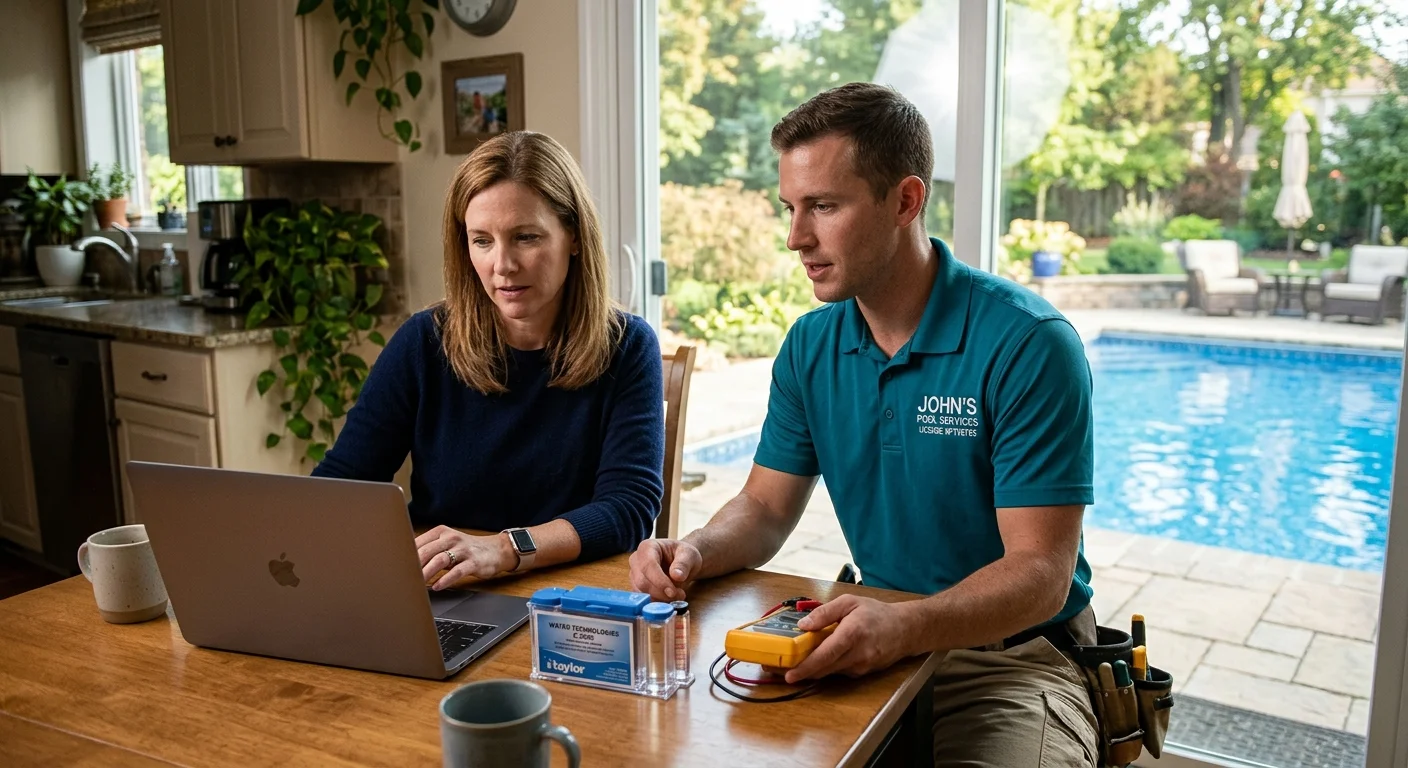
Searching for a “pool contractor near me” in San Diego County gives you names, not proof. Before signing a contract or paying a deposit, confirm the contractor’s licence with the Contractors State License Board.
California’s CSLB has a C-53 Swimming Pool Contractor classification. The official lookup applies statewide, so the same check works from Oceanside to Chula Vista and Encinitas to El Cajon. Refresh Pool Pros matches homeowners with licensed independent local pros. We don’t perform the physical work.
C-53 and what it covers for pool work
CSLB lists C-53 as the Swimming Pool Contractor classification. Its definition is: “A swimming pool contractor constructs swimming pools, spas or hot tubs, including installation of solar heating equipment using those trades or skills necessary for such construction.” A business name, advertisement, or polished proposal doesn’t replace the official record.
Ask the contractor for the exact name and licence number tied to the proposal. Compare both with the CSLB result. Small differences deserve attention. Don’t assume two similar business names belong to the same contractor.
That definition addresses construction. It doesn’t say which classification covers every repair or each task within a mixed project. If a proposal combines pool work with adjacent electrical, gas, or structural work, ask CSLB which classifications apply. Don’t guess from the project description.
The written scope should also match the service you’re buying. A pool repair proposal should identify the problem and planned work. A pool resurfacing project should clearly describe the contracted pool work. These pages can help you organize questions, but the contractor remains responsible for the proposal and physical work.
Treat the contractor’s classification as one checkpoint, not the entire hiring decision. Confirm the current record, compare it with the contract, and resolve every mismatch before paying.
Using the CSLB lookup, field by field
Use the official CSLB licence lookup. Don’t rely on a third-party directory or a screenshot supplied with a proposal. Open the CSLB record yourself and follow the current search prompts.
Check these details one at a time:
-
Contractor identity: Compare the name on the CSLB result with the proposal. Ask about any spelling, ownership, or business-name difference before proceeding.
-
Licence number: Match every digit against the number the contractor provided. A familiar company name isn’t a substitute for an exact match.
-
Classification: Compare the classification shown with the proposed scope. Ask CSLB whether the displayed classification fits the work.
-
Current status: Read the status shown on the CSLB record. Don’t treat an old printout or saved image as proof of the current status.
-
Record details: Review every notice and name displayed on the result. If something is unclear, get the explanation from CSLB rather than filling the gap yourself.
Run the check against the contractor named in your actual agreement. If a salesperson mentions one company but the contract names another, search the company accepting the contract.
Write down the date you checked the record and keep it with the proposal. Recheck before signing if the contractor changes, the business name changes, or a revised agreement identifies a different party. The goal is simple: the CSLB record, proposal, and person taking responsibility should align.
The $1,000 exemption and both conditions it requires
California Business and Professions Code §7048 contains a narrow licensing exemption. Effective January 1, 2026, the aggregate contract price for labor, materials, and all other items must be less than $1,000. The work must also be casual or minor, and it can’t require a building permit.
Both price and permit status matter. Work below the threshold isn’t exempt when a permit is required. Work that doesn’t require a permit still isn’t exempt when the aggregate contract price reaches the threshold. The statutory wording is “less than” $1,000, not $1,000 or less.
The aggregate price includes labor, materials, and all other items. A contractor can’t divide one job into several contracts below $1,000 to avoid licensing. The statute expressly excludes that approach.
Advertising as a contractor also removes the exemption at any price. That point matters when a person advertises pool contracting services but describes a larger project as several small tasks.
Read the current text of Business and Professions Code §7048 before relying on the exemption. Older pages may still repeat the former $500 threshold. That figure is stale for work covered by the rule after January 1, 2026.
California Business and Professions Code §7028 states that acting as a contractor without a licence is a misdemeanor unless an exemption applies. A specific fine or jail term couldn’t be confirmed. Check the current law or ask CSLB before relying on a penalty figure.
The deposit cap and why it matters on a big job
California Business and Professions Code §7159.5 limits a home improvement downpayment. It can’t exceed $1,000 or 10 percent of the contract amount, whichever is less. The words “whichever is less” control the calculation.
Consider a $30,000 home improvement contract. Ten percent would be $3,000, but the downpayment cap remains $1,000 because that’s the smaller amount. The rule isn’t a flat permission to collect 10 percent.
That cap addresses the downpayment, not the project’s total price. No confirmed local price range was available for pool repair or resurfacing. Ask each licensed contractor for a written proposal describing the full contract amount and payment terms.
Compare the name taking the downpayment with the name shown in the CSLB record. Pause if the proposal, payment instructions, and licence record identify different businesses. Let the contractor explain the difference, then confirm the answer through the official lookup.
You can read the source in Business and Professions Code §7159.5. For larger work, keep the current CSLB record, contract, and payment documentation together.
If you’re still defining the project, a San Diego pool inspection can help you organize the conditions you want a contractor to address. It doesn’t replace the licence check.
What to do if the licence does not check out
Stop before signing or paying when the CSLB result doesn’t match the proposal. First, rule out a typing error. Enter the licence information again and compare the contractor’s exact name with the contract.
Next, ask the contractor to explain the mismatch. Don’t accept a verbal assurance as the final answer. Return to the official CSLB lookup and confirm any corrected name, number, classification, or status there.
A missing or conflicting record shouldn’t be diagnosed from guesswork. Contact CSLB through its official website when you can’t determine whether C-53 applies or what a displayed status means. CSLB is the authority for its records.
Don’t solve the problem by dividing the project into smaller agreements. California’s exemption expressly excludes splitting a job into sub-$1,000 contracts to avoid licensing. Don’t assume a no-permit claim settles the issue either. The exemption also requires an aggregate price below $1,000 and work that is casual or minor.
If the information still doesn’t align, choose a different licensed contractor for the pool work. Keep your search focused on the exact party that will sign the agreement and accept payment. A contractor’s licence is something you verify before the project starts, not after a dispute appears.
When to call us
Call when pool repair, resurfacing, or related work needs a licensed pool service pro and you want a local match. Call us at (858) 400-4598 and we’ll connect you with a licensed local pool specialist.
Frequently asked questions
What licence should a California pool contractor have?
CSLB lists C-53 as the Swimming Pool Contractor classification. Check the contractor's current record and ask CSLB whether the displayed classification fits the proposed work.
Is pool work under $1,000 exempt from California licensing?
Only in limited cases. Effective January 1, 2026, the aggregate contract price must be less than $1,000, the work must be casual or minor, and it can't require a building permit.
How much can a pool contractor request as a downpayment?
For a home improvement contract, the downpayment can't exceed $1,000 or 10 percent of the contract amount, whichever is less.
What should I do if a contractor's licence doesn't check out?
Pause before signing or paying. Recheck the information, ask the contractor to explain any mismatch, and confirm the answer directly with CSLB.
Need professional help in San Diego County?
Refresh Pool Pros connects you with a licensed specialist for any service in this post.