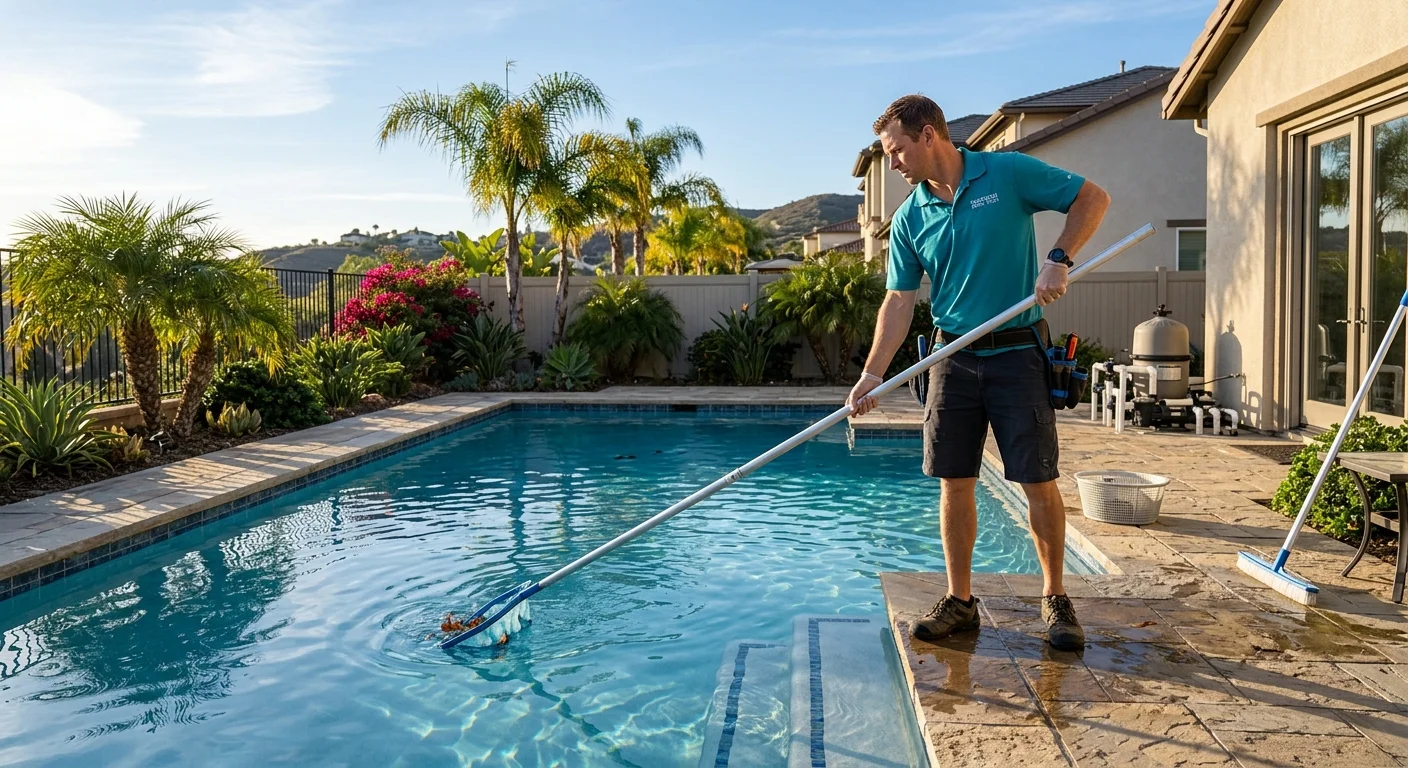
Searching for a pool closing service near me in San Diego often brings up advice written for snow country. Most local residential pools don’t need a full seasonal shutdown. They usually stay open, with circulation and water care adjusted for cooler months.
What closing means in a freeze climate
Pool closing in a freeze climate is a deliberate shutdown. It can involve lowering the water, clearing water from plumbing, plugging lines, preparing equipment, treating the water, and securing a cover. The exact process depends on the pool and its equipment.
The goal is to protect plumbing and equipment through repeated freezing weather. That’s different from simply using a pool less during winter. It’s also different from turning off the heater or shortening a filtration schedule.
San Diego homeowners should make that distinction before hiring anyone. A full freeze-climate closing may add steps that don’t fit the property. Copying an online checklist can also create equipment problems. Don’t drain a filter, pump, heater, or plumbing line unless the equipment instructions or a qualified specialist call for it.
Ask a prospective pro what “closing” means in the proposed scope. The answer should describe the pool’s circulation, water care, equipment settings, and cold-weather plan. It shouldn’t be a generic package copied from another climate.
We don’t publish a local closing price because no verified market figure is available in the approved sources. Ask the pro for a written, itemized quote based on the actual pool. If repair or construction work is proposed, confirm the contractor’s status through the CSLB license check.
For many San Diego homes, the better request is seasonal pool care. That keeps the system operating while matching service to lower use.
Why San Diego pools stay open
The practical answer across most of San Diego County is simple: pools usually stay open. Homeowners may stop swimming, but the water and equipment still need attention.
An open pool can keep circulating and filtering. It can also be tested and cleaned without reversing a full closing process later. That approach fits many properties near Oceanside, Encinitas, La Jolla, Point Loma, Coronado, and Chula Vista.
“Open” doesn’t mean every summer setting stays unchanged. Cooler weather, changing use, wind, leaves, and rain can affect the care plan. Pump schedules, heating choices, cleaning frequency, and chemical additions should follow the pool’s current condition.
San Diego County also isn’t one uniform climate. A coastal yard near the Pacific doesn’t have the same exposure as a property in El Cajon, Alpine, or Ramona. Elevation, wind, shade, plumbing placement, and the equipment pad all matter. One winter checklist can’t account for every home from the coast to the inland foothills.
When search results offer pool closing services, ask whether the company understands local winter care. A useful evaluation should separate three needs:
- Routine seasonal adjustments for an operating pool
- Cold-snap preparation for exposed equipment
- Extended-absence care while the home is empty
That distinction prevents homeowners from paying for the wrong scope. It also keeps important maintenance from being mistaken for a complete shutdown.
The cold-snap risks that still apply inland
“Mostly no” doesn’t mean cold weather can be ignored. Inland and elevated properties can face colder overnight conditions than coastal neighborhoods. Exposed plumbing and equipment deserve attention when a cold snap is forecast.
Homes east of Interstate 15 or along Interstate 8 toward the foothills may have different exposure from coastal homes. A shaded equipment pad can also experience different conditions from the main yard. Check the forecast for the property’s location instead of relying on a coastal reading.
Before colder weather arrives, identify the pump, filter, heater, valves, controller, and electrical supply. Keep the equipment instructions available. If the controller includes a freeze-protection function, ask a pool specialist to confirm how it’s configured. Don’t assume the setting is active or correct.
Avoid making an unplanned shutdown during cold weather. Turning off circulation, draining equipment, or moving valves without understanding the system can change how water moves through the plumbing. A specialist can review the equipment and explain the correct operating plan.
After a cold night, look for visible changes around the pad. Water beneath equipment, a damaged housing, unusual sounds, error messages, or missing circulation deserve professional attention. Don’t repeatedly restart equipment that appears damaged.
Our pool repair referral service can connect you with a licensed local specialist when the system needs assessment. The specialist performs the inspection and any physical work. Refresh Pool Pros only makes the connection.
Winter run times and chemistry
There’s no single winter pump schedule for every San Diego pool. The right setting depends on the pump, pool size, plumbing, debris, sanitizer, water condition, and how the pool is being used.
Start with evidence from the pool. Check water clarity, surface movement, skimming, debris collection, and test results. Review the equipment manufacturer’s instructions before changing programmed schedules. Don’t cut operating time only because swimming has stopped.
Water care continues through winter. Test results should guide any chemical additions. Avoid copying another homeowner’s dosing routine or adding products without knowing the current readings.
San Diego weather can also change the cleaning load. Wind can move leaves, dust, and other debris into the water. Rain can alter the pool’s condition. Check baskets and the water after those events instead of waiting for the next swim.
This page doesn’t publish universal chemical targets. The correct targets can depend on the pool system and products in use. Follow the test method, equipment instructions, and product labels. Ask a pool specialist when readings conflict or the water doesn’t respond as expected.
Cloudy or green water signals that the current care plan needs attention. Our guide to green pool cleaning in San Diego explains what to document before requesting help.
Controls and equipment also deserve a seasonal review. If schedules don’t run correctly or circulation remains weak, a specialist can inspect the pool equipment and controls and recommend the appropriate next step.
What to do if you are leaving the pool unused for months
Leaving San Diego for several months creates a different problem. The pool may not need closing, but it shouldn’t be abandoned. Water, debris, circulation, and equipment still need periodic checks.
Arrange for a responsible person or pool specialist to monitor the property. Give that person clear equipment access and written instructions. Record the current controller schedules and valve positions before leaving. Photos can help identify a change later.
Your absence plan should address:
- Water testing and treatment based on actual readings
- Basket, surface, and floor debris
- Pump, filter, heater, and controller condition
- Visible leaks or standing water near equipment
- Cover care, if the pool uses a fitted cover
- Steps to take when equipment reports an error
Review each product’s instructions before changing modes. A heater, spa, solar system, water feature, or automated cover may need its own plan. Don’t assume one switch prepares every connected component.
If the property is inland, ask a specialist to review exposed plumbing and cold-weather settings before departure. That review is especially useful when nobody familiar with the pool will remain nearby.
A pool cover doesn’t replace water and equipment care. If you’re adding or changing one, confirm that it’s compatible with the pool and follow its manufacturer’s instructions. Keep the deck and equipment access clear for the person checking the property.
When you return, inspect the water and equipment before resuming normal use. Document green water, low circulation, leaks, controller errors, or visible damage. That information gives the specialist a clearer starting point.
No universal winterization price could be confirmed from the approved sources. The pro should quote the actual work, whether that’s seasonal care, equipment preparation, or repair.
When to call us
Call when circulation stops, equipment leaks, controls fail, or cold weather may have damaged plumbing. You can verify a contractor’s license through the CSLB before approving regulated work.
Call us at (858) 400-4598 and we’ll connect you with a licensed local pool specialist.
Need professional help in San Diego County?
Refresh Pool Pros connects you with a licensed specialist for any service in this post.