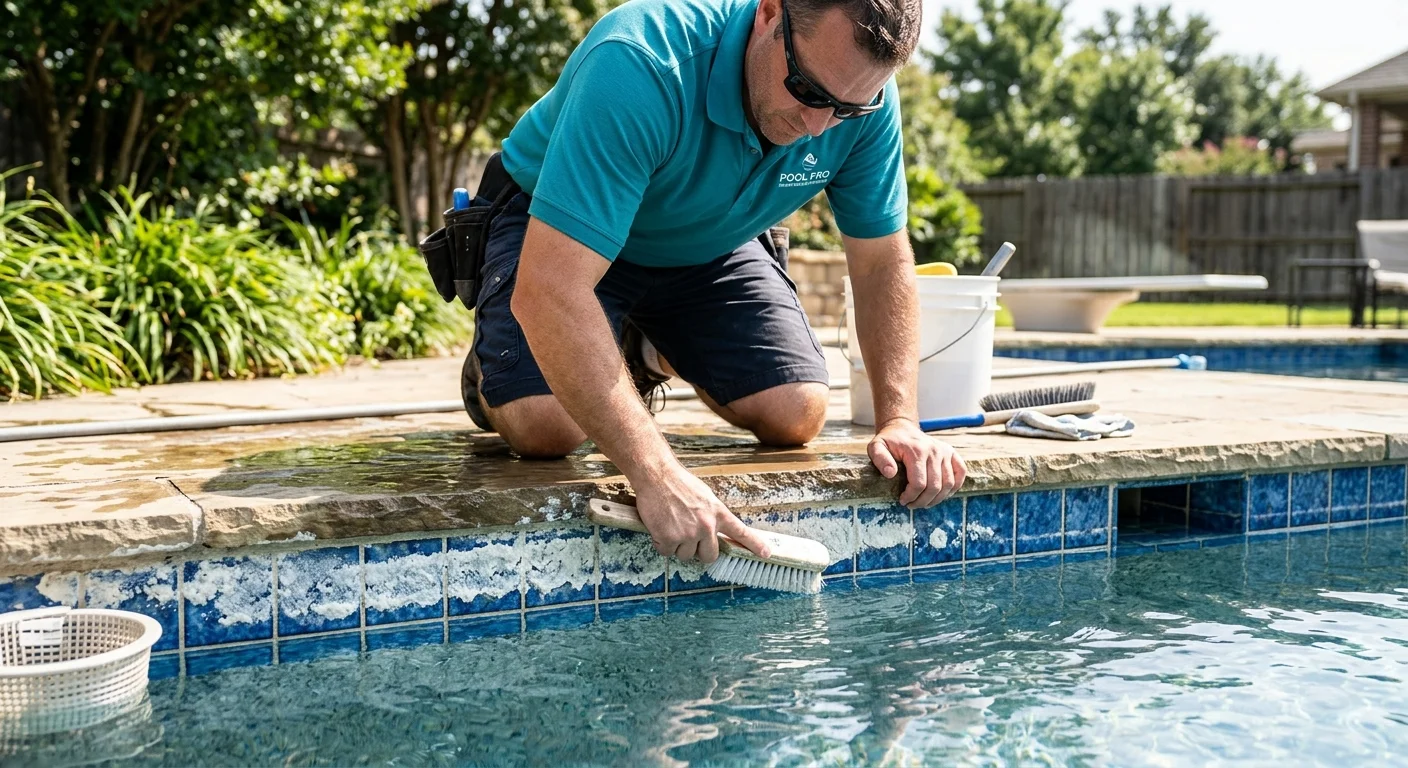
To fix hard water in a pool, start with fresh water tests. Confirm the pool’s calcium hardness, then compare partial draining, water exchange, and treatment with a qualified pro. In San Diego County, don’t empty a pool until the discharge path and property conditions have been checked.
Calcium hardness and why it is a pool number, not a house number
“Hard water” gets used for several different problems. A homeowner may mean spots on a faucet, white pool tile, or a pool test result. Those observations can start an investigation, but they don’t replace a current pool-water test.
The useful calcium hardness number belongs to the sampled pool water. It isn’t a permanent label attached to the house or neighborhood. A result from another property can’t tell you what your pool needs.
Start by testing water from the pool. Test the water used to refill it as well. Label both samples, record the date, and ask for written results. If a result seems surprising, confirm it before choosing an expensive or disruptive correction.
Keep photographs of the waterline, visible deposits, and equipment condition. Note whether the problem appeared gradually or after a refill. That record gives a pool specialist more context than a description such as “the water seems hard.”
Avoid choosing a treatment from appearance alone. White material near the waterline may deserve attention, but a photograph can’t confirm the full water condition. The specialist should connect the test result with what’s visible in the pool.
The goal isn’t to chase the word “hard.” It’s to identify the measured condition and select a response for that pool. That approach also prevents unnecessary draining when another action may fit the written test results.
What imported water means for pools here
San Diego pool owners often hear “imported water” used as a countywide explanation. That phrase doesn’t provide a property-specific hardness result. It also shouldn’t be turned into a made-up figure for every city.
No verified countywide hardness number appears in the approved source record for this page. Earlier per-city figures were removed because they conflicted. We won’t replace them with another estimate.
Use the utility named on your current water bill as the first contact. Ask for its current water quality report and the hardness information that applies to your service address. The San Diego County Water Authority is also a useful regional starting point, but your actual provider should confirm the local information.
This matters across a large county. A figure copied from a page about coastal North County shouldn’t guide a pool in East County or the South Bay. Even a nearby address isn’t a substitute for testing the water entering your property.
Compare the fill-water result with the pool-water result. They answer separate questions and give the specialist a clearer starting point. Keep both with your service records, especially when you add water or consider a correction.
If the provider can’t confirm a current hardness figure, say so in your notes. A direct pool and fill-water test is more useful than an unsupported number found online.
Scale on tile, heaters, and salt cells
White deposits often draw attention first. You may notice a line on the tile, a rough patch, or material around equipment. Those signs can support a scale inspection, but they aren’t enough to select a correction by themselves.
Begin with the places you can view without opening equipment. Photograph the waterline and any changing areas. Don’t scrape, soak, or apply a product until the surface and deposit have been identified.
A heater or salt cell deserves a closer look from someone familiar with that equipment. Ask the pro to explain what was inspected and whether the finding matches the water test. If a component needs service, our pool repair page explains how we connect owners with local specialists.
Keep water appearance separate from the scale question. Cloudy or green water needs its own assessment. Our guide to green pool cleaning in San Diego covers that situation without treating every water problem as hardness.
The pool finish also matters to the decision. A visible deposit may sit over a surface that needs separate evaluation. If the finish itself is part of the concern, review pool resurfacing and replastering with the specialist instead of assuming cleaning will settle everything.
Ask for findings in plain language. Where is the suspected scale? What test supports that conclusion? Is the recommendation for the water, the visible deposit, the equipment, or the finish?
Those distinctions make estimates easier to compare. They also help prevent one visible symptom from turning into a vague proposal for unrelated work.
Lowering hardness: partial drain, exchange, or treatment
There isn’t one correction that fits every pool. The starting test, fill water, finish condition, equipment, and discharge plan all shape the recommendation. A useful proposal should name the chosen method and its intended result.
Partial drain and refill
A partial drain replaces some pool water with fill water. Don’t accept a generic replacement percentage from a blog or sales pitch. The proposed amount should come from the current test results and a plan for your pool.
Ask where the removed water will go. Confirm which local authority sets the current discharge direction for the property. The proposal should also explain how the pool will be refilled and tested afterward.
Managed water exchange
Some proposals use “water exchange” for a planned process that adds water while removing other water. Ask the specialist to define the term in writing. You need to know how the process differs from a partial drain and what result the pro expects.
Don’t assume the word “exchange” makes local discharge questions disappear. The destination of removed water still needs an address-specific answer from the proper authority.
Treatment
“Treatment” can mean different things on different proposals. Ask exactly what the product or process claims to accomplish. Does it claim to change the measured calcium hardness, address visible deposits, or manage another part of the water condition?
Request the product name, written directions, and expected follow-up test. A “no-drain” label isn’t enough information to compare it with water replacement.
Before approving any option, gather:
- Current pool-water results
- Current fill-water results
- Photographs of visible deposits
- Notes about the finish and equipment
- The proposed destination for removed water
- A written description of the expected result
A clear scope should separate testing, water correction, deposit removal, equipment work, and finish work. That makes it easier to see what you’re actually authorizing.
Drain rules and why you do not empty a pool casually
We couldn’t confirm one countywide drain rule that applies to every San Diego County home. Don’t fill that gap with advice copied from another city. The authority serving the property sets the answer you need.
Before releasing pool water, identify the municipality and water provider for the address. Ask the appropriate wastewater or stormwater contact where the water may go, whether preparation is required, and whether any current restrictions apply.
Keep the response or record the agency, date, and person who provided it. If the answer points you to another department, follow that direction before work starts. Instructions for Carlsbad shouldn’t be assumed to cover El Cajon or Chula Vista.
A full drain shouldn’t be used as a casual experiment. Have the specialist write down the planned water level, discharge destination, refill steps, and follow-up testing. Ask what conditions would cause the work to stop or change.
You can check a contractor through the CSLB license lookup. Match the listing to the person or business offering the work. Don’t rely on a logo, advertisement, or verbal claim as proof of an active license.
The safest decision is also the clearest one. It starts with confirmed test results, written local direction, and a scope tied to the actual property.
When to call us
Call when confirmed hardness concerns involve draining, equipment deposits, or a damaged pool finish. A licensed pool service pro can inspect the pool, review the test record, and prepare a property-specific scope. Call us at (858) 400-4598 and we’ll connect you with a licensed local pool specialist.
Frequently asked questions
How do you fix hard water in a pool?
Start with fresh tests of the pool and fill water. A pool specialist can then compare partial draining, a managed water exchange, and treatment options for that specific pool.
Does a white line on pool tile prove the water is hard?
No. Treat the deposit as a reason to test and inspect the pool, not as a complete diagnosis based on appearance alone.
Can I empty my pool to lower calcium hardness?
Don't empty it casually. Confirm the discharge requirements for your address and have a qualified pool specialist plan any draining or water exchange.
How can I check a pool contractor's license?
Use the California Contractors State License Board's official online license lookup and confirm that the record matches the person or company offering the work.
Need professional help in San Diego County?
Refresh Pool Pros connects you with a licensed specialist for any service in this post.