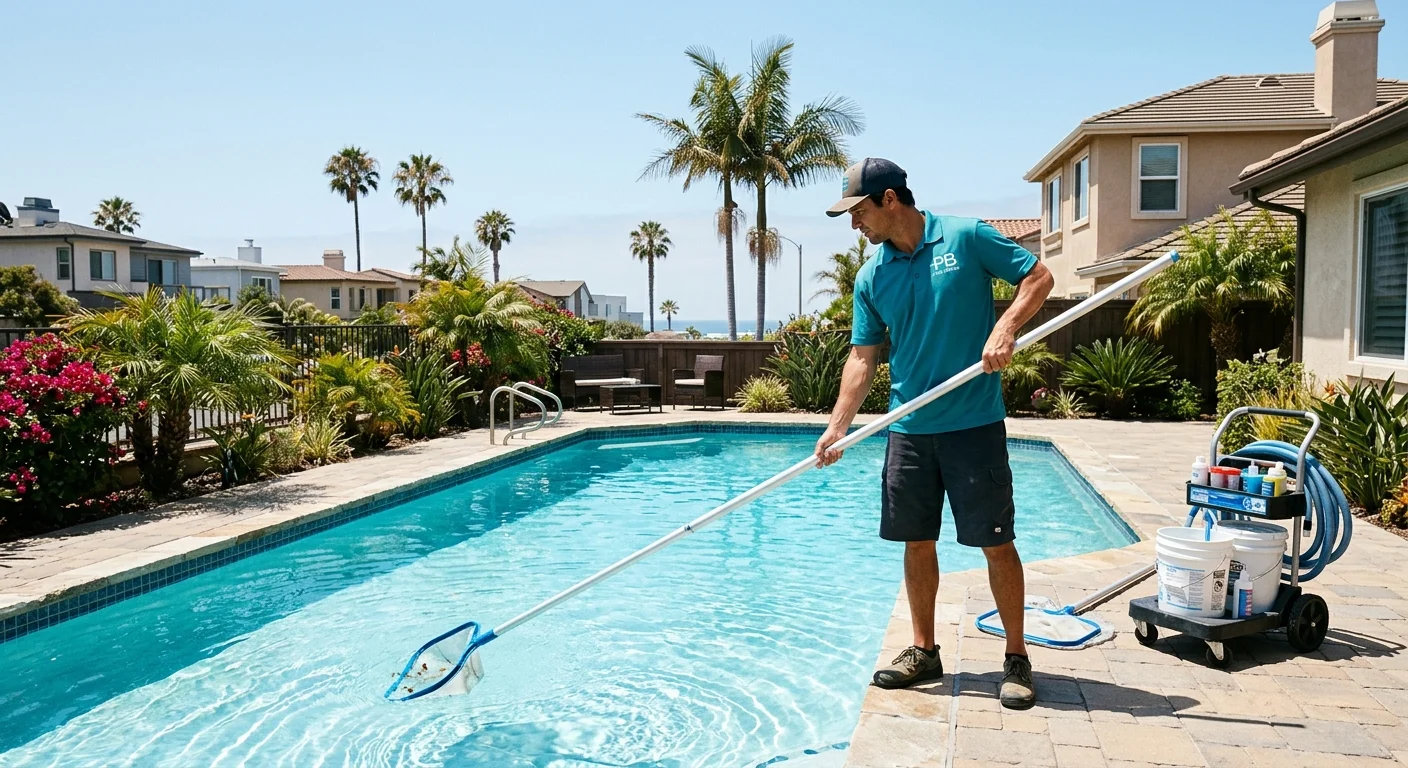
A pool a few blocks from the Pacific Ocean can look clean while sand, salt residue, and wind-blown debris keep building in baskets and around equipment. Good pool cleaning in Pacific Beach, CA starts with the pool’s actual exposure, not a generic coastal checklist. The goal is steady water care, clear circulation, and early notice when cleaning has become an equipment issue.
Salt air, wind-blown sand, and what they do to water chemistry
Ocean air can leave a light salt film on decks, rails, lids, and exposed equipment. That residue doesn’t turn the pool into a managed saltwater system. It also doesn’t replace sanitizer or measured chemical treatment.
Sand reaches Pacific Beach pools several ways. Wind carries fine material into open yards. Feet, towels, toys, and pets can bring larger grains from the beach. Once in the water, heavier particles settle while finer material moves toward the filter.
Those conditions matter, but they don’t provide a chemical reading. A pool’s treatment should follow actual test results. Distance from the ocean isn’t a sound basis for guessing chemical doses.
Ask the service pro to track readings over time. The record should also note swimmer use, visible debris, weather exposure, and any chemicals added. Those notes show whether a change is temporary or part of a repeating pattern. The CDC’s healthy swimming guidance also provides general information about maintaining healthy pool water.
Pacific Beach is a City of San Diego community, yet exposure varies by property. A walled yard near Garnet Avenue may collect different debris than an open yard closer to Mission Boulevard or Crown Point. The useful question isn’t whether the pool is coastal. It’s how that specific pool responds to its surroundings.
A local service plan should reflect those observations. Our Pacific Beach pool service page explains how we connect homeowners with licensed local pool specialists.
Why coastal pools clog skimmers and filters faster
A skimmer catches material moving across the surface. The filter handles finer particles carried through the circulation system. When wind, sand, leaves, hair, and other debris increase, both parts receive a heavier load.
Not every Pacific Beach pool clogs at the same rate. An exposed yard can collect material differently from a covered or sheltered pool. Foot traffic from the beach can also change the load from one service period to the next.
A full basket restricts the path water must follow. A dirty filter can also affect circulation. The useful signals include weaker return flow, poor surface movement, and filter readings that differ from the pool’s clean baseline. Filter pressure shouldn’t be judged from a universal number. The pro should compare it with that system’s normal reading and follow the manufacturer’s instructions.
Routine care should include the skimmer basket, pump basket, filter condition, and visible return flow. These checks belong together. Cleaning only the waterline can leave a circulation problem unnoticed.
Written records help here too. A note showing repeated basket loading or changing filter pressure gives the next pro useful context. It also helps separate a windy week from a persistent restriction.
Debris removal may restore normal circulation. When it doesn’t, adding more cleaning visits won’t solve the underlying fault. Repeated weak flow after baskets and the filter receive proper attention can point toward a blocked line, damaged component, or pump problem. That is the point where diagnosis matters more than another pass with a net.
Corrosion on equipment near the ocean
Salt residue and coastal moisture can be hard on exposed metal. Fasteners, heater cabinets, valve hardware, anchors, and equipment enclosures may show changes before the pool water looks different.
A weekly visit should include a visual check around the equipment pad. The pro should note new discoloration, flaking material, damaged coatings, wet areas, and changes around fittings. Photos taken from the same position can make gradual changes easier to compare.
Not every mark means equipment has failed. Surface discoloration on a fastener isn’t the same condition as a cracked housing, active leak, or damaged internal component. The location and extent of the change matter. So does the equipment manufacturer’s maintenance guidance.
Avoid treating every rusty spot with an unapproved spray or coating. Products that aren’t intended for pool equipment may hide damage or affect surrounding materials. Accessible exterior care should follow the manufacturer’s directions. Internal equipment, controls, heaters, and motors belong with a qualified specialist.
Actual exposure matters more than the Pacific Beach name alone. Walls, covers, rooflines, landscaping, and airflow can change what reaches the equipment. A yard near Sail Bay may have a different pattern from an ocean-facing yard west of Mission Boulevard.
The practical approach is consistent observation. Record what changed, where it appeared, and whether moisture is present. If corrosion reaches a functional part, cleaning the surface isn’t a repair. A licensed pool specialist can inspect the component and explain whether it can remain in service or needs corrective work.
What a weekly service visit should cover here
A weekly visit needs a defined scope. The homeowner and service pro should agree on what gets checked, what gets cleaned, and how concerns are reported. That avoids treating a clear surface as the only measure of completed care.
For a Pacific Beach pool, the visit should address:
- Surface debris, settled sand, steps, walls, and the waterline
- Skimmer and pump baskets, including visible condition around lids
- Measured water readings and treatment suited to that pool
- Return flow, surface movement, and filter pressure against its baseline
- Filter condition and service under the manufacturer’s instructions
- Visible leaks, corrosion, cracked fittings, and equipment changes
- A written record of readings, treatment, debris, and noted defects
The exact work can change with the pool. A windy period may add grit and leaves. Heavy swimmer use may change what the pro observes. A cover, nearby landscaping, and the pool’s circulation pattern also affect where material gathers.
The service record is especially useful when more than one symptom appears. Cloudy water plus weak return flow calls for a different conversation than a clean pool with sand on the floor. The same applies when baskets refill unusually quickly after proper cleaning.
Green water also deserves more than a cosmetic pass. It can involve water treatment, circulation, filtration, or a combination of conditions. Our guide to green pool cleaning in San Diego explains what information to gather before arranging service.
A good visit ends with a clear status. The homeowner should know what was done, what was measured, and what needs attention next. That clarity matters more than a vague note saying the pool was serviced.
When cleaning stops being enough and it is a repair
Cleaning stops being enough when the same symptom remains after debris and routine water care receive proper attention. At that stage, repeated cleaning can document the problem without correcting its cause.
Warning signs can include:
- Water appearing around the pump, filter, heater, valves, or connections
- Return flow that stays weak after baskets and filters receive proper care
- A pump that repeatedly loses prime
- Cracked lids, housings, valves, fittings, or exposed equipment parts
- Filter readings that don’t return toward the established clean baseline
- Cloudy or green water that keeps returning despite documented treatment
- Corrosion that has moved beyond a removable exterior deposit
These signs don’t identify the failed part by themselves. A clogged basket can resemble a pump problem. Poor flow can have several causes. Water near equipment may also travel from somewhere other than the first visible wet spot.
Ask the pro to separate observations from diagnosis. A useful explanation identifies the symptom, the checks performed, and the component believed to be responsible. It should also state whether cleaning, adjustment, repair, or replacement is being proposed.
When physical damage or equipment failure is driving the problem, review our pool repair service and arrange a qualified diagnosis. Refresh Pool Pros matches homeowners with licensed independent local specialists. The matched pro performs the work and provides any terms connected with that work.
You can verify a contractor directly through the CSLB license check. Confirm the license status and details before approving covered repair or construction work.
When to call us
Call when recurring debris, weak circulation, leaks, green water, or equipment corrosion has moved beyond routine care. A licensed pool service pro can separate a cleaning backlog from a filter, pump, leak, or equipment problem. Call us at (858) 400-4598 and we’ll connect you with a licensed local pool specialist.
Frequently asked questions
How often should a Pacific Beach pool be cleaned?
Set the schedule from the pool's debris load, swimmer use, water readings, and circulation. Open coastal exposure may require more basket and filter attention than a sheltered yard.
Does ocean air turn a backyard pool into a saltwater pool?
No. Ocean residue doesn't replace a managed saltwater system or normal water testing. Chemical treatment should follow measured readings and the pool equipment manufacturer's instructions.
What should a weekly pool service visit include?
The scope should cover debris removal, brushing, basket care, water testing, circulation checks, filter observations, equipment inspection, and a written service record.
When does a pool cleaning problem need repair?
Persistent leaks, weak return flow, repeated loss of prime, cracked equipment, and recurring water problems can point beyond routine cleaning. A licensed pool specialist should diagnose the cause.
Need professional help in San Diego County?
Refresh Pool Pros connects you with a licensed specialist for any service in this post.