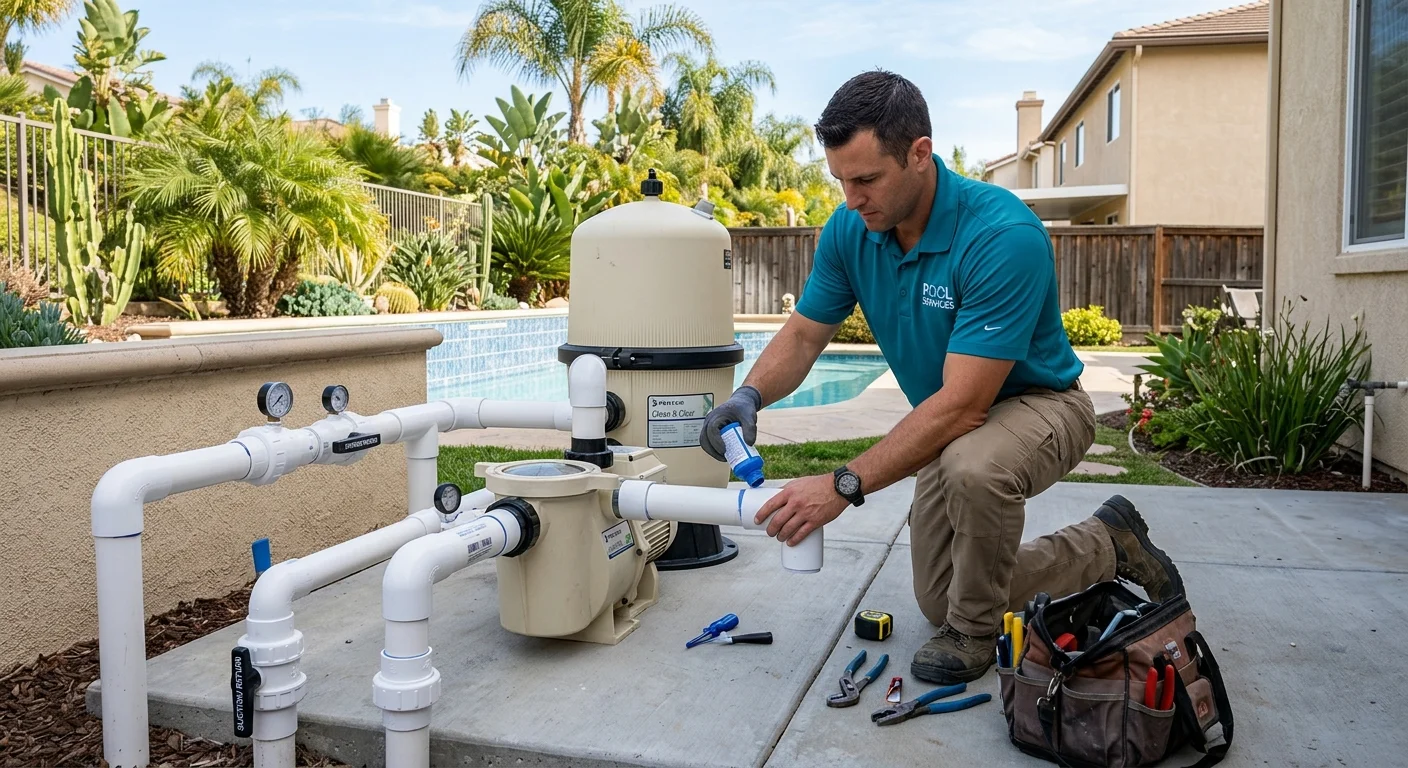
A new pump or filter can change more than one machine. The installer may also need to adjust plumbing, electrical connections, valves, controls, and the equipment pad. A proper pool equipment installation starts with a documented plan for the whole system.
What gets replaced on an equipment pad and what stays
Pool equipment pads often contain several connected components. These may include a pump, filter, heater, sanitizer, valves, controls, and plumbing manifolds. Replacing one component can affect the space and connections around everything else.
The written scope should separate new equipment from reused equipment. It should name each model being installed. It should also identify any valves, wiring, plumbing, controls, or supports that will remain.
An installer may find that the existing pad still fits the planned equipment. In other cases, different connection locations can require plumbing changes. A larger housing may also affect access to nearby valves or filter service points.
Existing components don’t need replacement merely because they’re old. They do need to be compatible with the planned system. Ask the installer to explain why each retained part can stay. That answer should cover condition, connections, controls, and available service access.
Local access matters before installation day. If the pad sits behind a narrow North Park side yard, confirm gate clearance and the delivery path. If it’s beside a wall or fence, ask whether filter lids and pump baskets will remain accessible. These details can shape the layout.
Take clear photos before approving the proposal. Include the full pad, labels, plumbing routes, electrical panels, and nearby obstacles. Compare those photos with the final written scope. For a broader planning checklist, read our San Diego pool equipment upgrade guide.
Sizing: why pump and filter have to match the pool, not the old label
A like-for-like model swap can look simple. Still, the old equipment label doesn’t prove that the original system was sized correctly. The pool may have changed since that equipment was selected.
The installer should examine the complete circulation system. That includes the pool and spa arrangement, pipe configuration, filter, return lines, suction lines, and water features. Added equipment can also change how the system needs to operate.
Pump selection involves more than fitting the old plumbing. The planned pump must work with the system around it. Ask how the proposed model matches the filter, controls, available electrical supply, and expected operating schedule.
Filter selection also belongs in the same conversation. A filter and pump work as one circulation system. The proposal should identify the filter model and explain its relationship to the planned pump. It should also leave enough room for cleaning and servicing.
Waterfalls, raised spas, cleaners, solar loops, and automation can add operating modes. Make sure the installer knows which features share the equipment. A proposal based only on a photograph may miss these connections.
Ask for the sizing basis in plain language. You should understand what the installer inspected and what assumptions were made. If an important detail couldn’t be confirmed, the proposal should say what must be checked on site.
Brand matters, but compatibility matters more. Our guide to pool equipment brands for 2026 can help you compare product lines before discussing specific models.
Plumbing and electrical work an install actually involves
Equipment installation usually includes more than setting a machine on the pad. The specialist may need to remove old connections, plan new pipe runs, set components, reconnect the system, and complete startup checks.
On the plumbing side, ask which pipes will be cut or rerouted. New equipment may place unions, inlets, and outlets in different positions. The layout should provide access to valves, pump baskets, drain plugs, and filter service points.
New pipe runs should have a clear purpose. Ask the installer to show where water enters and leaves each component. Confirm which valves control the pool, spa, cleaner, heater, or water features. Labels make future troubleshooting easier.
Electrical work depends on the selected equipment and existing setup. The written scope should identify the planned power connection, controls, breakers, disconnects, grounding, and bonding work. It should also state who handles each part.
If the project includes a heater, ask how electrical, plumbing, controls, and any fuel connection are divided between qualified parties. Don’t rely on a general phrase such as “complete installation.” Each responsibility should be named.
Startup should test the system as a connected whole. Ask the installer to check priming, visible leaks, valve operation, filter readings, controller communication, and each included operating mode. Any unresolved issue should be recorded before handoff.
A neat pad is useful, but appearance isn’t the only test. The finished arrangement should match the approved scope. It should also leave practical access for routine cleaning, inspections, and later repairs.
Permits and who is responsible for pulling them
Permit needs can change with the equipment, connections, and project scope. A single permit rule covering every San Diego County equipment replacement couldn’t be confirmed. Check with the building department responsible for the property address.
Ask the installer whether the proposal assumes a permit. If so, the contract should name who applies, who coordinates any inspection, and who provides the final record. If the installer says no permit is needed, ask for that conclusion in writing.
California treats unlicensed contracting as a misdemeanor unless an exemption applies. A job requiring a building permit doesn’t qualify for the state’s minor-work exemption. Splitting one project into smaller contracts doesn’t create an exemption. Someone advertising as a contractor also loses that exemption.
Before signing, use the official CSLB license lookup. Match the listing against the person or business named in the contract. Don’t rely only on a logo, advertisement, or copied license number.
If an equipment project expands into permitted pool construction or remodeling, another California rule may apply. The law requires at least two of seven drowning prevention safety features when a permit is issued for pool construction or remodeling at a private single-family home. It isn’t a blanket retrofit rule for every existing pool. Confirm its application with the permitting authority and review the California statute.
Permit responsibility shouldn’t stay verbal. Keep the written answer with the contract, equipment records, inspection documents, and final handoff materials.
Questions to ask before the install date
Good questions expose missing details before old equipment is disconnected. Start with the exact scope. Ask the installer to walk through every new, reused, moved, and removed component.
Your written checklist should cover:
- The manufacturer and model of each new component
- Every valve, pipe, control, and connection being reused
- The reason behind the proposed pump and filter sizing
- Required plumbing, electrical, automation, or heater work
- Permit responsibility and any expected inspection
- Equipment placement and future service clearance
- Removal or disposal of replaced equipment
- Startup testing and the final homeowner walkthrough
Ask what could change after work begins. Hidden damage, undocumented wiring, or incompatible controls may affect the scope. The contract should explain how proposed changes will be documented and approved before extra work proceeds.
Get explicit answers about automation. Confirm whether the new pump, heater, sanitizer, and controller will communicate as planned. Ask which functions will remain available through existing wall controls, apps, or schedules.
The handoff should include installed model and serial information, manuals, controller settings, and operating instructions. Ask the installer to demonstrate the valves and normal startup sequence. Photograph the completed pad and its labels.
Warranty language deserves the same care. The referral service doesn’t provide a warranty. Ask the installer to identify any manufacturer or contractor warranty offered, including its terms and responsible party.
Use the property itself to sharpen your questions. For an exposed coastal location near Encinitas, ask how the proposed placement and hardware fit that setting. For an El Cajon pad receiving strong afternoon sun, ask about equipment location and access. These are planning questions, not reasons to assume one product fits every home.
Our pool equipment installation and upgrade service can connect you with a licensed local specialist. Share photos and the existing equipment labels, but expect the final plan to reflect an on-site assessment.
When to call us
Call when the project involves new pool equipment, altered plumbing, electrical work, controls, or a permit question. A licensed pool specialist can inspect the complete system and prepare a written scope.
Call us at (858) 400-4598 and we’ll connect you with a licensed local pool specialist.
Frequently asked questions
Does pool equipment installation require a permit?
Permit requirements depend on the project scope and local jurisdiction. Confirm the current rule with the building department for the property address, then put permit responsibility in the contract.
How do I verify a pool equipment installer's license?
Search the installer through the California Contractors State License Board's official license lookup. Confirm that the license information matches the person or company named in your contract.
Can an installer reuse the existing pool plumbing?
Some plumbing may stay when it's compatible, supported, and in suitable condition. Ask the installer to identify every reused component and explain that choice in writing.
What should a pool equipment installation contract include?
The written scope should identify the equipment, reused components, plumbing and electrical work, permit responsibility, startup tasks, cleanup, and any warranty terms offered.
Need professional help in San Diego County?
Refresh Pool Pros connects you with a licensed specialist for any service in this post.