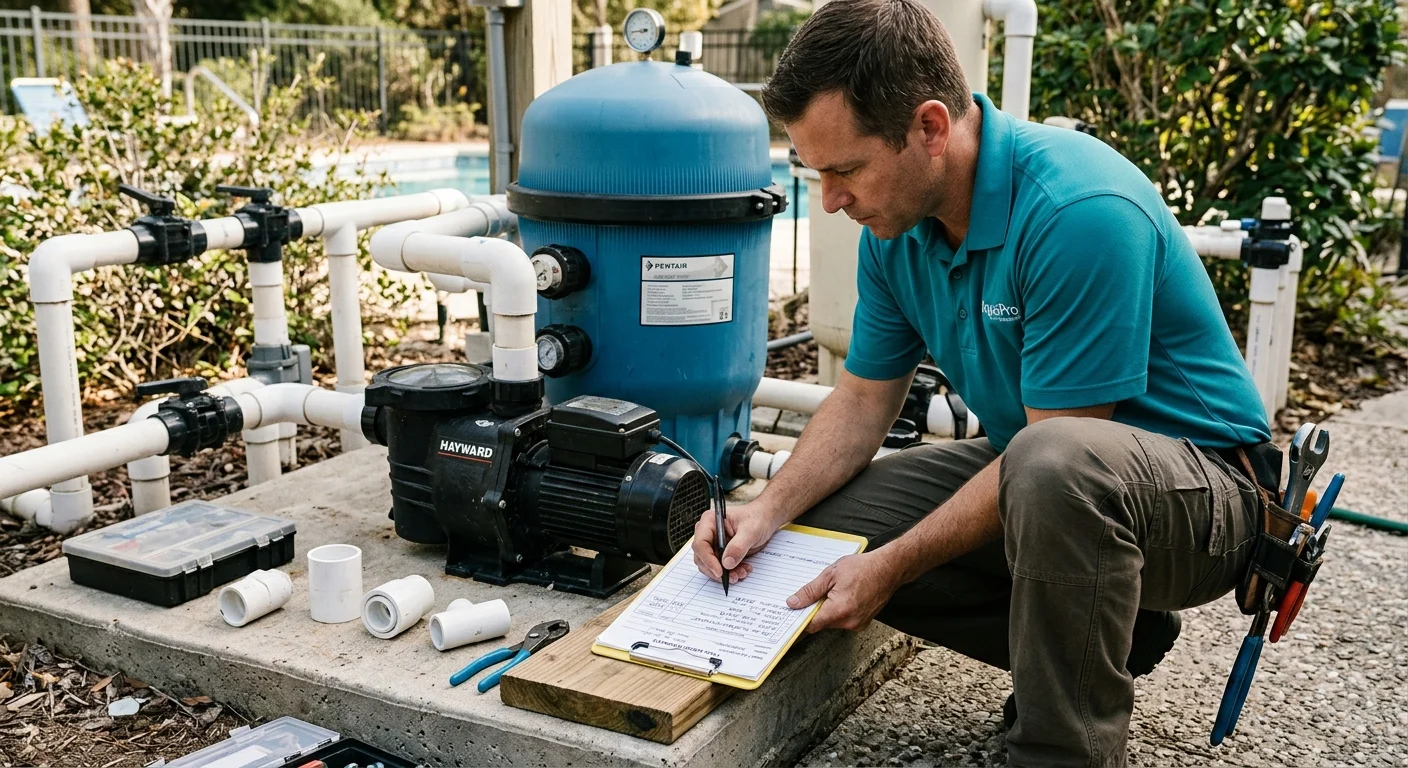
A pump, heater, filter, or control problem can produce very different proposals. A useful pool equipment repair estimate explains the diagnosis, proposed work, parts, exclusions, and payment terms before you approve anything. San Diego homeowners should compare that written scope, not just the final total.
Diagnosis versus estimate, and why they are separate
A diagnosis identifies the apparent fault. The estimate explains what the contractor proposes to do about it. Keeping those steps separate makes the scope easier to question and compare.
Ask the specialist to record the symptoms you reported. The written diagnosis should also identify what was inspected or tested. If a conclusion depends on further testing, that uncertainty belongs in writing. It shouldn’t be hidden inside a broad repair description.
The estimate should then connect each proposed task to that diagnosis. For example, “equipment repair” is too vague. The proposal should identify the affected pump, filter, heater, automation panel, valve, or related component. It should also distinguish repair work from replacement work.
This matters when a visible symptom could involve more than one component. You need to know whether the quoted work addresses the apparent cause, only the damaged part, or both. Ask what happens if the first repair doesn’t resolve the reported problem.
San Diego County properties also have different equipment settings. A pad near the coast in Oceanside may show different visible conditions than an inland pad in El Cajon. The specialist should document the conditions actually observed instead of making assumptions from the ZIP code.
If replacement or a larger system change enters the discussion, review the pool equipment installation and upgrade options separately. A repair estimate shouldn’t quietly turn into an upgrade proposal without a clear change in scope.
Line items that should appear in writing
A clear estimate lets another contractor understand the proposed job. Each major task should have its own description. Bundled phrases make it harder to see what you’re buying.
Look for these details:
- The equipment type, manufacturer, model, and visible identification details
- The diagnosed issue and any testing that supports it
- Each repair, removal, installation, adjustment, or programming task
- Parts and materials included in the proposed price
- Labor shown separately or clearly identified as included
- Permit costs, if applicable, or a statement that they aren’t included
- Taxes, delivery charges, or disposal charges, if applicable
- Work specifically excluded from the proposal
- The payment schedule and required downpayment
- The period for which the quoted terms remain available
- Any written parts or labor warranty offered by the contractor
- The contractor’s business name and license information
Don’t treat “miscellaneous materials” as self-explanatory. Ask what that line covers. The same applies to electrical, plumbing, controls, startup, or programming language. If a task affects the final result, its inclusion should be clear.
Access conditions also belong in the estimate when they affect the scope. Equipment behind a narrow side gate in Chula Vista presents a different work area from an open pad in North County. The contractor should describe any access assumption that shapes the proposal.
If permits may be involved, ask who will confirm the requirement and identify the correct authority for your address. San Diego County contains incorporated cities and unincorporated communities, so don’t assume one permitting counter covers every property.
A complete scope gives you a reference when the work begins. It also makes later changes easier to identify. Any added task should come with a written price and your approval before it becomes part of the job.
Parts, brands, and substitutions
A parts line should say more than “new pump parts” or “replacement controls.” Ask for the manufacturer, model, part number, quantity, and whether the component is new or another stated condition. If an exact part hasn’t been selected, the estimate should say that plainly.
Brand names alone aren’t enough. Equipment within one brand can have different connections, controls, and operating requirements. Ask the specialist to explain why the proposed component fits the existing system. The estimate should also identify any related work needed for that fit.
Substitutions need written rules. The proposal should state whether the contractor may substitute another part without approval. If substitutions are allowed, ask how any change in scope or price will be handled. Don’t rely on a verbal promise made during the inspection.
For a larger replacement, compare the proposed equipment with your current setup and planned use. Our San Diego pool equipment upgrade guide explains the decisions that often separate a basic replacement from a broader system change. You can also review our pool equipment brand guide before approving a named product.
Keep the comparison tied to the actual proposal. A familiar brand doesn’t make an estimate complete. Model details, included controls, installation tasks, exclusions, and written terms still matter.
If a listed part becomes unavailable, request a revised written estimate. That revision should identify the substitute and any related scope change. It should also show whether the total changes before you approve the new part.
The deposit cap in California and how it applies
California limits the downpayment on covered home improvement contracts. Business and Professions Code §7159.5 states that the “downpayment shall not exceed one thousand dollars ($1,000) or 10 percent of the contract amount, whichever amount is less.”
The last four words matter. The cap isn’t a flat 10 percent. It’s the smaller of $1,000 or 10 percent of the contract amount. Ask the contractor to label the downpayment clearly instead of blending it into an unexplained first payment.
Don’t confuse this deposit rule with California’s contractor-license threshold. Under Business and Professions Code §7048, the exemption applies only when the aggregate contract price for labor, materials, and all other items is less than $1,000, the work is casual or minor, and no building permit is required. That threshold became effective January 1, 2026.
Splitting one project into smaller contracts doesn’t create the exemption. Anyone advertising as a contractor also loses that exemption at any price. These conditions must be considered together.
Before approving the proposal, verify the contractor through the official CSLB license lookup. Check the record against the business name and license information shown on the estimate. Don’t use a third-party directory as a substitute for the state’s record.
The downpayment cap doesn’t tell you whether the total repair price is fair. It only limits the downpayment on the covered contract. The diagnosis, scope, parts, exclusions, and payment schedule still require separate review.
Comparing two estimates fairly
Place both estimates side by side and compare the scope first. Two different totals may reflect two different diagnoses or repair plans. A lower number isn’t a direct bargain if it leaves out parts, testing, programming, or related work included elsewhere.
Start with the diagnosed fault. Do both specialists identify the same equipment and problem? If not, ask each one what observations or tests support the conclusion. Don’t force two conflicting proposals into a price comparison before you understand the disagreement.
Next, compare the proposed outcome. One contractor may quote a limited repair while another proposes replacement. One may include related connections or controls while the other excludes them. Mark every difference before considering the totals.
Then review the parts. Match manufacturers, model numbers, quantities, and stated condition. Note any allowance, undecided selection, or substitution clause. An estimate built around an unspecified part can’t be compared fairly with one naming an exact component.
Review labor and exclusions with the same care. Ask whether removal, installation, setup, testing, cleanup, delivery, disposal, tax, and permit costs are included when applicable. Don’t assume silence means inclusion.
Finally, compare the payment terms and contractor details. Confirm the downpayment follows California’s “whichever amount is less” limit. Verify each contractor directly through CSLB. Ask for written clarification when any term is unclear.
Local conditions should appear only when they affect the observed scope. A Point Loma property exposed to salt residue, a tight City Heights side yard, and a broad inland equipment pad may present different working conditions. The estimate should describe the actual site instead of applying a countywide assumption.
You don’t need identical proposals. You need enough detail to understand why they differ. Choose based on the supported diagnosis, defined scope, identified parts, exclusions, credentials, and written terms.
When to call us
Call when the diagnosis is uncertain, the proposals conflict, or the repair may require licensed contracting. Call us at (858) 400-4598 and we’ll connect you with a licensed local pool specialist.
Frequently asked questions
Is a diagnosis the same as a pool equipment repair estimate?
No. A diagnosis identifies the apparent problem and supporting test results. An estimate describes the proposed work, parts, labor, exclusions, and total price.
What parts information should a repair estimate include?
Ask for the manufacturer, model or part number, quantity, condition, and any proposed substitution. The estimate should also explain whether approval is required before a substitution.
How much can a contractor request as a downpayment in California?
For a covered home improvement contract, California law says the downpayment cannot exceed $1,000 or 10 percent of the contract amount, whichever amount is less.
How should I compare two pool repair estimates?
Compare the diagnosis, scope, parts, labor, exclusions, payment terms, and contractor credentials. Matching only the bottom-line totals can hide major differences.
Need professional help in San Diego County?
Refresh Pool Pros connects you with a licensed specialist for any service in this post.