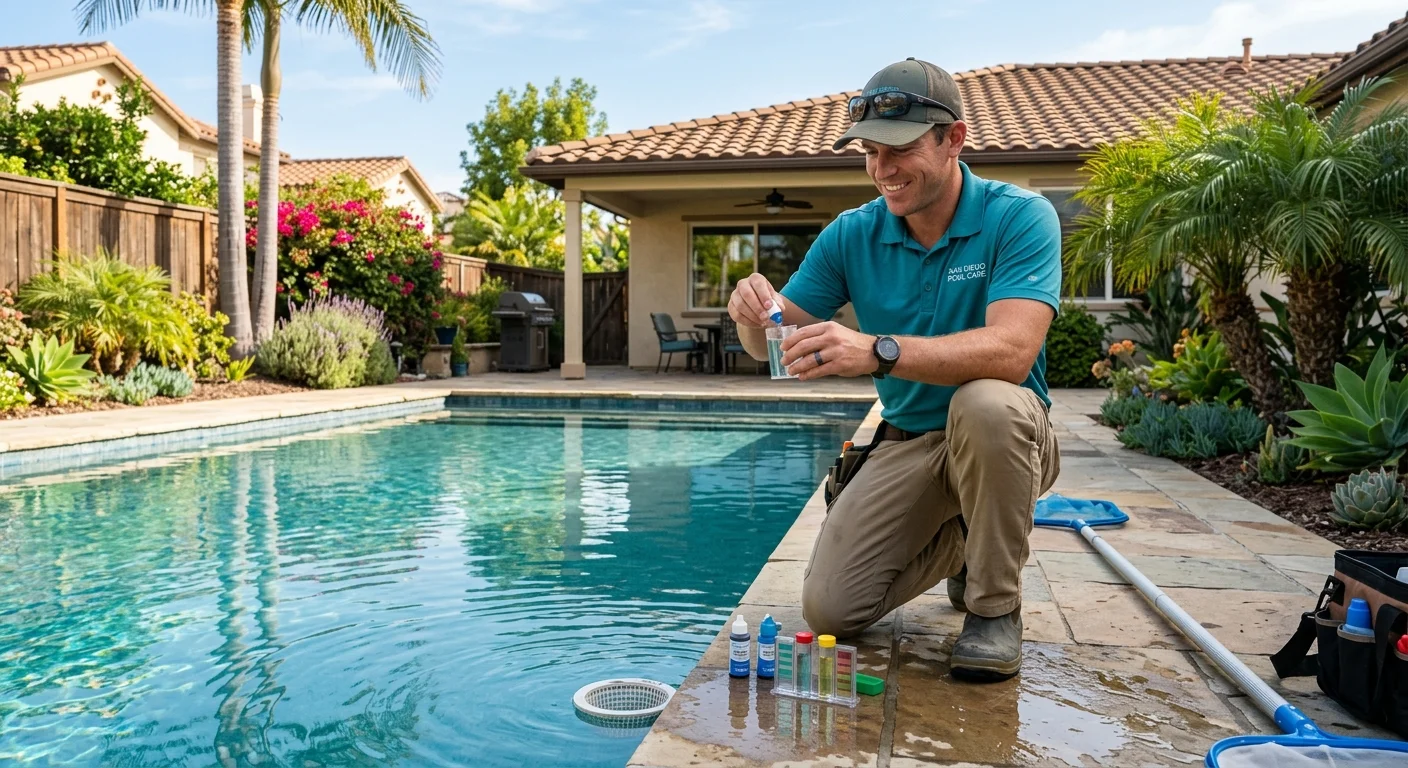
A maintenance plan can look complete until cloudy water, a noisy pump, or heavy debris exposes a gap. A pool maintenance service should define the cleaning, chemistry, and observation tasks the pro handles during each visit.
The tasks on a standard weekly visit
A typical pool maintenance service covers surface cleaning, water testing, chemical adjustment, and basic equipment observation. The exact work depends on the agreement, pool condition, weather, landscaping, and how often the pool gets used.
During a standard visit, the technician may remove floating leaves with a skimmer net. They may empty the skimmer and pump baskets, then brush the walls, steps, benches, and waterline. Vacuuming may be included each week, performed when needed, or handled on a rotating schedule.
The agreement should clearly address these routine tasks:
- Skimming leaves and floating debris
- Emptying accessible skimmer and pump baskets
- Brushing pool surfaces and steps
- Vacuuming or checking an automatic cleaner
- Testing the pool water
- Adding routine treatment chemicals
- Looking for visible leaks or equipment problems
- Recording completed work and test results
Don’t assume every item happens during every visit. A windy week may require more debris removal. A heavily used pool may need different attention than one that stayed covered. The service should respond to the pool’s actual condition while still completing the agreed core tasks.
Ask how the pro documents each visit. A door tag, email, text, or online report can show which tasks were completed. It should also note conditions that require owner attention. That record makes it easier to spot repeating chemistry or equipment problems.
Chemistry checks versus cleaning, and why both matter
Cleaning and water treatment solve different problems. Skimming, brushing, basket emptying, and vacuuming remove visible material. Chemistry checks examine water conditions that can’t be judged by appearance alone.
A clear pool may still need adjustment. A dull or cloudy pool may have more than one cause. The technician should test the water before deciding what to add. The service agreement should identify which readings are checked and whether routine chemicals are included.
For local supply information, the San Diego County Water Authority is a useful starting point. It doesn’t replace testing water from the pool itself. Avoid relying on an unsupported countywide hardness number or a guess based only on the city name. Owners can check their current water provider report and ask the technician how fresh fill water affects the maintenance approach.
Physical cleaning still matters after the chemistry is adjusted. Debris can collect in baskets, settle on surfaces, or interfere with water movement. Brushing reaches areas that an automatic cleaner may miss. Chemistry alone won’t remove leaves or scrub buildup from steps.
The CDC’s healthy swimming guidance provides owner-facing information about pool water and swimmer habits. Your maintenance agreement should still explain what the technician tests, what gets recorded, and when a condition falls outside routine service.
What is almost never included in a maintenance plan
Routine maintenance isn’t the same as repair, restoration, or equipment replacement. A weekly technician may identify a problem, but diagnosing and correcting it can require a separate visit, approval, and quote.
Common exclusions include:
- Pump, filter, heater, or automation repairs
- Replacement parts and equipment
- Leak detection or plumbing work
- Electrical work
- Surface repairs or resurfacing
- Major cleanup after prolonged neglect
- Recovery from severe water conditions
- Work requiring equipment disassembly
A maintenance agreement should state how the pro handles these discoveries. The technician might document the issue, explain the next diagnostic step, and provide a separate proposal. Repairs should be quoted separately by the pro before work begins.
A pool that has turned green may need more than its regular visit. The treatment depends on the water condition, circulation, debris, and equipment operation. Our guide to green pool cleaning in San Diego explains why recovery shouldn’t be treated as ordinary weekly upkeep.
Equipment failures also belong outside the routine cleaning scope. If a pump stops moving water or a filter develops a problem, the next step may be professional pool repair. Replacement or upgrade decisions may involve a separate pool equipment specialist.
Read exclusions as carefully as the included services. A short list labeled “full service” can still leave major gaps. The written scope matters more than the plan’s name.
Equipment checks a good tech does without being asked
Routine service should include observation around accessible pool equipment. This isn’t a full inspection or repair diagnosis. It’s a chance to notice visible changes before the next scheduled visit.
A technician can look and listen for concerns such as:
- Water appearing around visible equipment or plumbing
- Unusual sounds during normal operation
- Weak or irregular visible water movement
- Debris restricting an accessible basket
- A cleaner that isn’t moving as expected
- A control display showing an alert
- Visible damage around accessible components
These observations don’t prove the cause. Water near a pump might come from more than one source. A stopped cleaner could have a simple obstruction or an equipment problem. The technician should describe what was observed without turning a quick glance into a definite diagnosis.
Ask whether the service report includes equipment notes. Photos can help when a condition changes between visits. The agreement should also explain whether basic adjustments are included and what requires separate authorization.
When a concern needs repair work, request a written scope from the pro. Check the contractor through the official CSLB license lookup before approving regulated work. Refresh Pool Pros connects homeowners with licensed independent pool specialists. The matched specialist performs the physical work and provides any applicable repair terms.
Reading a service agreement before you sign it
Start with frequency and scope. “Weekly service” describes a schedule, not a complete task list. Confirm what the technician does during a normal visit and what happens when the pool needs extra attention.
The agreement should answer practical questions:
- Are brushing and vacuuming performed every visit or as needed?
- Are routine treatment chemicals included?
- How are unusual chemical treatments handled?
- Who empties each basket and cleaner container?
- Is filter cleaning included or scheduled separately?
- Does the pro service an attached spa under the same plan?
- How are equipment concerns reported?
- What work requires a separate quote?
- What happens when access isn’t available?
- How are skipped or weather-affected visits documented?
Check which pool features the plan covers. An attached spa, water feature, salt system, heater, automatic cover, or automation controller may require added tasks. Don’t assume those components are included because they share the same equipment area.
San Diego County pools aren’t interchangeable. A property in Encinitas, El Cajon, Point Loma, or Chula Vista can have different access, landscaping, use patterns, and installed equipment. The agreement should describe your actual pool instead of relying on a countywide template.
Ask for exclusions in writing. Pay attention to vague phrases such as “basic chemicals,” “light cleaning,” or “equipment check.” The agreement should define those terms well enough that both sides understand the plan. It should also state that repair work and replacement parts are quoted separately.
Keep a copy of the signed agreement and several service reports. Those records help you compare the promised scope with the work being documented. They also give a repair specialist useful context if a repeating problem develops.
When to call us
Call when routine care reveals a leak, equipment failure, persistent water problem, or another issue needing a licensed pool pro. Repairs are separate from maintenance and should be quoted separately by the matched specialist.
Call us at (858) 400-4598 and we’ll connect you with a licensed local pool specialist.
Frequently asked questions
What does a pool maintenance service usually include?
Plans vary, but common tasks include water testing, chemical adjustment, debris removal, basket emptying, brushing, vacuuming, and visual equipment checks.
Are pool repairs included in routine maintenance?
Repairs are usually separate from routine maintenance. Ask the pro to diagnose the problem and provide a separate written quote before approving repair work.
Does pool maintenance include chemicals?
Some plans include routine chemicals, while others bill for them separately. The service agreement should identify what is included and how extra treatments are handled.
Should a maintenance technician inspect pool equipment?
A routine visit should include basic visual observations around the pump, filter, valves, and visible plumbing. Testing, dismantling, and repairing equipment may require separate approval.
Need professional help in San Diego County?
Refresh Pool Pros connects you with a licensed specialist for any service in this post.