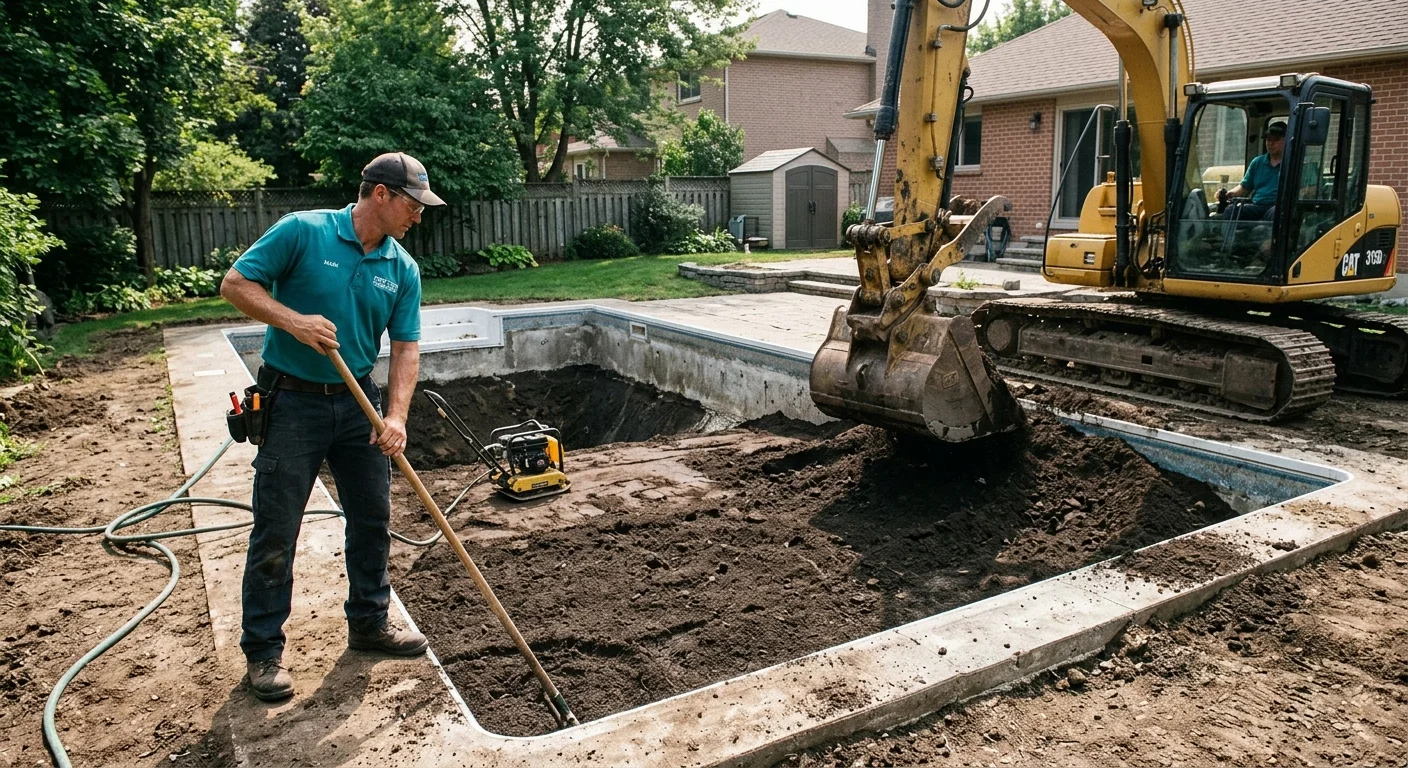
For swimming pool removal in El Cajon, start by defining the proposed result. Then confirm permits, records, drainage, and compaction before choosing a contractor. Removal is demolition work, while restoring a worn pool calls for a pool specialist.
The right choice depends on the pool and your plans for the yard. A detailed restoration assessment can also prevent an irreversible decision based only on appearance.
Partial fill-in versus full removal
“Partial fill-in” and “full removal” sound clear, but the labels aren’t enough. The written scope should explain exactly what happens below the finished yard.
For a partial proposal, ask which parts of the shell remain. The contractor should identify every section proposed for removal and every section left underground. Ask how existing plumbing, steel, equipment, and electrical connections appear in the scope. Don’t assume those items are covered because the proposal says “pool removal.”
A full-removal proposal needs the same level of detail. Ask whether “full” includes the entire shell and all related materials. The document should also say where removed material goes and what replaces it. If two bids describe different end conditions, their headings don’t make them comparable.
Tell each bidder how you hope to use the space. A simple open yard, landscaping, a patio, and a possible future structure aren’t the same request. Don’t assume a method supports a future plan without written confirmation from the appropriate contractor, designer, and local authority.
Refresh Pool Pros doesn’t perform pool demolition. We connect homeowners with licensed independent pool service and restoration pros. If removal remains your choice, you’ll likely need a separate specialist whose proposal specifically covers demolition and site work.
Before signing, check the contractor through the CSLB license lookup. Confirm that the listed business name and license information match the proposal.
Permits, engineering, and the disclosure question
A current El Cajon-specific permit path couldn’t be confirmed from the approved source material for this page. Requirements for engineered plans, inspections, final approval, or later disclosure also couldn’t be verified. Don’t let a bidder replace that missing confirmation with a confident guess.
First, confirm which authority has jurisdiction over the parcel. An El Cajon mailing address doesn’t answer that question by itself. If the property is inside city limits, ask the City of El Cajon building counter. If it isn’t, ask San Diego County. Describe the exact proposed method, not just “pool removal.”
Request written answers to several questions:
- Is a permit required for this exact scope?
- Must plans or engineering documents be submitted?
- Which inspections apply during the work?
- What records show that the project was completed and closed?
- Does the authority impose any requirement tied to future site use?
If the authority requires a building permit, California’s minor-work contractor exemption doesn’t apply. Business and Professions Code section 7048 requires both an aggregate contract price below $1,000 and no required building permit. The work must also be casual or minor. Splitting a larger project into smaller contracts doesn’t create the exemption.
A specific rule requiring later disclosure of a removed or filled pool couldn’t be confirmed here. Ask a qualified California real estate professional what must be disclosed during a future sale. Keep the contract, approved plans, inspection records, fill documentation, photographs, and final approval together. Ask the permit authority which documents become part of its permanent record.
Drainage and soil compaction, the part people skip
The finished surface may look simple, but the written scope must address what sits below it. “Fill and grade” isn’t a useful description unless the proposal defines both.
Ask the contractor to name the proposed fill materials. The scope should state how material will be placed and how compaction will be checked. If testing or a report is proposed, identify who provides it and what document you’ll receive. If it isn’t proposed, ask why and take that answer to the permit authority or engineer reviewing the project.
Drainage also needs a site-specific plan. Ask where water should move after the pool basin is gone. The contractor should show proposed finished elevations and explain how the new grade relates to the house, neighboring properties, fences, patios, and existing drains. Don’t accept a verbal promise that the yard will “drain fine.”
Walk the site with each bidder. Point out roof downspouts, low areas, irrigation, retaining features, and any place where water already collects. Ask which conditions are included in the proposal and which require another specialist.
Your intended use matters here too. Tell the contractor if you may later add landscaping, hardscape, or a structure. Ask the reviewing authority whether that future use changes the required plans, inspections, or supporting documents. Get the answer before demolition starts, when the scope can still be revised.
Why a tired pool is often a restoration candidate instead
A pool that looks finished may still deserve a restoration assessment. Stained finishes, damaged tile, worn coping, dated equipment, and visible cracks don’t all point to the same remedy. A licensed pool specialist can inspect those conditions and explain which parts may be repairable.
Start by separating appearance from function. Ask the specialist to assess the interior surface, shell, plumbing, equipment, deck connection, and water loss concerns. If cracks are present, don’t decide from photographs alone. The location and surrounding conditions need an on-site review.
Our guide to the signs a pool needs resurfacing can help you organize the symptoms. For finish-related work, review the available pool resurfacing and replastering options. If the goal is a different layout or updated features, these San Diego pool remodel ideas can help define the conversation.
Ask for separate written scopes when comparing restoration with removal. A restoration proposal should identify the conditions found, the proposed work, excluded items, and any warranty offered by that independent contractor. Refresh Pool Pros doesn’t provide the warranty and doesn’t perform the work.
Removal may still fit your plans. The assessment simply gives you another documented option before the pool structure is changed permanently.
How to decide between the two
Build the decision around the end result, not the pool’s current appearance. Write down what you want from the property during the next several years. Then compare proposals that address the same goal.
For removal, gather these items before signing:
- A precise description of what leaves and what remains
- Written permit guidance from the authority with jurisdiction
- Any required plans, engineering, and inspection stages
- Fill material and compaction details
- A drainage and final-grading plan
- The completion records you’ll receive
- Contractor license information that matches the agreement
For restoration, ask a licensed pool specialist to separate surface work from structural, plumbing, equipment, and deck concerns. Request a written scope that explains what was inspected and what wasn’t. Don’t treat resurfacing as the answer to every pool problem, but don’t assume demolition is the only answer to a tired finish.
Compare uncertainty as carefully as the proposed work. A short bid that omits permits, fill, drainage, or records hasn’t answered the main questions. Ask for missing details before choosing. No verified price range for pool removal is approved for this page, so confirm the full contract amount and payment schedule directly with each contractor.
For a California home improvement contract, the down payment can’t exceed $1,000 or 10 percent of the contract amount, whichever is less. Verify the contractor through CSLB and don’t rely on a third-party license badge.
The best decision is the one supported by a defined scope, local written guidance, and an honest assessment of the existing pool.
When to call us
Call when you need a licensed pool specialist to assess whether resurfacing, repair, or restoration is a practical alternative to removal. Call us at (858) 400-4598 and we’ll connect you with a licensed local pool specialist.
Frequently asked questions
Does swimming pool removal in El Cajon require a permit?
A current El Cajon-specific permit rule couldn't be confirmed from the approved sources for this page. Ask the City of El Cajon building counter, or San Diego County if the property is outside city limits, before accepting a demolition proposal.
What's the difference between partial fill-in and full removal?
Those labels don't provide enough detail by themselves. Ask each contractor to identify what will be removed, what will remain underground, which fill materials are proposed, and what completion records you'll receive.
Does a filled pool have to be disclosed when the property is sold?
A specific California or El Cajon disclosure requirement wasn't confirmed for this page. Ask a qualified California real estate professional what a later sale requires, and keep every permit, inspection, plan, and completion record.
Can Refresh Pool Pros remove my pool?
Refresh Pool Pros doesn't perform demolition or other physical work. We connect homeowners with licensed independent pool specialists who can assess whether restoration is a practical alternative before the homeowner hires a separate removal specialist.
Need professional help in San Diego County?
Refresh Pool Pros connects you with a licensed specialist for any service in this post.