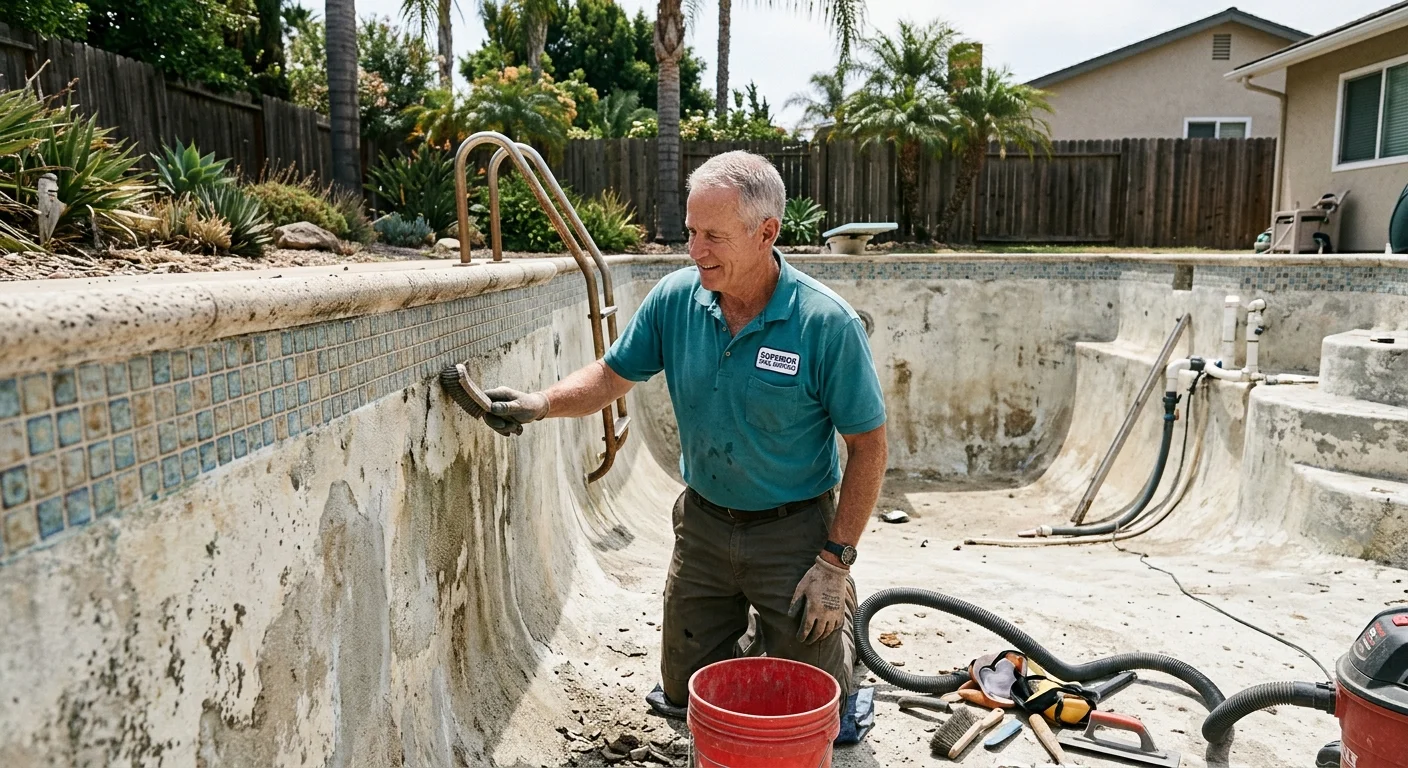
A search for “pool restoration near me” often starts with a worn finish, dated tile, or damage you can’t identify. Restoration brings the existing pool back. A remodel changes its design, materials, or features.
What restoration means: bringing the existing pool back
Pool restoration focuses on renewing what you already have. The pool keeps its basic footprint, layout, and intended use. The work addresses confirmed wear or damage instead of creating a different pool.
A restoration scope might involve the interior finish, tile, coping, plumbing, or equipment. Those items shouldn’t be assumed from photos alone. A licensed pool specialist needs to identify which parts have failed and which can remain.
Resurfacing is often the largest visible part of a restoration. It removes or prepares the worn interior so a new finish can be applied. Our pool resurfacing and replastering service explains how we connect homeowners with licensed local pros for that work.
The appearance of the surface provides useful clues. Rough areas, visible cracks, staining, flaking, and exposed material all deserve closer review. Our guide to the signs your pool needs resurfacing can help you organize what you’ve noticed before meeting a specialist.
Restoration doesn’t mean every old component gets replaced. It also doesn’t mean visible damage is merely cosmetic. The useful question is narrower: what must be repaired to return this pool to sound working condition?
When requesting local quotes, send the same information to each pro. Include the property address, clear photos, known leaks, equipment concerns, and your preferred finish. That makes the proposed scopes easier to compare.
What remodel means: changing shape, finish, or features
A remodel starts with a different goal. You’re changing how the pool looks, functions, or fits the yard. Repairs may still be included, but they aren’t the entire project.
Possible design changes include a new step layout, bench, coping profile, tile style, interior finish, or water feature. A larger plan might alter part of the pool’s shape. Each requested change should appear clearly in the written scope.
An older-looking pool doesn’t automatically need remodeling. If you like its layout and features, restoration may answer the actual problem. Remodeling makes more sense when your desired result can’t be reached by renewing the existing materials.
Finish selection alone doesn’t settle the label. Replacing a failed finish with a different color could remain a restoration. Pairing that finish with new features and layout changes points toward a remodel. The full scope matters more than the name.
Our guide to San Diego pool remodel ideas can help separate useful changes from optional ones. It doesn’t replace an on-site assessment. Its purpose is to help you arrive with a clearer design brief.
Ask each contractor to divide the proposal into two groups. One should cover confirmed repairs. The other should cover elective design changes. That separation helps prevent a cosmetic wish list from hiding a condition that needs attention first.
The condition signs that decide it for you
Start with the pool’s condition, not a catalog of finishes. A design choice won’t explain ongoing water loss, movement, or failing material. Those concerns need a diagnosis before the project receives a final label.
Look for patterns and record where they appear:
- Widespread roughness, flaking, or exposed interior material supports a resurfacing assessment.
- A crack needs classification. Its location and surrounding conditions matter.
- Ongoing water loss calls for investigation before new finishes are selected.
- Loose tile or coping may require inspection of the material beneath it.
- Pump, filter, heater, light, and plumbing concerns should be listed separately.
These observations don’t diagnose the pool. They give the licensed specialist a useful starting point. Mark problem areas with removable tape when practical, then take wide and close photos. Note whether a symptom is constant or intermittent.
Ask the pro to explain which findings affect function, which affect appearance, and which remain uncertain. If more investigation is needed, the proposal should identify that step. Don’t let an unexplained allowance stand in for a diagnosis.
This process matters across San Diego County, whether the property is in Encinitas, El Cajon, City Heights, or Chula Vista. “Near me” should mean more than a company appearing in local results. The contractor still needs to assess your specific pool and write a scope tied to its actual condition.
Avoid deciding from a single visible symptom. Worn plaster may be the main issue, or it may sit beside a leak or equipment problem. A restoration can expand after inspection. A proposed remodel can also shrink once you separate needed work from preferences.
How the scope changes permits and inspections
Permit questions follow the work being proposed. They shouldn’t be answered from the words “restoration” or “remodel” alone. Two contractors may use the same label for materially different scopes.
Before signing, give the responsible permitting authority a written list of proposed changes. Ask which items require a permit, which inspections apply, and what documents must be submitted. If the scope changes later, confirm whether that answer also changes.
California’s Swimming Pool Safety Act adds an important rule for private single-family homes. When a permit is issued for pool construction or remodeling, the pool must have at least two of seven drowning-prevention safety features. An enclosure is the first listed feature, but the rule isn’t simply “a fence is required.” It also isn’t a blanket retrofit rule for every existing pool.
Don’t rely on an old proposal or another homeowner’s permit experience. Ask the authority responsible for your address about the current scope. Get the answer before materials are ordered or construction begins.
Ask the contractor for a license number, then use the official CSLB license check. Confirm that the record matches the person or business named in your contract.
Refresh Pool Pros doesn’t perform the physical work or pull permits. We connect homeowners with licensed independent pool pros. Permit responsibility, inspections, and requested design changes should be documented between you and the contractor doing the job.
Sequencing if you end up doing both
Restoration and remodeling can share one project. The key is to settle the condition questions before finalizing finishes and features. Otherwise, a later discovery can disrupt choices made too early.
A practical planning sequence starts with investigation. Have the specialist document surface damage, suspected leaks, plumbing concerns, equipment issues, and requested design changes. If testing or added access is needed, resolve that uncertainty before locking the scope.
Next, separate required repairs from elective improvements. Decide which remodel ideas still make sense after the repair needs are clear. Then confirm permit and inspection requirements for the combined scope.
The written proposal should show the order of work. Changes to plumbing, features, steps, or the pool’s shape generally belong before the final interior finish. Tile and coping decisions also need coordination with the chosen finish. Ask the contractor to explain the planned sequence in plain language.
Keep a record of approved selections and scope changes. If a hidden condition is found, request a written explanation before authorizing added work. The revision should identify what was discovered and how it changes the original plan.
Don’t compare proposals by their final totals alone. Compare the stated conditions, included work, exclusions, materials, permit responsibility, and payment schedule. No verified standard price covers every San Diego restoration or remodel, so this site doesn’t publish a price list. The contractor sets the quote after reviewing the actual pool and requested changes.
When to call us
Call when worn surfaces, cracks, leaks, or design changes require an on-site assessment from a licensed pool pro. We’ll help you connect with a local specialist who can inspect the pool and define the proper scope.
Call us at (858) 400-4598 and we’ll connect you with a licensed local pool specialist.
Frequently asked questions
What does pool restoration include?
Restoration renews worn or damaged parts while keeping the pool's basic layout and purpose. The exact scope depends on what a licensed specialist confirms during an inspection.
Is pool resurfacing considered restoration or remodeling?
Resurfacing usually fits a restoration when it renews the existing interior without changing the pool's design. It may become part of a remodel when paired with new features or structural changes.
Will my pool project need a permit?
Permit requirements depend on the proposed work and the authority responsible for the property. Confirm each part of the scope with that office before signing a contract.
How can I check a pool contractor's license?
Ask for the contractor's license number and verify it through the California Contractors State License Board's official online lookup.
Need professional help in San Diego County?
Refresh Pool Pros connects you with a licensed specialist for any service in this post.