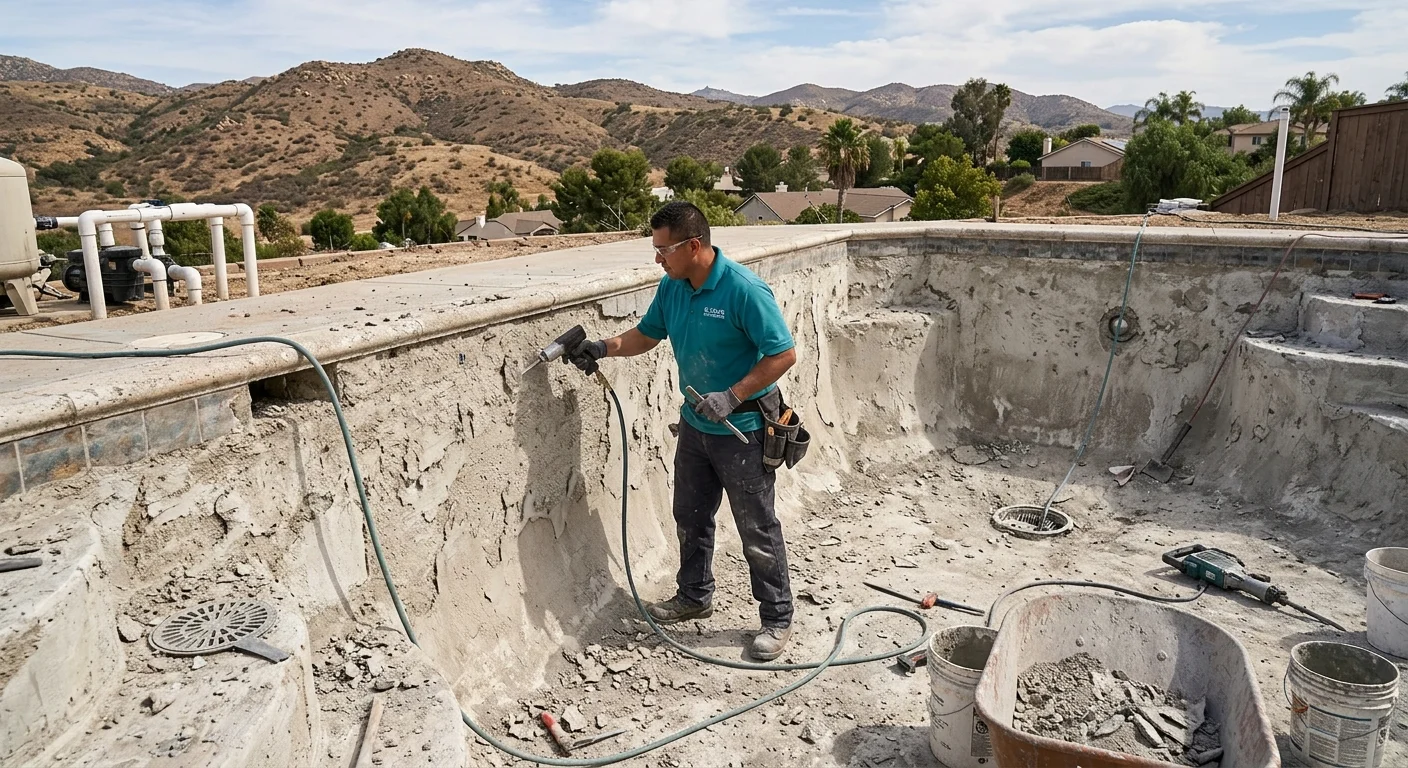
A worn El Cajon pool finish needs a careful surface assessment. Inland heat, hard water, and old repairs can leave similar-looking marks. A licensed pool pro can determine whether resurfacing fits or another repair should come first.
If you’re comparing El Cajon pool resurfacing proposals, focus on preparation. The finish sample, written scope, license record, and permit answer also matter. Those details tell you more than a broad promise about the completed pool.
What inland East County conditions do to a pool finish
El Cajon sits in inland East County, away from the coast’s milder pattern. Pool surfaces here face sustained heat and strong sun exposure. Hard water can also leave visible deposits along the interior and waterline.
These conditions don’t prove that a pool needs resurfacing. They do affect what the contractor should inspect. A chalky patch might be buildup, worn finish, or both. Discoloration can also hide earlier repairs beneath the surface.
Start with the pool empty only when the selected pro says it’s appropriate. Before that point, document what you can see from the deck. Note rough areas, recurring stains, cracks, hollow-looking patches, and spots where the underlying material appears exposed. Photos taken in consistent light can help compare changes.
Ask the contractor to explain what’s cosmetic and what affects the scope. Resurfacing changes the interior finish. It doesn’t automatically correct every leak, plumbing defect, or structural problem. Those issues may need separate evaluation.
The inspection should also cover fittings that meet the finish. Lights, drains, returns, steps, and tile edges create transitions. Ask how each transition will be prepared and finished. A vague proposal can leave these decisions until the pool is already drained.
Our El Cajon pool service connections help homeowners find licensed independent specialists. The matched pro performs the inspection and physical work.
Scale and staining on older El Cajon pools
Hard water can leave mineral scale on pool surfaces. It may appear as a pale film, a rough band, or an uneven patch. Staining can create darker or colored areas that look embedded in the finish.
Appearance alone doesn’t identify the cause. A rough white area might be surface buildup, exposed finish, or overlapping conditions. A dark mark might sit on the surface or extend into worn material. Ask the inspecting pro to show you the difference.
This matters because cleaning and resurfacing solve different problems. Removing a deposit won’t rebuild a worn finish. Covering a surface without addressing an active source of staining can also leave unanswered questions. The proposal should state what the contractor found and how the recommended scope responds.
Older repairs deserve extra attention. Look for patches with different colors or textures. Ask whether those areas remain sound and how the new material will meet them. If a crack is present, don’t assume a finish coat is the whole repair. Have the pro classify the damage before accepting the resurfacing scope.
Our guide to the signs a pool may need resurfacing can help organize your observations. It isn’t a substitute for an onsite inspection.
Don’t accept a lifespan promise based only on material type. No verified finish lifespan appears in the approved sources. Ask each contractor for product documents, maintenance instructions, and written warranty terms for the exact finish being proposed.
The resurfacing sequence from chip-out to startup
A clear contract should describe the sequence before draining begins. Methods vary by pool condition, finish system, and contractor. The written scope should tell you which method applies to your pool.
The proposal may begin with draining and removal of loose or selected finish material. Some scopes describe a full chip-out. Others call for a different preparation method. Ask what will remain, what will be removed, and how the pro decided.
Next, the contractor should identify repairs discovered during preparation. These might be listed as included work, allowances, or change-order items. Don’t rely on a verbal understanding. Ask how unexpected cracks, hollow areas, fittings, and damaged transitions will be documented.
Surface preparation follows the approved removal and repair work. The contract should name the proposed bonding or preparation system. It should also identify the finish material, color, texture, and any selected aggregate. Review a physical sample when one is available. Screen colors can look different from installed material.
Finish application is followed by filling and startup care. Don’t assume those responsibilities belong to the same person. The agreement should say who manages the fill, initial water treatment, brushing instructions, and equipment restart. It should also state what the homeowner must do.
Avoid scheduling other backyard work without discussing access. The resurfacing pro may need a clear route between the street, pool, and work area. Ask who protects nearby surfaces and handles removed material.
Our pool resurfacing and replastering service page explains how we connect homeowners with licensed local specialists. Refresh Pool Pros doesn’t drain, prepare, finish, or restart pools.
Finish choices and what they change day to day
Finish selection changes how the pool looks and feels. It can also change the care instructions provided after installation. Compare exact products, not broad labels alone.
Start with texture. Ask to touch a cured sample, preferably underwater if the contractor has one available. A small dry sample won’t perfectly reproduce an installed pool, but it can make differences easier to discuss. Pay close attention to steps, benches, and shallow areas where feet contact the finish.
Color affects the pool’s appearance throughout the day. The selected finish, water depth, shade, and surrounding materials all influence what you see. Ask for the manufacturer’s color information. Don’t treat an edited photo as a guaranteed match.
Hard water makes maintenance instructions especially relevant in El Cajon. Ask how the selected product should be cleaned and monitored. Get those directions in writing. If the contractor’s advice differs from the manufacturer’s documents, request clarification before choosing.
The proposal should name the finish product rather than saying only “plaster” or “aggregate.” It should also record selected colors and upgrades. Confirm whether tile, coping, fittings, steps, or decorative details are included. Resurfacing and a broader remodel aren’t automatically the same scope.
Don’t choose from lifespan claims that can’t be verified. No approved source supports a fixed service life for a pool finish. Installation conditions, water care, product requirements, and use can differ. If the pro offers a workmanship warranty, request its exact coverage, exclusions, and claim process in writing.
Permits and inspections in El Cajon
The specific permit path for straightforward pool resurfacing in El Cajon could not be confirmed from the approved sources. Before signing, ask the City of El Cajon whether the written scope requires a permit or inspection. Give the city the full scope, including structural, plumbing, electrical, tile, coping, and equipment work.
Don’t rely on a contractor’s broad statement that resurfacing never needs a permit. The answer may depend on what the project includes. If the scope changes after preparation, ask whether the permit answer changes too. Record responsibility for applications, inspections, and fees in the contract.
California’s contractor exemption is narrow. Under Business and Professions Code section 7048, the aggregate contract price must be less than $1,000, the work must be casual or minor, and it must not require a building permit. That threshold took effect January 1, 2026. Anyone advertising as a contractor loses the exemption at any price, and a job can’t be split into smaller contracts to avoid licensing.
Ask for the contractor’s license number. Then use the official CSLB license lookup. CSLB identifies C-53 as the Swimming Pool Contractor classification. Its definition addresses construction of swimming pools, spas, and hot tubs, but doesn’t say every repair task requires C-53. Ask CSLB which classification fits any unclear scope.
California also limits a home improvement downpayment. It can’t exceed $1,000 or 10 percent of the contract amount, whichever is less. Review payment milestones before signing.
A separate California safety rule applies when a permit is issued for pool construction or remodeling at a private single-family home. The pool must have at least two of seven drowning-prevention features. That rule doesn’t establish whether resurfacing itself needs a permit. Ask the city how it applies to your project.
When to call us
Call when finish wear, scale, staining, or cracks make the right scope unclear. A licensed local pool specialist can inspect the surface and explain the proposed preparation.
Call us at (858) 400-4598 and we’ll connect you with a licensed local pool specialist.
Frequently asked questions
How can I tell whether my El Cajon pool needs resurfacing?
Rough areas, recurring stains, cracks, and exposed material deserve an inspection. A licensed local pro can separate finish wear from scale, leaks, and structural damage.
Does pool resurfacing require a permit in El Cajon?
The specific permit requirement for a straightforward resurfacing project could not be confirmed from the approved sources. Ask the City of El Cajon to review the exact scope before work begins.
How much does pool resurfacing cost in El Cajon?
No verified local price range is available in the approved sources. Request a written quote that separates preparation, repairs, finish materials, startup care, and permit costs.
How do I check a pool contractor's California license?
Ask for the contractor's license number and verify it through the official CSLB license lookup. Confirm that the record matches the person or business named in your contract.
Need professional help in San Diego County?
Refresh Pool Pros connects you with a licensed specialist for any service in this post.