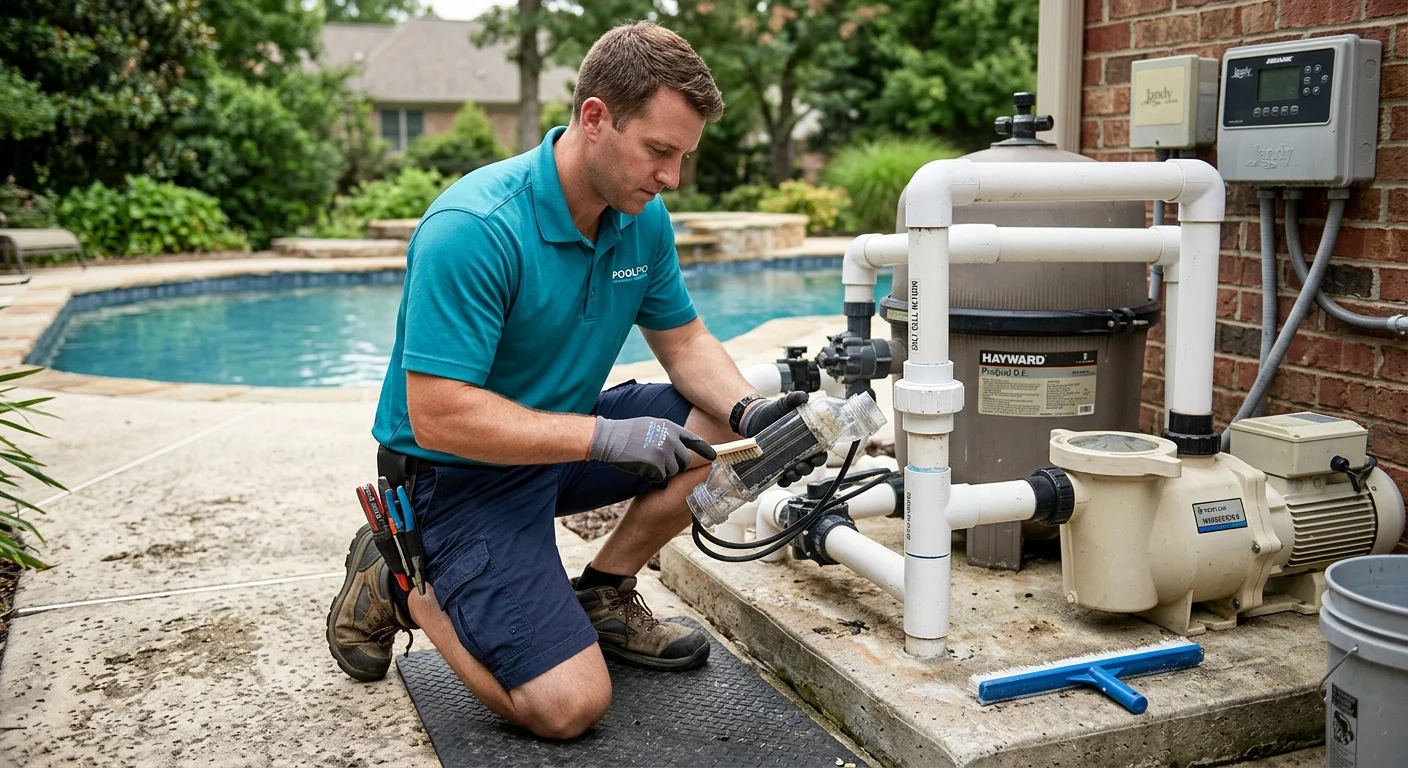
Salt cell replacement in San Diego usually starts with a weak or worn cell, not a whole-system conversion. The clearest sign is poor chlorine output after salt, flow, and scale have been checked. Refresh Pool Pros matches homeowners with licensed independent specialists. The right next step is diagnosis, not automatic replacement.
What the cell does and how it wears out
The salt cell sits in the pool’s return plumbing. Water containing dissolved salt passes between coated metal plates. An electrical current across those plates produces chlorine for the pool.
The controller and cell work as one system. The controller manages output and reports operating conditions. The cell handles chlorine production. A warning on the controller can point toward the cell, but it doesn’t prove the cell has failed.
Cell performance declines as its plate coating wears. Scale can also cover the plates and interfere with production. Wiring, flow, water temperature, or a controller problem may create similar symptoms.
Common warning signs include weak chlorine production and repeated cell alerts. An unexpected salt reading can also be a clue. Visible plate damage deserves attention as well. None of these signs should be judged alone.
Start by confirming that water is moving normally through the equipment. Then compare the displayed salt reading with an independent test. The cell should also be inspected for scale and damage. A pool specialist can review its operating data against the manufacturer’s instructions.
Replacement makes sense when the cell can’t produce as specified after those checks. Cleaning won’t restore coating that has worn away. It also won’t correct a controller or connection problem.
That distinction matters because a salt system contains several connected parts. Replacing the cell without testing them may leave the original problem untouched.
Low salt readings that are really a dying cell
A controller’s low salt message seems simple. It often sends homeowners straight toward another bag of salt. That can be the wrong response when the pool already contains enough.
Many salt systems estimate salinity from the cell’s electrical behavior. Water temperature and the condition of the plates can affect that estimate. A worn or scaled cell may therefore report low salt even when an independent test says otherwise.
Don’t add salt based only on a dashboard reading. First, obtain a fresh salinity result using a test method suited to salt pools. Compare that result with the operating range in the system’s manual. The manufacturer’s range matters more than a generic number found online.
Next, record the exact warning or diagnostic message. Check whether water is flowing through the cell. Note whether the reading changes after the cell is inspected and properly cleaned. A specialist can then test the cell and controller together.
The pattern matters. A single unusual reading may come from current conditions. Repeated low readings paired with weak chlorine output create a stronger reason to inspect the cell. A large disagreement between independent testing and the controller also needs diagnosis.
This is where a careful cell diagnosis saves guesswork. The specialist should identify whether the fault sits in the cell, controller, sensor, connection, or flow condition. Ask for that finding before approving a replacement.
If the system can’t maintain chlorine, continue testing the pool water directly. A salt display shouldn’t be treated as proof that the water is properly sanitized.
Scale on the plates and how cleaning works
Scale often appears as a pale mineral coating on the cell plates. It reduces the exposed plate area and can interfere with chlorine production. Heavy buildup can make a working cell look like a failed one.
Cleaning starts with inspection. A pool specialist can isolate the equipment, remove the cell as directed, and examine the spaces between its plates. The cell manufacturer’s manual should control the cleaning method.
Don’t scrape the plates with metal tools. Don’t guess at a cleaning mixture or soak time. An overly aggressive cleaning method may damage the plate coating. Repeated cleaning without fixing the cause can also hide a continuing water-balance problem.
A proper cleaning removes the deposit without attacking the cell. The cell is then reinstalled and tested under normal flow. If output returns and diagnostic readings settle, scale may have caused the problem. If output stays weak, the cell or another system component may need further testing.
Local water conditions shouldn’t be reduced to one San Diego County hardness number. We couldn’t confirm a single countywide figure. For source-water information, start with the San Diego County Water Authority, then find the current water quality report for the supplier serving your address.
That matters because a pool in Encinitas and one in La Mesa may have different source water and care histories. Pool chemistry also changes after filling, evaporation, chemical additions, and regular use. The pool’s current test results should guide the diagnosis.
Scale is evidence, not a final verdict. Clean first when the manufacturer permits it. Replace only after testing shows the existing cell can’t return to proper operation.
Matching a replacement cell to the controller
A replacement cell must communicate and connect correctly with the existing controller. A similar shape or matching pipe size isn’t enough. The exact controller family and approved cell models should be confirmed before ordering.
Start with the labels on both components. Photograph the cell model, controller model, connections, and any displayed error. Common families on San Diego pads include Pentair IntelliChlor, Hayward AquaRite T-cells, and Jandy AquaPure. A similar shape or matching pipe size isn’t enough. Don’t rely on memory or a product listing that says a cell fits many systems.
Capacity matters too, but a larger rating doesn’t automatically make a cell compatible. The controller must support it. The connection and plumbing arrangement must also match the manufacturer’s requirements.
Ask the specialist to state which component failed and why. The written scope should identify the proposed cell and confirm its controller compatibility. It should also separate cell replacement from controller, wiring, or plumbing work.
This decision is different from choosing whether to own a salt pool. Our guide to chlorine versus salt water pools in San Diego covers that broader comparison. Homeowners considering a new system can also review salt water pool conversion costs in San Diego.
If you want to keep the existing system, a specialist providing salt water pool conversion and service can diagnose the installed equipment and identify a compatible replacement. Bring the controller information to that conversation.
Before authorizing substantial repair work, check any claimed contractor license through the California Contractors State License Board. The lookup shows the state’s current record, which is more reliable than a directory badge or advertising claim.
We don’t publish an unverified salt cell price range. Product choice and work scope vary by system. Get the exact model and complete written scope before comparing quotes.
Habits that shorten cell life
A new cell can still struggle when the underlying operating problem remains. Replacing the component should include a review of why the previous one stopped producing.
Scale deserves ongoing attention. Keep pool water within the equipment manufacturer’s stated operating conditions. Check the cell at the intervals given in its manual. If deposits return quickly, have the water balance and operating setup reviewed.
Avoid unnecessary cleaning. Cleaning is maintenance for actual buildup, not a cure for every warning. Stronger solutions, longer soaking, and abrasive tools aren’t better. Use only the procedure approved for that cell.
Don’t force maximum output to cover another problem. Weak circulation, dirty filtration, unbalanced water, and incorrect settings require their own diagnosis. Raising cell output may disguise the symptom without correcting its cause.
Flow also matters. The generator should operate only under the conditions specified by its manufacturer. Have unexplained flow warnings checked instead of repeatedly clearing them.
Keep a simple record of salt tests, warnings, cleaning, and setting changes. Include the cell and controller model numbers. That history helps a specialist see whether output fell gradually or stopped after another change.
San Diego equipment pads face varied settings. A shaded coastal North County pad isn’t the same setting as an uncovered East County pad. Check for moisture, debris, damaged connections, and direct weather exposure during routine equipment inspections.
Finally, don’t assume every chlorine problem belongs to the cell. Test the water and review the full circulation system. A correct diagnosis protects the replacement from being asked to solve an unrelated fault.
When to call us
Call a licensed pool service pro when cleaning, salinity testing, and controller checks don’t explain weak output. You should also get help when the cell, wiring, plumbing, or controller shows damage.
Call us at (858) 400-4598 and we’ll connect you with a licensed local pool specialist.
Frequently asked questions
Does a low salt warning mean the salt cell has failed?
Not by itself. Compare the controller reading with an independent salinity test, then check flow, scale, connections, and controller diagnostics.
Can cleaning restore a salt cell?
Cleaning may restore output when scale covers the plates, but it won't restore a worn plate coating. Follow the manufacturer's exact cleaning procedure.
Can any replacement salt cell work with my controller?
No. The cell must match the controller family, connection, and required capacity. Confirm the exact model before ordering a replacement.
Need professional help in San Diego County?
Refresh Pool Pros connects you with a licensed specialist for any service in this post.