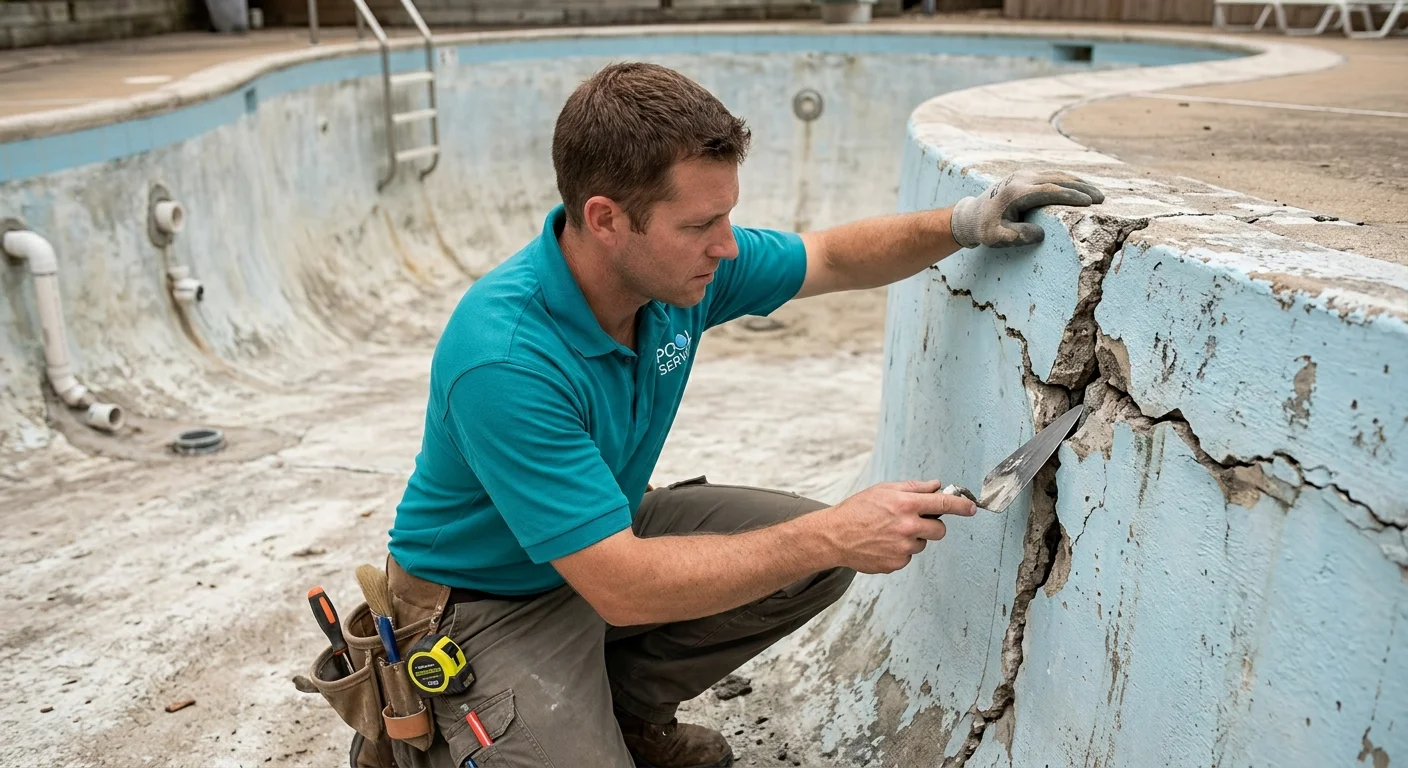
A structural pool crack repair cost can’t be set from a photo or generic price chart. We couldn’t confirm a current San Diego price from an approved primary source, so we won’t publish a guessed range. A licensed specialist must inspect the shell, identify the repair scope, and prepare a written quote.
The visible line is only one part of that decision. Its depth, path, surrounding damage, access, and required finish work can all affect the proposed repair.
Surface crazing versus a structural crack
Pool finishes can develop fine surface lines that don’t continue into the shell. These lines are often called crazing. They affect the plaster or other exposed finish rather than the concrete structure beneath it.
A structural crack is different. It extends into the pool shell instead of staying within the finish. The line may appear wider or more defined, but looks alone can’t confirm its depth. Discoloration, rough edges, or missing plaster can also make a cosmetic defect seem more severe.
Watch where the crack travels. A line confined to a small patch of aging plaster calls for a different assessment than one crossing several surfaces. Cracks near steps, benches, corners, tile, coping, or fittings deserve close attention. Those transitions can help a specialist understand what moved and where the damage continues.
Water loss may occur alongside shell damage, but it doesn’t prove the crack is leaking. Pools can lose water through plumbing, fittings, equipment, or evaporation. Likewise, a structural crack may be present without an obvious daily water-level change.
That uncertainty is why an on-site diagnosis matters. Don’t authorize structural work from a distant photo estimate alone. Ask the specialist to identify whether the damage affects the finish, the shell, or both.
Our guide to cracked pool plaster explains cosmetic finish damage in more detail. If the line reaches the shell, the project belongs in a structural pool repair assessment.
Soil movement in San Diego and what it does to a shell
San Diego County includes coastal ground, inland valleys, mesas, slopes, and developed canyon edges. Conditions can vary from one property to the next. Even neighboring homes may have different grading, drainage, fill, or retaining conditions.
A pool shell rests within that site. When the supporting ground moves unevenly, stress can concentrate in part of the structure. The shell may resist that movement, or it may crack at a weaker area or transition.
That doesn’t mean every crack proves active soil movement. Construction details, past repairs, drainage, and changes around the pool can also matter. A specialist should examine the whole setting before assigning a cause.
Look beyond the waterline during that review. Nearby deck separation, displaced coping, changed drainage paths, or movement around steps can provide context. They don’t establish a diagnosis by themselves. They simply help show whether the crack is isolated or part of a broader pattern.
San Diego’s dry periods and seasonal rain also make property drainage worth discussing. Roof runoff, irrigation, planters, slopes, and drains can change moisture around a pool. The repair plan should account for visible site conditions instead of treating every shell crack alike.
Be wary of anyone naming one cause before inspecting the property. A dependable proposal should connect the diagnosis to observed conditions. If soil or drainage work sits outside the pool contractor’s scope, ask who should evaluate it before the shell is closed and refinished.
How a structural crack is diagnosed
Diagnosis starts with documenting the crack as it exists. The specialist may trace its route, inspect adjoining surfaces, and note whether previous patches are present. The goal is to learn where the damage begins, where it ends, and which pool components it crosses.
The inspection should separate three questions:
- Is the visible damage limited to the finish?
- Does the crack continue into the structural shell?
- Is there evidence that another condition still needs attention?
A specialist may need access to the shell beneath loose or damaged finish material. The pool’s condition and proposed testing determine how that access is handled. Don’t drain or remove material before receiving instructions from the professional evaluating the job.
Water loss needs its own diagnosis. A crack near a wet area isn’t automatic proof of the leak source. The specialist may recommend separate pool leak detection when the water level is dropping. That keeps a plumbing leak, fitting problem, and shell defect from being treated as one issue without evidence.
Ask for photographs and a written scope. It should identify the damaged area, proposed structural method, finish restoration, and any excluded work. Ask whether the recommendation addresses an isolated crack or a wider shell concern.
The written quote should follow this diagnosis. Since we couldn’t verify a published local rate, compare the scope rather than searching for one promised average. Two proposals may describe different repairs even when both use the phrase “crack repair.”
Confirm the contractor’s license status through the official CSLB license lookup. Check the record yourself before signing.
Staple and epoxy injection repair, step by step
Staples and epoxy injection are possible structural repair methods, not automatic answers for every crack. A licensed specialist decides whether either method fits the shell, crack, and surrounding conditions.
A proposed repair may follow this general sequence:
-
Expose the affected shell. The specialist removes finish material around the crack as needed. This reveals the concrete and helps define the actual damage.
-
Prepare the repair area. Loose material and failed earlier patches must be addressed. The exact preparation depends on the shell and selected repair system.
-
Create locations for structural staples. Where staples are specified, the specialist prepares crossing points on both sides of the crack. The staples are intended to connect sound material across the damaged line.
-
Place the specified repair materials. The specialist installs the staples or anchors called for by the repair plan. Product selection and placement belong in the contractor’s written scope.
-
Treat the crack itself. Epoxy injection or another compatible repair material may fill and bond the prepared crack. Injection isn’t a substitute for investigating movement or damaged concrete around it.
-
Restore the shell and finish. The repaired area is closed with materials suited to the planned system. Tile, plaster, pebble, or another finish may require separate restoration.
The order can change with access and job conditions. Some cracks need a different structural approach. Others turn out to be finish damage after the surface is opened.
Ask what each step is meant to accomplish. Also ask how the specialist will confirm the crack’s full path before covering it. A clear scope should distinguish structural repair from cosmetic restoration.
Why resurfacing alone does not fix a structural crack
Pool resurfacing replaces or restores the exposed interior finish. It can address worn, rough, stained, or failing surface material. It doesn’t automatically reconnect a cracked concrete shell beneath that finish.
Covering a structural crack with new plaster may hide the line for a time. The underlying break remains unless the repair scope treats it. Movement or separation below the new surface can then show through the finished area.
The sequence matters. First, identify the crack and any related condition. Next, complete the specified shell repair. Finish restoration follows after the structural work is ready to be covered. A project involving both services should state which contractor handles each part.
This distinction also makes quotes easier to compare. One proposal might cover only finish removal and replacement. Another may include opening the crack, repairing the shell, restoring nearby materials, and resurfacing a larger area. The totals can’t be compared fairly without matching scopes.
Ask for direct language in the contract. “Repair crack” is too vague by itself. The document should identify the location, structural method, finish area, and exclusions. It should also state who handles any related tile, coping, deck, or drainage work.
Resurfacing can be an important final stage. It just shouldn’t be presented as the structural repair when the pool shell itself is damaged.
When to call us
A crack that reaches the shell needs an assessment from a licensed pool service pro. Call us at (858) 400-4598 and we’ll connect you with a licensed local pool specialist.
Frequently asked questions
How much does structural pool crack repair cost?
We couldn't confirm a current San Diego price from an approved primary source. A licensed specialist must diagnose the crack before providing an itemized quote.
How can I tell if a pool crack is structural?
A crack that continues through the finish into the shell may be structural, but appearance alone isn't enough. A pool specialist must inspect the damaged area and surrounding structure.
Can resurfacing fix a structural pool crack?
Resurfacing replaces the visible finish. It doesn't repair a damaged shell unless the structural crack is addressed first as part of the project.
How do I check a pool contractor's license?
Check the contractor's license status through the official CSLB license lookup before signing a contract.
Need professional help in San Diego County?
Refresh Pool Pros connects you with a licensed specialist for any service in this post.