Pool leak detection cost doesn’t follow one reliable San Diego price. We couldn’t confirm a current countywide figure in the approved official sources. Your quote will depend on the testing scope, pool features, access, and what happens after the leak is narrowed down.
The variables that move a leak detection quote
The first variable is the symptom itself. A dropping waterline, damp equipment pad, or wet area near the deck can point toward different tests. A specialist may need to examine the shell, fittings, equipment, or underground plumbing. More areas to test usually mean a broader diagnostic scope.
Pool design also matters. Attached spas, waterfalls, raised walls, lights, drains, and multiple plumbing circuits add possible leak points. A simple pool with accessible equipment presents a different assignment from a pool and spa system with several returns and water features.
Access can change the work involved. A hillside property near Mount Helix may present different access than an open lot in Poway. Tight side yards, locked equipment enclosures, landscaping, and covered plumbing routes can limit where equipment goes. They can also affect which surfaces are easy to inspect.
The condition of the pool matters too. Cloudy water can make visual checks harder. Existing cracks, loose fittings, standing water, or noisy equipment may require closer inspection. Tell the specialist what you’ve observed and when it happens.
A useful quote should explain these variables in writing. Look for the pool areas covered, proposed methods, exclusions, and expected deliverables. Our pool leak detection and repair service can connect you with a licensed local specialist who can assess the actual property.
Why a bucket test comes first and costs nothing
A bucket test helps separate suspected leakage from ordinary evaporation. If you already have a bucket and removable tape, it doesn’t require special diagnostic equipment. It’s a screening step you can complete before requesting a professional inspection.
The basic comparison uses pool water inside the bucket. The bucket sits securely on a pool step, with its water near the surrounding pool level. Mark the waterline inside the bucket and the pool level outside it. Keep the pool’s operating conditions consistent during the observation period.
Both water surfaces experience the same local weather. If the pool level falls farther than the bucket level, the result supports further leak investigation. A close match suggests evaporation may explain the change. The test doesn’t identify where water is escaping, and one observation shouldn’t replace a physical inspection.
San Diego conditions can change between coastal and inland communities. Wind, sun exposure, shade, and recent weather can affect water loss. Record the conditions, circulation setting, and any recent water added. Those notes give the specialist better context.
Our guide to pool leaks versus evaporation in San Diego explains how to read the result without treating it as final proof. For regional water information, homeowners can also consult the San Diego County Water Authority.
Non-invasive methods versus opening the deck
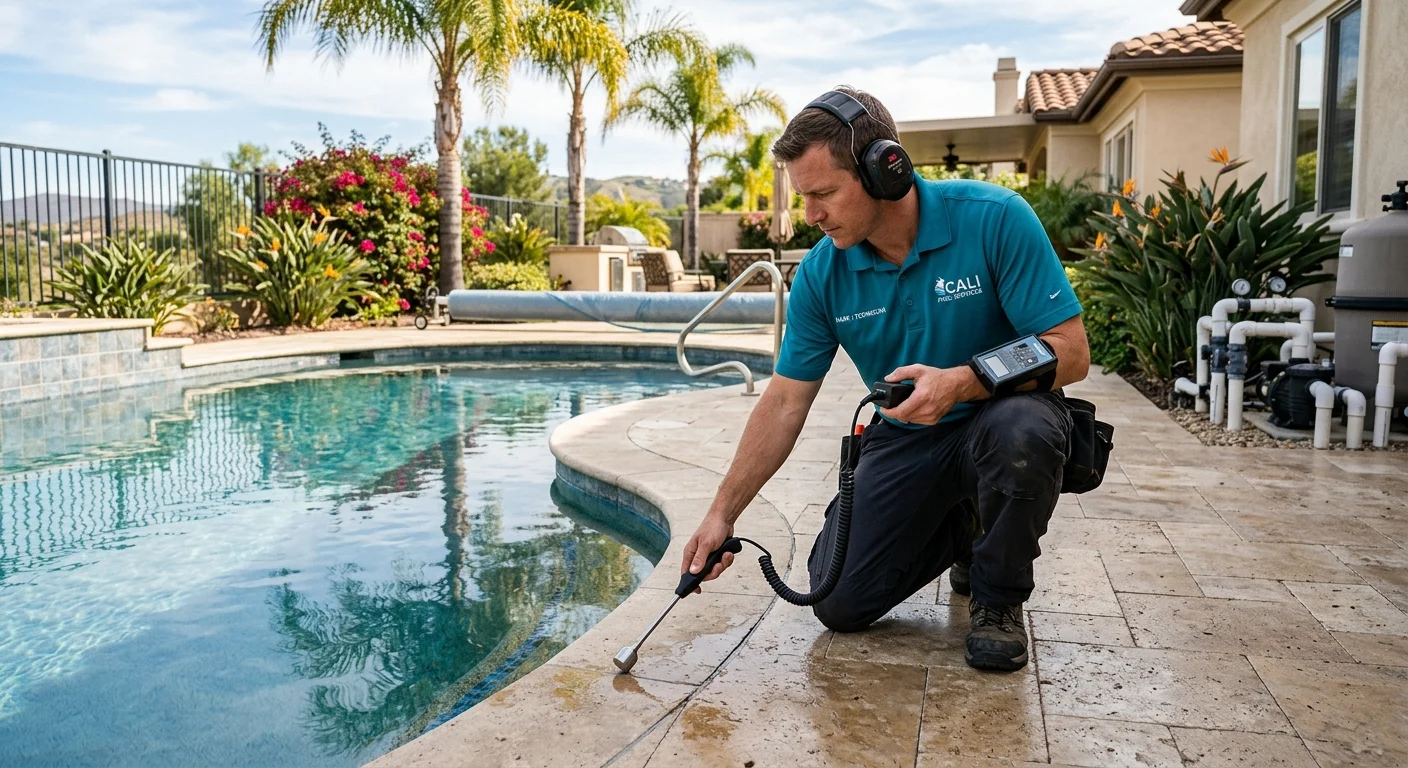
Leak detection usually starts with methods that don’t disturb finished surfaces. The exact sequence depends on the symptom and pool layout. A specialist may inspect accessible equipment, fittings, tile lines, lights, and visible shell areas. The pro may also observe the pool with circulation running and stopped.
Other possible methods include dye checks near suspected openings, acoustic listening, and pressure testing selected plumbing sections. Each method answers a different question. Dye may show movement at an accessible point. Listening equipment may help narrow a sound source. Pressure testing may help evaluate a selected plumbing run.
Ask which methods are included before accepting a quote. “Leak detection” can describe a visual assessment, a focused test, or a wider inspection of several systems. Those scopes aren’t interchangeable.
Opening the deck is a separate decision. A specialist should first explain what evidence points toward the suspected location. Ask how tightly the problem has been narrowed and what uncertainty remains. Cutting into concrete without a defined target can expand the work without improving the diagnosis.
Non-invasive testing can’t guarantee every leak will be located. Plumbing routes may be unclear, sounds may travel, and more than one issue may exist. A careful proposal should state those limitations. For a closer look at the process, read how pool leak detection works.
When detection and repair are quoted separately
Detection answers where the water may be escaping. Repair answers what must be opened, replaced, sealed, or rebuilt. Those questions often can’t be priced as one fixed scope before testing begins.
A suspected pipe leak illustrates the difference. Detection may narrow the problem to a plumbing section or deck area. The repair plan still depends on depth, access, nearby materials, and what becomes visible after opening the area. A fitting at accessible equipment presents a different repair scope from a concealed line.
Read the proposal carefully. It should say whether the quote covers diagnosis only or includes a defined repair. It should also identify any authorization needed before additional work begins. Don’t rely on a verbal assumption that repair is included.
Ask what you’ll receive after detection. Useful deliverables may include marked locations, photos, test notes, or a written description of the suspected source. Confirm what the specific specialist provides rather than assuming every visit includes the same documentation.
Repair terms deserve their own review. Ask who will complete the work, what materials are included, and whether deck restoration is part of the proposal. If another trade or property approval may be needed, that should be discussed before surfaces are opened.
Before authorizing repair work, verify the contractor through the official CSLB license check. Refresh Pool Pros makes referrals, while the matched independent specialist handles the physical work and contract.
How to compare two leak detection bids
Start by making the scopes equal. One bid may cover the shell, fittings, equipment, and selected plumbing. Another may cover only the area connected to the reported symptom. The lower quote tells you little if it excludes tests included elsewhere.
Compare the proposed methods next. Look for clear language about visual inspection, pressure testing, listening equipment, dye checks, or other planned steps. A long equipment list isn’t enough. The proposal should connect each method to an area or suspected problem.
Then review exclusions. Common points to clarify include attached spas, water features, concealed plumbing, deck opening, equipment repair, and surface restoration. Don’t assume an item is included because the pool has that feature.
Documentation and follow-up also matter. Ask what findings you’ll receive and what happens if testing doesn’t isolate one source. Confirm whether further testing requires new approval. The answer should be written before work begins.
Use the same property information for both bids. Share bucket test notes, photos, equipment observations, and the circumstances surrounding the water loss. Mention whether the level changes only while circulation runs, only while it rests, or under both conditions. Accurate inputs make the scopes easier to compare.
Finally, separate confidence from guarantees. A specialist should explain what the proposed tests can examine and where uncertainty remains. Choose the bid that defines the assignment clearly. A vague promise can leave you comparing totals without knowing what either total covers.
When to call us
Call when the bucket test points toward leakage, the waterline keeps falling, or the likely source remains unclear. This work needs a licensed local pool specialist when diagnosis leads to regulated repair work.
Call us at (858) 400-4598 and we’ll connect you with a licensed local pool specialist.
Frequently asked questions
What is the average pool leak detection cost in San Diego?
We couldn't confirm a reliable countywide figure from the approved official sources. Ask each specialist for a written quote covering the test methods, pool features, access, exclusions, and follow-up.
Can a bucket test confirm that my pool has a leak?
A bucket test is a useful screening step, not a complete diagnosis. It helps compare pool water loss with evaporation under similar conditions.
Does pool leak detection include the repair?
Not always. Detection and repair may appear as separate scopes because the needed repair isn't clear until the suspected leak is located.
How should I compare pool leak detection bids?
Compare the included tests, areas covered, exclusions, documentation, follow-up terms, and repair authorization process. Check contractor license information through the official CSLB lookup.
Need professional help in San Diego County?
Refresh Pool Pros connects you with a licensed specialist for any service in this post.