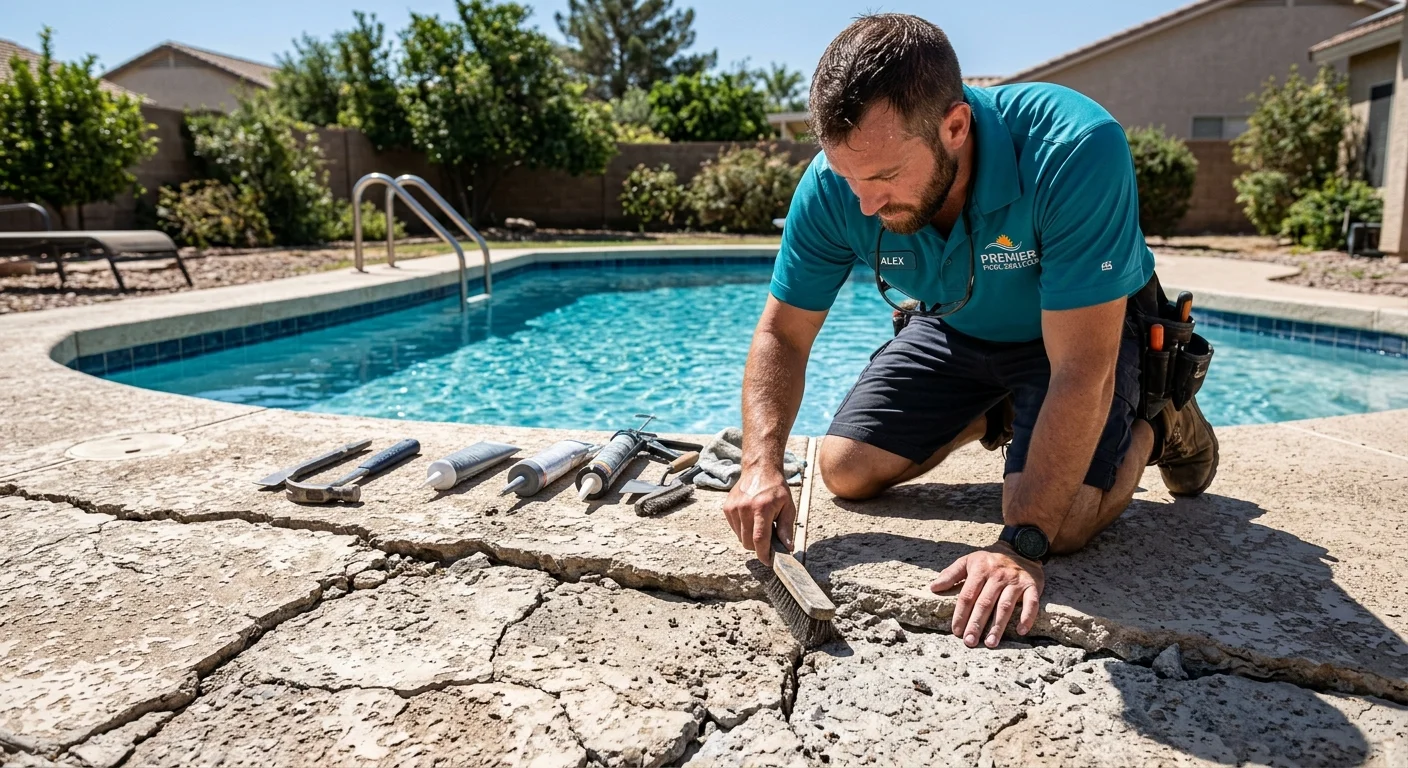
A line across the patio doesn’t reveal what caused it. Good cracked pool deck repair starts with identifying the joint, movement, or hidden leak before choosing a finish.
That diagnosis matters across San Diego County. A deck near I-5 in Encinitas and one near I-8 in El Cajon may need different site questions. The visible crack is only the starting point.
Control joints and cracks that are supposed to be there
Some straight lines in concrete are planned control joints. They give movement a defined path instead of leaving the surface to crack randomly. A joint may be tooled into fresh concrete or cut after placement. It often looks straight and repeats across the deck.
A joint can still contain a crack. That doesn’t automatically mean the deck has failed. The useful questions concern its shape and condition. Is the line following the joint? Are both sides level? Is the joint open, filled, or breaking along its edges? Has an earlier filler separated?
Irregular cracks deserve a separate look. They may wander across panels, branch, or cross a planned joint. A specialist should also inspect where the deck meets coping, drains, walls, and equipment pads. Those transitions can change the repair approach.
Don’t fill every visible line with the same product. Joint material may need to remain flexible, while a stable surface defect may call for another treatment. Covering the line before identifying it can hide evidence needed for diagnosis.
Damage at the pool edge may involve the coping rather than the surrounding slab. Our guide to pool coping options and materials explains that separate part of the pool perimeter.
Cracks that signal movement under the deck
A crack becomes more concerning when its two sides no longer sit level. Other warning patterns include widening, repeated failure of an old patch, or several cracks converging around one area. These signs don’t establish a cause, but they justify looking below the finish.
The specialist may examine the crack across the entire deck. That includes checking nearby joints, drainage paths, slab edges, and transitions into other surfaces. Photos from earlier months can help show whether the pattern has changed. Mark when you first noticed movement and whether it followed other work nearby.
Possible causes must be tested, not guessed from a photograph. The condition below the concrete, surrounding roots, drainage, and earlier construction can all become part of the investigation. A surface patch won’t correct movement that remains active beneath it.
The pool itself needs separate attention. A crack limited to the deck isn’t the same as one visible through the pool interior. If the damage continues through the vessel or appears inside the pool, read about structural pool crack repair and request an appropriate inspection.
Keep the first visit focused on cause. A useful pool repair specialist should explain what can be observed, what remains uncertain, and what needs testing before recommending demolition.
Deck cracks that are really a plumbing leak
A deck crack can sit near leaking plumbing without proving the pipe caused it. Water may also appear beside a crack after rain, splash-out, irrigation, or washing. Opening the slab based on location alone can create unnecessary damage.
Start by recording what you see. Note persistent damp areas, new staining, soft material at an edge, or water appearing when nearby systems run. Track the pool level under consistent conditions. Don’t add dye, sealant, or expanding filler before the specialist sees the area.
A pool specialist may compare the deck pattern with plumbing routes and equipment behavior. If the evidence points below the slab, a leak specialist can isolate plumbing runs and recommend further testing. The goal is to narrow the location before concrete is removed.
Pool water loss has several possible sources. Our guide to pool leak detection explains how specialists separate plumbing concerns from other likely paths. You can also compare the signs in pool leak or evaporation.
Ask who will handle each part of the job. Leak testing, plumbing access, concrete removal, pipe repair, and deck finishing may involve separate scopes. Get the proposed sequence in writing so the repaired line isn’t covered before testing is complete.
Before signing a construction contract, confirm the contractor’s current status through the official CSLB license check.
Repair options: patch, overlay, replace
A patch is the most focused option. It may suit isolated surface damage after the cause has been identified. The repair material must be chosen for the existing deck and the condition of the crack. Color and texture matching should be discussed before work begins.
Patches remain visible on many finished surfaces. Ask to see the proposed finish under dry and wet conditions if a sample is available. Also ask how the pro will prepare the crack edges and treat any nearby joint. A neat surface won’t help if movement continues underneath.
An overlay covers a broader area with a new finish. It can make sense when the existing deck is an acceptable base but has widespread cosmetic wear or earlier mismatched patches. Eligibility depends on the slab’s condition. An overlay isn’t a substitute for correcting active movement, poor support, or a leaking line.
Replacement removes a selected deck section or a larger connected area. It may provide access to plumbing or the material below the slab. It can also address sections that no longer align. The scope should identify removal limits, access, drainage transitions, joints, surface finish, and protection for the pool.
Compare proposals by scope, not by a single repair label. One contractor’s “patch” may include different preparation than another’s. Ask each pro to state what caused the crack, what remains uncertain, and what conditions could change the recommendation.
Coordinating deck work with resurfacing
Deck repair and pool resurfacing affect neighboring surfaces, but they aren’t the same project. The deck surrounds the pool. Resurfacing renews the pool interior. One doesn’t automatically correct problems in the other.
Coordination matters near coping, tile, drains, and the waterline. Deck demolition can create debris and vibration around finished surfaces. Interior work also changes how crews access and protect the pool. When both projects are planned, ask the deck and pool specialists to agree on the order before either scope begins.
Start with unresolved leaks or movement. A new deck finish can conceal access points, while fresh pool work may need protection during later demolition. The written plan should identify who removes materials, who restores each transition, and when plumbing gets tested.
If the interior is stained, rough, or cracked, request a separate assessment for pool resurfacing and replastering. Don’t add resurfacing merely because deck work is underway. Each proposal should explain the condition it addresses.
Coping can connect the two scopes visually and physically. Decide whether it stays, receives a focused repair, or belongs in a broader renovation plan. Clear boundaries help prevent an attractive deck repair from ending at an unresolved pool edge.
When to call us
Call when the crack is changing, raised, repeatedly patched, or paired with unexplained water loss. A licensed local pool pro can inspect the pool-related conditions and help define the next step.
Call us at (858) 400-4598 and we’ll connect you with a licensed local pool specialist.
Frequently asked questions
Does every pool deck crack need repair?
No. A specialist should first identify whether the line is a planned joint, a surface crack, or evidence of movement below the deck.
Can a cracked pool deck mean there is a plumbing leak?
It can, but appearance alone can't confirm one. A pool specialist may recommend isolating and testing plumbing before any deck removal.
Can an overlay cover a cracked pool deck?
An overlay may renew an eligible surface, but it won't correct ongoing movement or a plumbing problem below the deck.
Should deck repair happen before pool resurfacing?
The sequence depends on the deck, coping, plumbing, and planned interior work. Ask both specialists to agree on access and sequencing first.
Need professional help in San Diego County?
Refresh Pool Pros connects you with a licensed specialist for any service in this post.