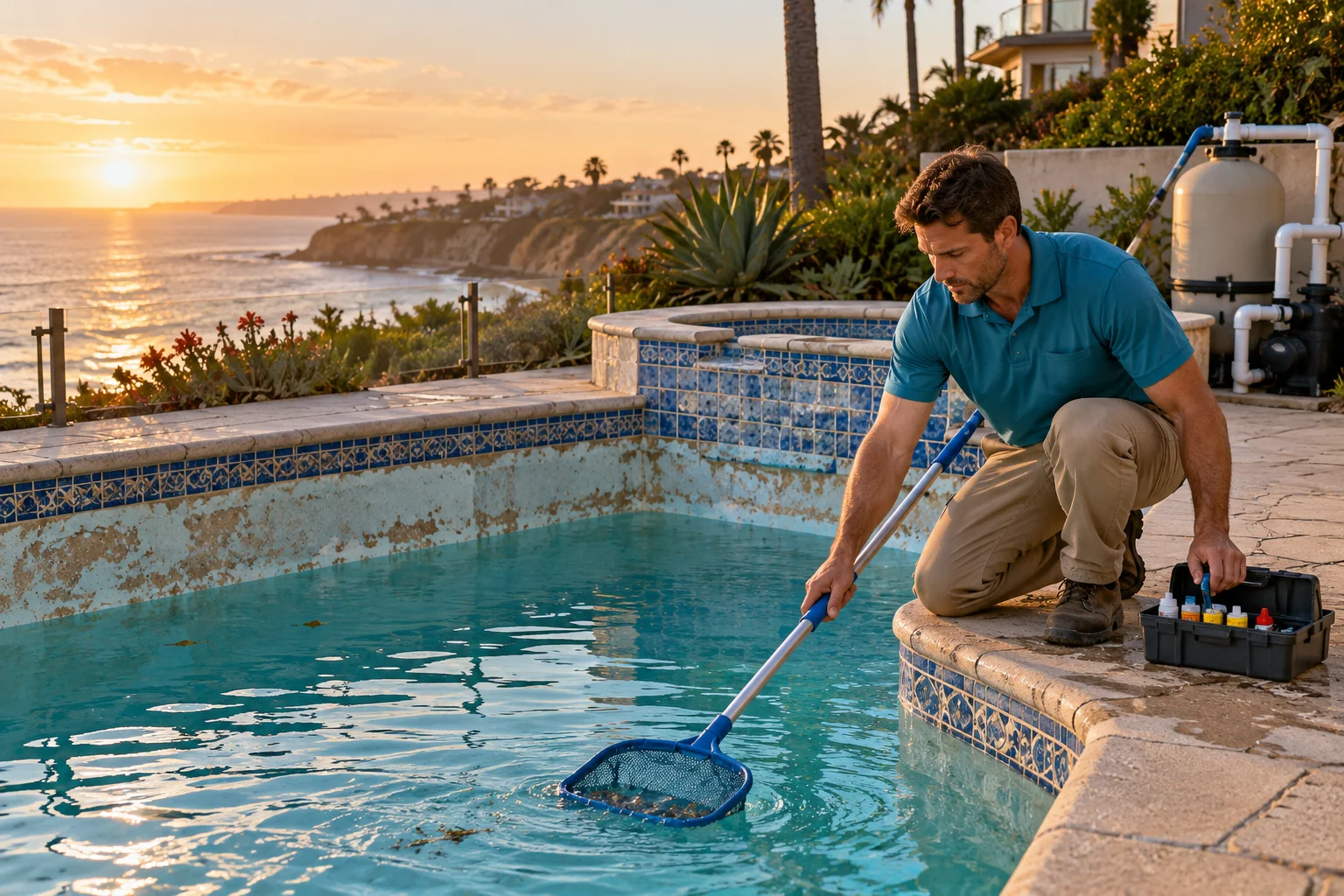
A La Jolla pool remodel often begins with worn plaster or dated tile. The real decision is how far the work should go. Coastal exposure, older gunite, bluff lots, and narrow side yards can all shape the scope.
The first estimate shouldn’t focus only on a new finish. It should identify access limits, connected materials, proposed features, permit questions, and the work each quote excludes.
Coastal lots, bluffs, and tight side yards
La Jolla properties don’t offer one standard remodeling setup. A pool near the coast may sit behind a home with limited side access. Another may occupy an elevated or sloped lot where the pool, deck, walls, and surrounding landscape meet in a compact space.
That layout matters before anyone selects tile or finish colors. The licensed pro needs to understand how workers, tools, removed material, and new material can reach the pool. A narrow gate or stepped walkway may affect the work plan. Landscaping, exterior finishes, and neighboring property lines may also need protection.
Ask each pro to document the access route in writing. The quote should explain any assumptions about gates, stairs, staging space, or material handling. If access depends on removing part of a fence or landscape feature, that item should appear in the scope. Don’t rely on a verbal understanding.
Bluff and hillside settings deserve a careful boundary between cosmetic remodeling and other work. New plaster and tile address the pool finish. They don’t automatically address movement, drainage, deck cracking, or nearby retaining features. If the visible condition suggests a larger issue, ask who should assess it before the remodel proceeds.
Keep the project focused on the actual property. A design that works on a wide inland yard may not suit a tight coastal site. Homeowners planning an inland project can use the separate El Cajon pool remodel guide for that location.
Tile, coping, and features that change the scope
Resurfacing can be the center of a remodel without being its only component. Waterline tile, coping, deck edges, lights, steps, benches, and attached spas can change the work around the shell.
Start by separating worn items from optional changes. Failed tile or damaged coping belongs in a different category from a new water feature. This keeps the quote readable and helps prevent design choices from hiding necessary repairs.
Tile and coping also meet other materials. Ask how the proposed work will handle transitions between the pool, deck, and surrounding surfaces. The written scope should state what will be removed, what will remain, and how disturbed areas will be finished. It should also identify the selected materials instead of using broad phrases such as “standard tile.”
Added features need their own scope. A new bench, ledge, light, spillway, or water feature may affect plumbing, electrical work, controls, or permitting. Don’t assume that a feature shown in a concept image is included in the construction quote. Confirm every included element by name.
If the main need is a new interior finish, review the pool resurfacing and replastering service before comparing broader remodel proposals. If the shell and features need more than a finish change, the distinction between pool restoration and remodeling can help define the project.
A clear scope protects the design. It lets every pro quote the same work and gives the homeowner a practical way to compare exclusions.
Salt air and older gunite along the coast
A coastal pool should be inspected as a complete system, not judged by plaster color alone. Salt air, exposed hardware, older finishes, and previous repairs all deserve attention during the site review. Their condition can’t be diagnosed from photos alone.
Begin with a visual record. Photograph worn plaster, missing tile, cracked coping, stains, patched areas, and exposed fittings. Include the equipment pad and deck transitions. These images help each licensed pro discuss the same visible conditions.
Next, ask the pro to distinguish surface wear from conditions that need further investigation. A finish problem may call for resurfacing. A crack, recurring water loss, loose material, or movement at adjoining surfaces may require a different evaluation. The remodel quote should not silently treat every defect as cosmetic.
Older gunite pools may also contain layers from earlier work. Ask what preparation is included before the new finish is applied. The answer should appear in the contract, along with how unexpected substrate conditions will be handled. Don’t accept a vague allowance without knowing what triggers a change.
Equipment changes should remain a separate decision unless they’re required by the chosen scope. A remodel is a useful time to review lights, controls, plumbing connections, and the equipment pad, but replacement shouldn’t be assumed without an explanation.
There’s no verified finish lifespan figure in the approved source record for this page. Material condition, preparation, installation, water care, and manufacturer terms can differ. Ask the licensed pro for the selected product documents and written warranty terms before choosing a finish.
Permits and inspections for a La Jolla pool
La Jolla is a City of San Diego community. Permit questions therefore go through the City of San Diego, not a separate La Jolla city hall.
The exact permit requirement for every pool remodel scope could not be confirmed from the approved source record for this page. Confirm the current rule with the City before signing a construction schedule. Describe the project precisely, including structural changes, electrical work, plumbing changes, added features, and alterations around the pool.
Don’t treat “remodel” as one permit category. Resurfacing alone may be reviewed differently from work that changes the shell or adds electrical, plumbing, or structural elements. The City determines what applies to the property and proposed work.
California’s pool safety law also belongs in the planning discussion. When a permit is issued for construction or remodeling of a pool at a private single-family home, the pool must have at least two of seven drowning prevention safety features. This is not a blanket retrofit rule for every existing pool, and it does not mean that a fence is always the single required answer.
The complete list and local application should be confirmed with the City and the licensed contractor. The verified statutory language is available in California Health and Safety Code section 115922.
Ask the quote to state who prepares permit documents, who submits them, and who coordinates required inspections. Any City correction or excluded design work should also have a clear process.
How to compare a remodel quote from a licensed pro
A useful comparison begins with matching scopes. If one proposal covers plaster only while another includes tile, coping, access work, and equipment changes, the totals don’t describe the same project.
Create one written project brief for every bidder. Include photos, desired materials, features under consideration, access limits, and known concerns. Then compare each response line by line.
Look for these details:
- Surface preparation and removal work
- Named finish, tile, and coping materials
- Included quantities and affected areas
- Deck and landscape protection
- Plumbing, lighting, or equipment changes
- Access and staging assumptions
- Permit and inspection responsibility
- Cleanup and disposal responsibilities
- Exclusions and change-order procedures
- Payment schedule and written warranty terms
Check the contractor through the official CSLB license lookup. Confirm that the license information matches the person or company offering the contract. Review the status shown by CSLB before work begins.
California law requires the home improvement downpayment to be no more than $1,000 or 10 percent of the contract amount, whichever is less. That rule is about the downpayment, not the full payment schedule. Read the contract carefully and ask the licensed pro to explain each payment milestone.
This page doesn’t publish a La Jolla remodel price range. No verified local figure was available in the approved source record, and project scopes vary too widely for an invented number to help. The service company must provide the specific quote after discussing or assessing the property.
When to call us
Call when worn plaster, failed tile, damaged coping, or a larger design change needs an on-site review by a licensed pool professional. Call us at (858) 400-4598 and we’ll connect you with a licensed local pool specialist.
Frequently asked questions
What should a La Jolla pool remodel include?
The scope may include resurfacing, waterline tile, coping, deck transitions, equipment, lighting, or water features. A licensed local pro should inspect the pool and separate necessary work from optional design changes.
Does a pool remodel in La Jolla need a permit?
The exact permit requirement depends on the project scope and could not be confirmed for every remodel type. La Jolla is within the City of San Diego, so confirm the current requirements with the City before work begins.
Does California require new pool safety features during a remodel?
When a permit is issued for construction or remodeling of a pool at a private single-family home, California law requires at least two of seven drowning prevention safety features. Ask the City of San Diego and the licensed contractor how the rule applies to the proposed permit.
How should I compare La Jolla pool remodel quotes?
Compare the written scope, surface preparation, named materials, tile and coping quantities, equipment changes, access assumptions, permit responsibility, payment schedule, exclusions, and warranty terms from each licensed pro.
Need professional help in San Diego County?
Refresh Pool Pros connects you with a licensed specialist for any service in this post.