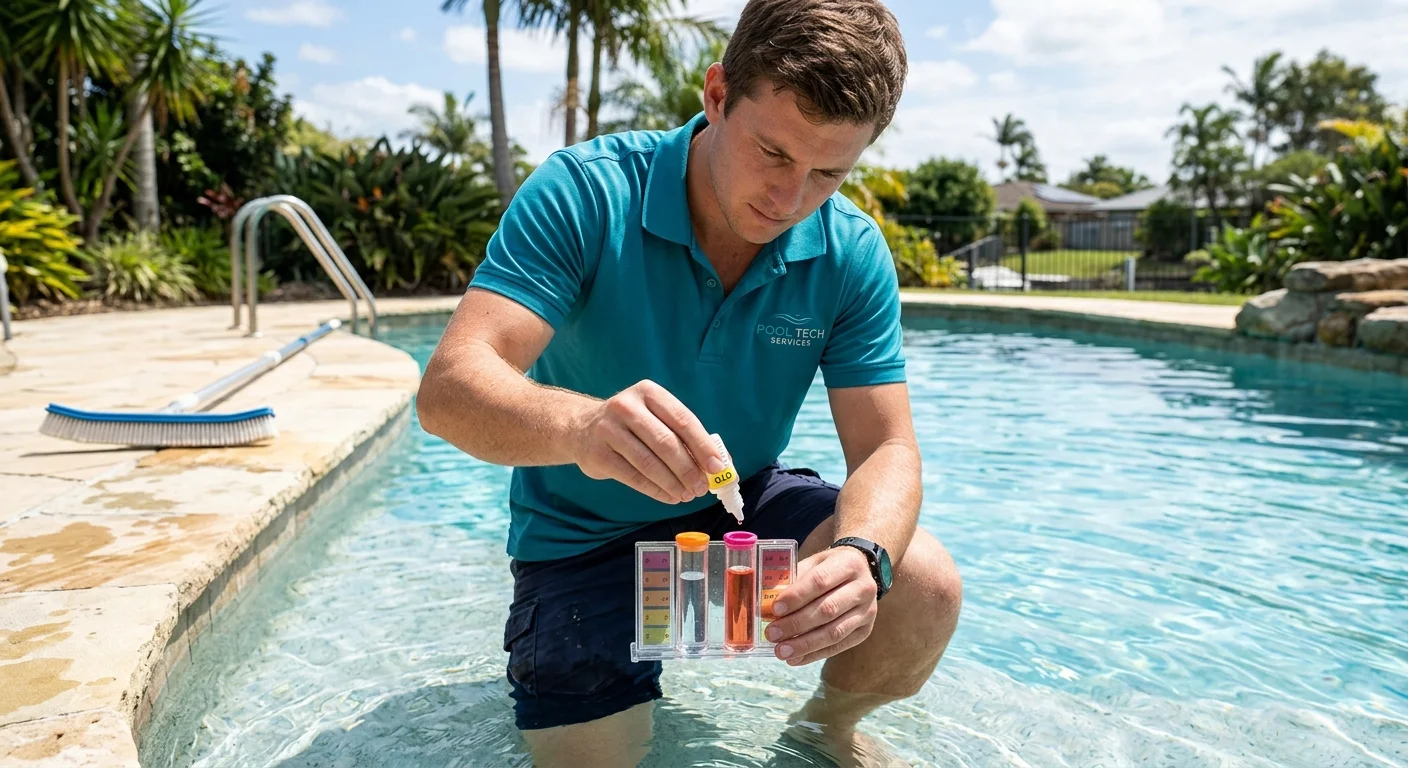
A search for pool testing near me usually starts when water looks wrong or readings keep changing. Start with sanitizer, pH, total alkalinity, calcium hardness, and cyanuric acid. Add other tests only when your equipment, fill water, or pool symptoms call for them.
Home testing works best as a trend, not a single verdict. A nearby pool store or service specialist can provide a second measurement when results conflict. The CDC healthy swimming guide also provides current guidance about water health and swimmer habits.
The core readings and what each one controls
Each reading answers a different question. Testing only chlorine can miss the reason chlorine keeps moving. Record the results together so you can see their relationships.
-
Sanitizer: For most residential pool tests, this means free chlorine. The reading shows how much active sanitizer the test detects. Total chlorine provides added context when compared with free chlorine.
-
pH: This describes how acidic or basic the water is. It affects swimmer comfort, chlorine behavior, and how the water interacts with equipment and surfaces.
-
Total alkalinity: This measures the water’s buffering capacity. It helps explain why pH stays steady or keeps drifting after adjustments.
-
Calcium hardness: This tracks dissolved calcium in the water. It helps put scale, cloudy water, and surface concerns into context.
-
Cyanuric acid: Often shortened to CYA, it protects chlorine from sunlight. Its level changes how a chlorine reading should be interpreted.
-
Salt: Test this when the pool uses a salt chlorine generator. Compare the result with the equipment maker’s current instructions.
-
Water temperature: Temperature gives context to the other readings. It can also matter when following reagent or equipment instructions.
Don’t treat a printed target as California law. Product labels, equipment instructions, and pool conditions all matter. If results suggest a circulation or equipment problem, a pool repair specialist can inspect the system rather than treating chemistry alone.
Test strips, drop kits, and photometers
Test strips are fast and easy to repeat. They’re useful for spotting a change between routine checks. Lighting, timing, wet fingers, and strip age can affect how the colors appear. Read the strip within the product’s stated window.
Drop kits take more care but give you greater control over the sample. Fill to the marked line, hold bottles as directed, and count each drop carefully. A rushed test can look precise while still being wrong.
Photometers replace visual color matching with an electronic reading. That helps when two colors look almost identical. The device still depends on clean sample cells, fresh reagents, and the maker’s operating steps. A number on a screen isn’t automatically accurate.
Whichever method you choose, consistency matters. Test from the same general pool area when practical. Keep the sample away from a return jet or recently added product. Store supplies as their labels direct, and replace anything damaged or expired.
When a result looks surprising, repeat it before changing the water. Use fresh supplies or confirm it with another method. Write down what you added and when. That record can reveal whether a reading is drifting or whether one test was simply off.
Cyanuric acid, the one that creeps up on you
Cyanuric acid deserves its own section because it changes slowly and affects how chlorine readings make sense. It enters the water through conditioner and some stabilized chlorine products. Repeated additions can raise it without causing an obvious visual change.
Evaporation doesn’t remove dissolved CYA. The water leaves, but the dissolved material remains. This matters in San Diego, where a pool may need regular top-offs during dry and windy periods. Adding water replaces volume, but it doesn’t undo every change caused by evaporation.
Don’t respond to a weak chlorine reading by repeatedly adding product. Test CYA and the rest of the water balance first. The right next step depends on the confirmed reading, the sanitizer system, and what has recently entered the pool.
Salt pools need the same context. A salt system makes chlorine, so it doesn’t eliminate the relationship between chlorine and CYA. Our guide to chlorine and salt water pools in San Diego explains that distinction.
If a test suggests water replacement, confirm the result first. Ask a pool specialist how the proposed change fits your pool surface, equipment, and property. Large adjustments based on one questionable reading can create a different problem.
Testing rhythm for a San Diego pool year
There isn’t one schedule that fits every backyard. A practical starting rhythm is to check sanitizer and pH every few days during regular use. Run a broader balance panel weekly. Add another check whenever conditions change.
Test again after a crowded swimming day, rain, strong wind, or a large top-off. Check after adding a treatment, following its label directions. Equipment shutdowns and circulation changes also justify a fresh baseline.
San Diego’s coastal and inland pools don’t always move alike. A shaded Oceanside pool and an exposed El Cajon pool face different sunlight, heat, wind, and use patterns. Your testing record should reflect the actual yard, not just the calendar.
Seasonal habits matter too. Santa Ana winds can bring dust and plant debris. Cooler stretches can reduce swimming while leaves continue entering the water. Warm inland weeks can increase use and top-offs. These events are better testing cues than a date alone.
Keep a simple log with the date, results, recent weather, water added, and products used. Include any change in pump operation or water appearance. If fill water seems connected to a new pattern, check the San Diego County Water Authority and your local water provider’s current report.
Green water needs more than a blind chemical dose. Start with confirmed readings, then use our San Diego green pool guide to identify the other information a specialist may need.
What a lab test adds that a home kit cannot
A professional counter or service test gives you a second measurement system. It may also cover readings that a basic home kit doesn’t include. The exact panel varies, so ask what was measured and which method was used.
Depending on the equipment, the panel may include metals, phosphates, salt, or total dissolved solids. Those results can add context when stains, scale, cloudy water, or equipment warnings don’t match your regular tests. They still need to be interpreted alongside the pool’s history.
Bring a fresh sample in a clean container. Note when and where you collected it. Also list recent products, added water, weather changes, and equipment problems. Without that context, a detailed printout can still lead to a poor diagnosis.
A lab-style test doesn’t make home testing unnecessary. Your home log shows how water changes between visits. The outside test provides a checkpoint when a result seems doubtful or when repeated adjustments don’t hold.
Ask for the measured results, not just a shopping list. Compare them with your own log and equipment instructions. If the two methods disagree, repeat the sample before making a major change. Persistent disagreement may come from old reagents, sample handling, testing technique, or a problem outside the chemistry itself.
When to call us
Bring in a licensed pool service pro when readings conflict, sanitizer won’t hold, or the water changes after repeated corrections. Chemistry problems can also point toward circulation, filtration, or equipment concerns.
Call us at (858) 400-4598 and we’ll connect you with a licensed local pool specialist.
Frequently asked questions
How often should I test my pool water?
A practical starting rhythm is to check sanitizer and pH every few days during regular use. Run a broader panel weekly, then test again after heavy use, rain, added water, or an unexpected change.
Can I rely on pool test strips alone?
Test strips work well for quick trend checks. Confirm an unexpected result with a fresh strip, a drop kit, a photometer, or a professional water test before making a large adjustment.
Why does my pool chlorine reading keep dropping?
Heavy use, debris, sunlight, circulation problems, and the relationship between chlorine and cyanuric acid can affect the reading. Confirm the full water balance before adding more product.
What should I bring for a professional pool water test?
Bring a fresh sample in a clean container. Note when you collected it, recent products added, unusual weather, equipment changes, and any visible water or surface problems.
Need professional help in San Diego County?
Refresh Pool Pros connects you with a licensed specialist for any service in this post.